A Closer Look: Nature All Around Us
by Judy Gallagher, NVBA Board Member
Attractive Flies?
My mother raised me to hate flies. She mentioned their habit of frequently walking on feces, and then transferring their dirty attention to our picnic food. And there were those pesky mosquitoes! But I've learned over the years that not all flies share those lifestyles. Also, there are a number of flies that are attractive if you get a close look at them.
Picture-winged flies, so-called because many species have patterns of bands or spots on the wings, are members of family Ulidiidae. There are at least 130 species in the U.S. and Canada, and around 700 species worldwide. Many of these flies haven't been studied thoroughly, and their lifestyles are not well documented.
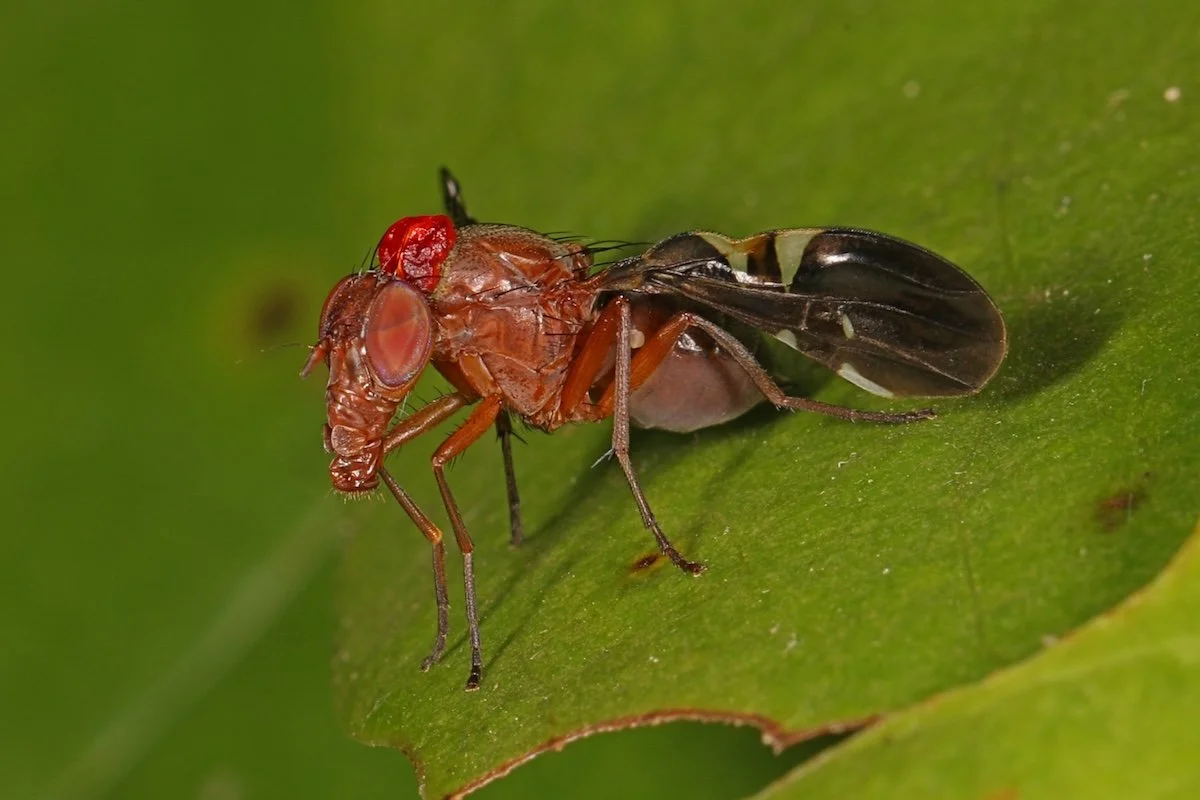
Common Picture-winged Fly. Photo: Judy Gallagher
The most common species in our area is the Common Picture-winged Fly, Delphinia picta. Larvae feed on decaying plant matter, and they are found any place where there is decaying vegetation. Common Picture-winged Flies have a courtship ritual where the female waves her wings gently, and the male responds by twisting and paddling his wings
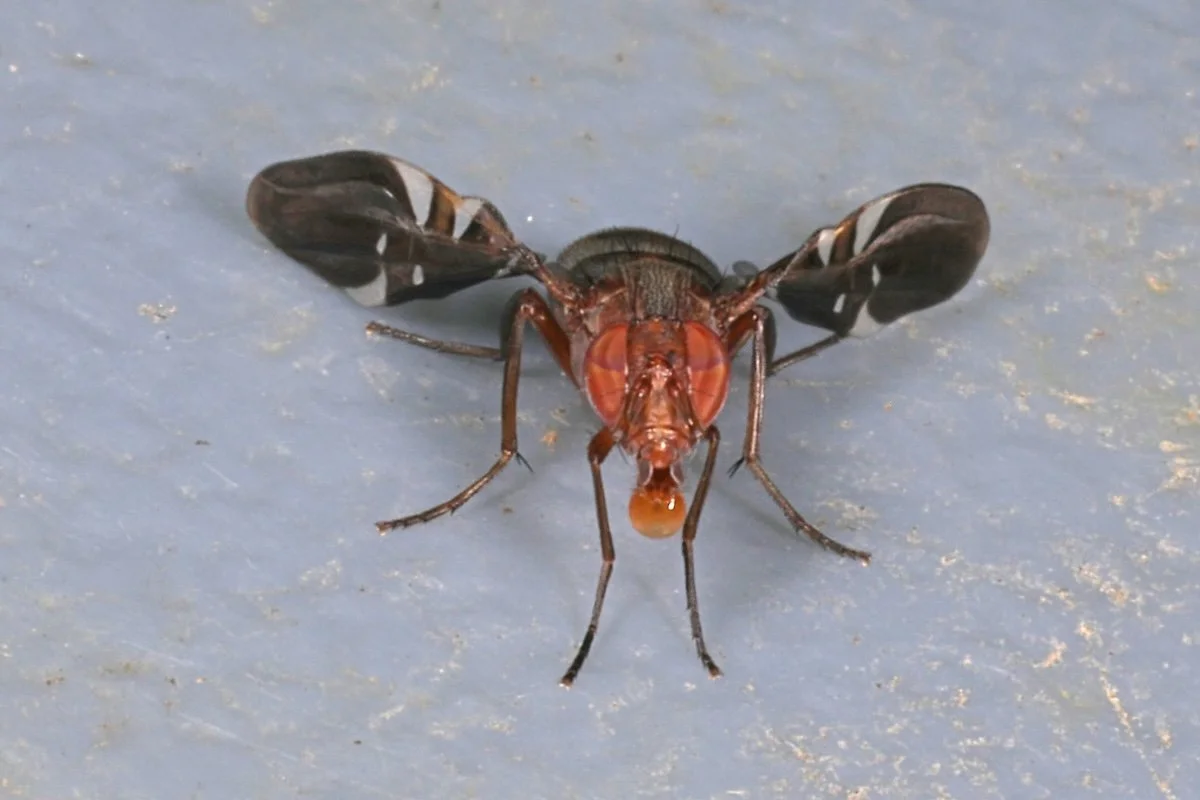
Common Picture-winged Fly blowing a bubble. Photo: Judy Gallagher
Courtship rituals also include blowing bubbles. The mouthparts look like gas masks, but its design is perfect for efficiently sucking up plant matter.
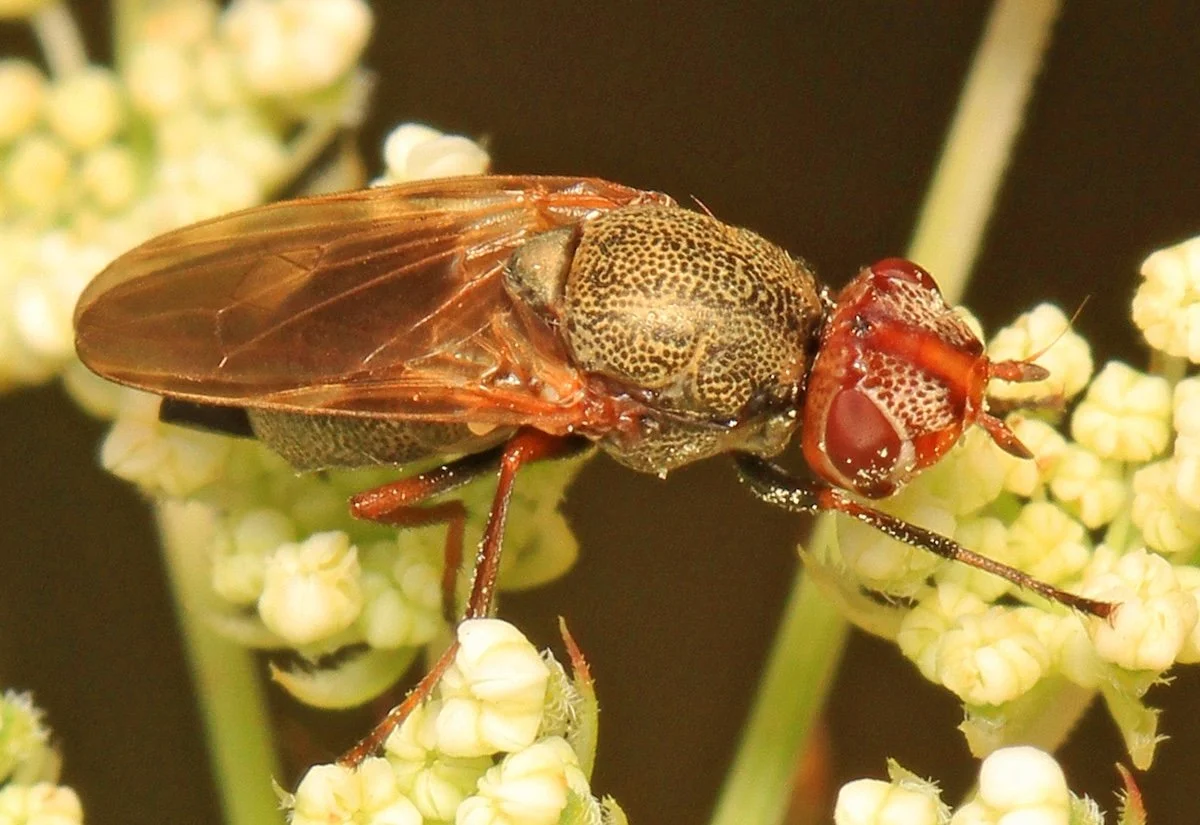
Tetanops luridipennis. Photo: Judy Gallagher
Members of the Tetanops genus don't have extravagantly decorated wings, but their bodies are pretty interesting looking. Unlike most other Picture-winged Flies, their larvae live in roots and feed on plant material. One member of the genus, the Sugar-beet Root Maggot, is a major agricultural pest. Not much is known about most Tetanops species' lifestyles, so it's not clear what the fly in my picture feeds on.
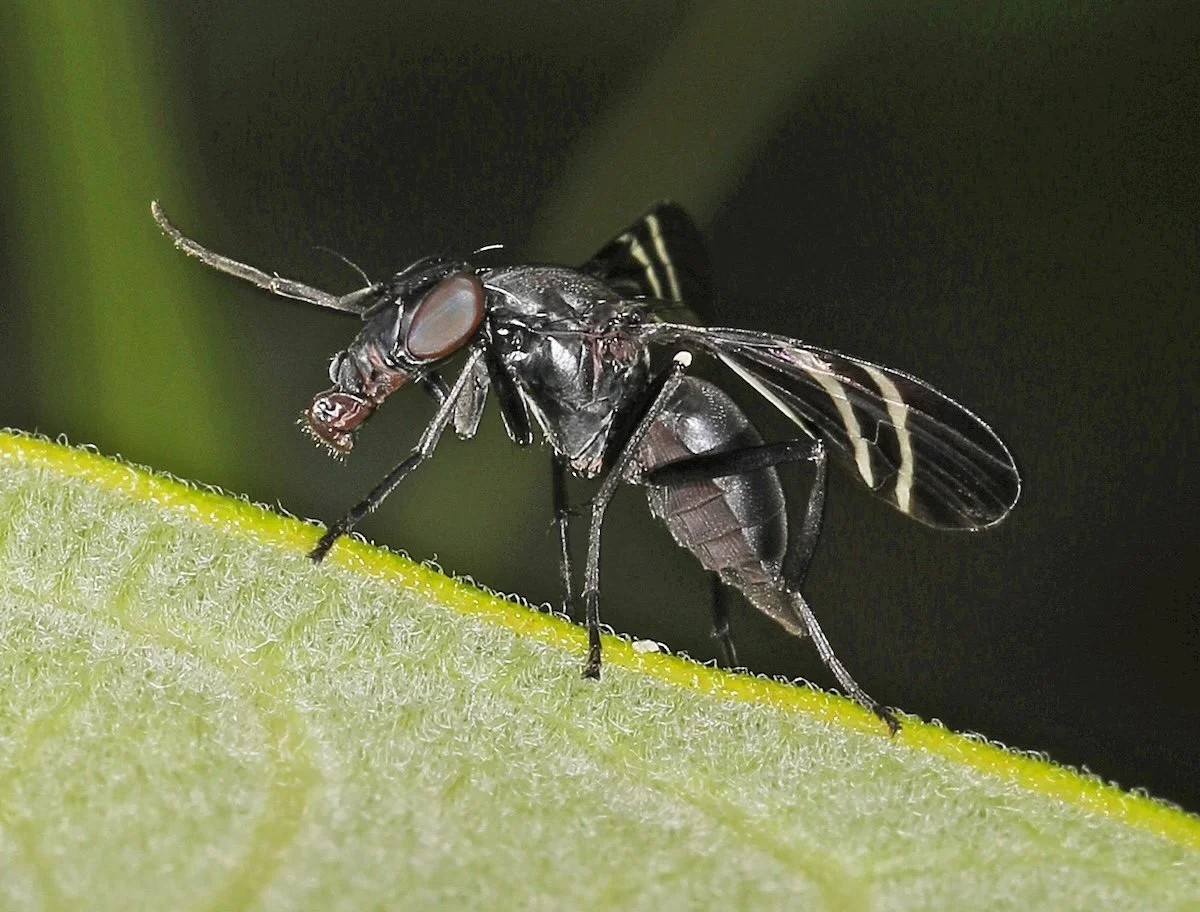
Black Onion Fly. Photo: Judy Gallagher
Black Onion Fly larvae feed on roots of onions, garlic, leeks, etc., but aren't common enough to be a major agricultural pest. The adult is between 1/4 and 3/8 inches long, mostly black, with clear or white stripes on its wings. Like the Common Picture-winged Fly, its mouthparts are designed for vacuuming up decaying vegetation.
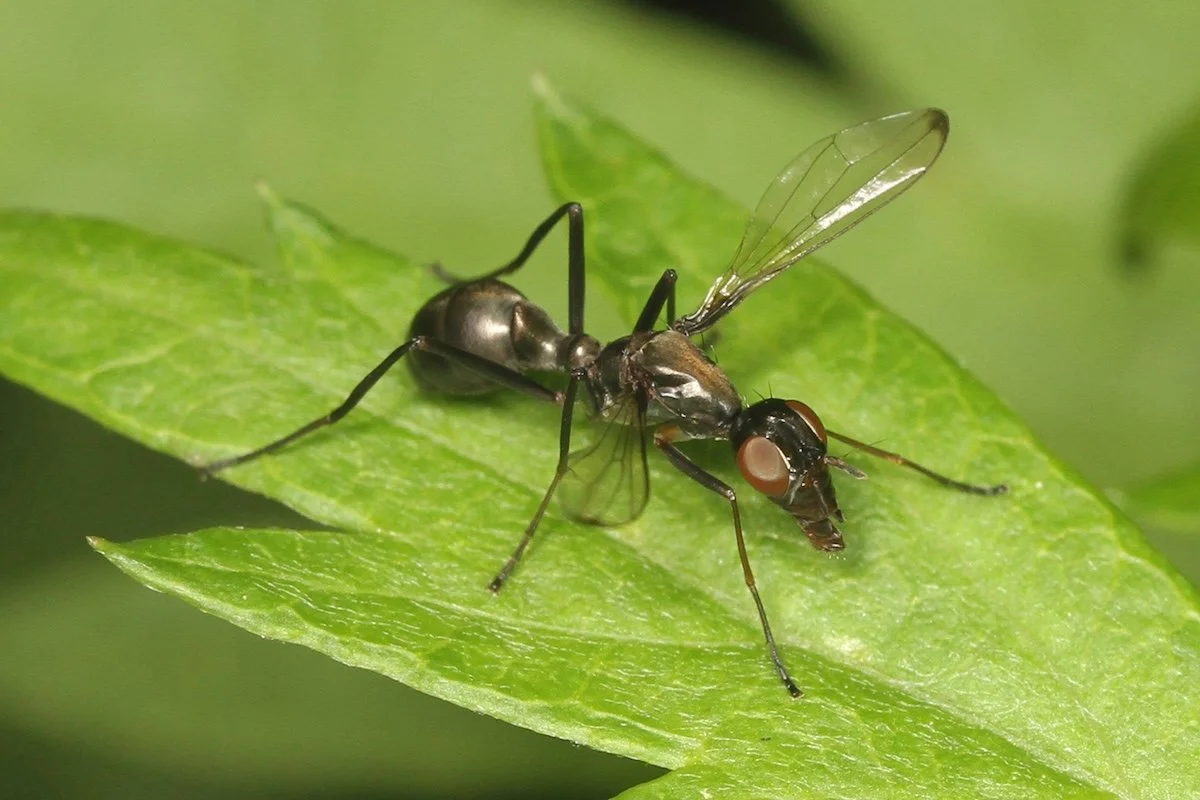
Myrmecothea myrmecoides. Photo: Judy Gallagher
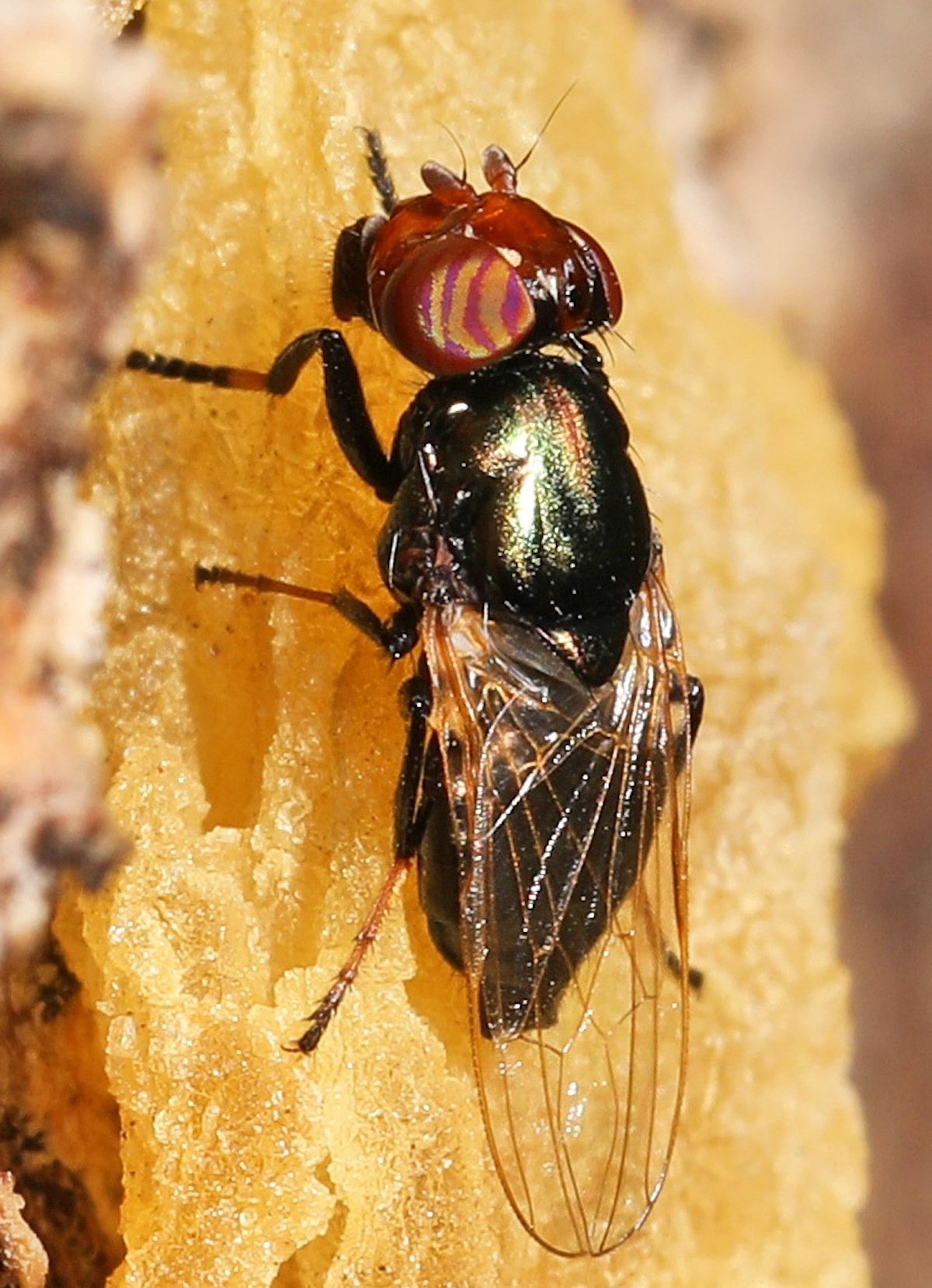
Physiphora species. Photo: Judy Gallagher
This fly (above) isn't often seen, and doesn't have a common name. As you can see, it resembles an ant, and its scientific name means "antlike". It also behaves like an ant, running ant-like over green leaves and stalks. When I saw this fly at Meadowood, I thought it was an ant until I noticed that magnificent snout. Not much is known about this fly, but it may, like other ant mimics, derive protection from predation by looking like an ant.
Physiphora species picture-winged flies don't have the heavily patterned wings that are more typical of this family, but just look at the eyes (left)! Like many other picture-winged flies, they have elaborate courtship rituals that include wing-lifting and foreleg movements, and males tap females or even push at them with their mouthparts.
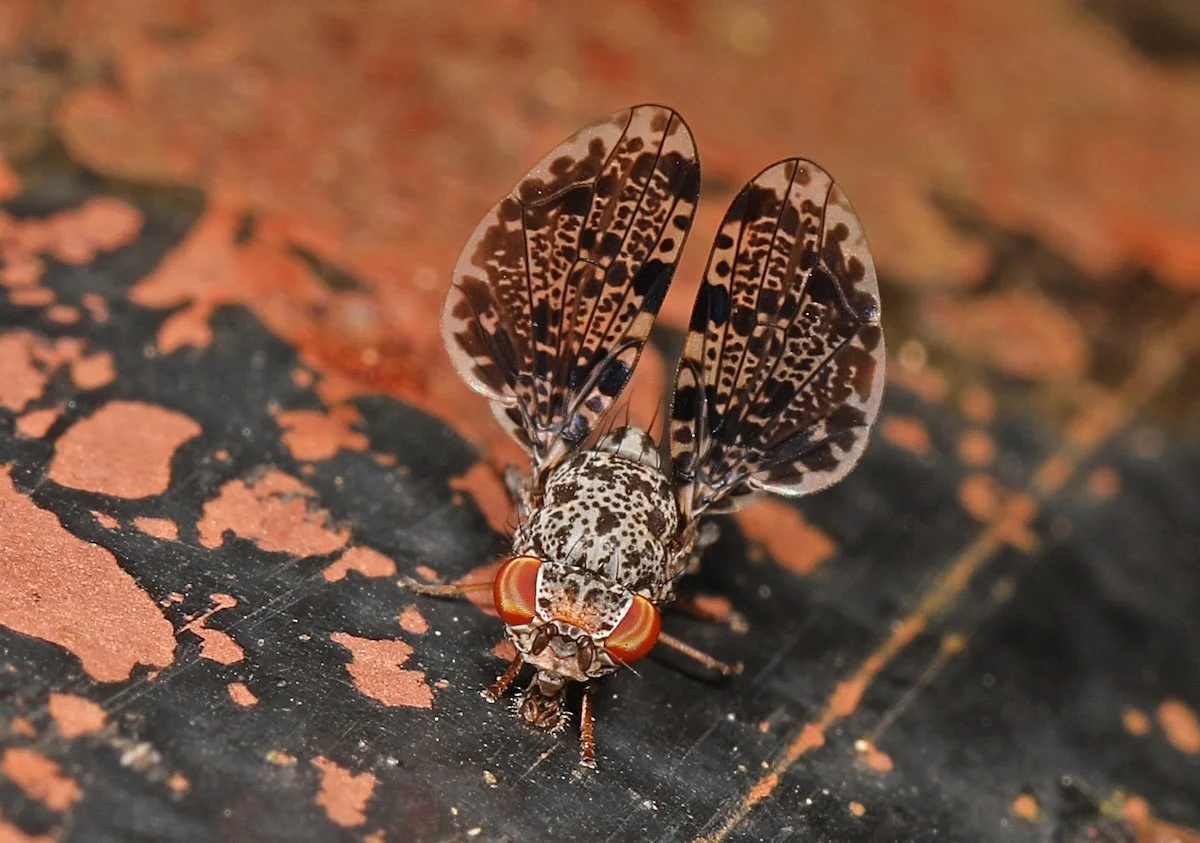
But my favorite Picture-winged Fly is the Peacock Fly, Callopistromyia annulipes (below). Adults feed on detritus, including the waste materials from wood-feeding beetle tunnels, and larvae probably feed on dead wood, fungi, or something else connected to dead wood.
Both male and female flies display, presumably as part of their mating rituals. Peacock Flies raise their wings above their heads, and strut around impressively. They're only about 1/8 to 1/4 inch long, so they're easy to miss.
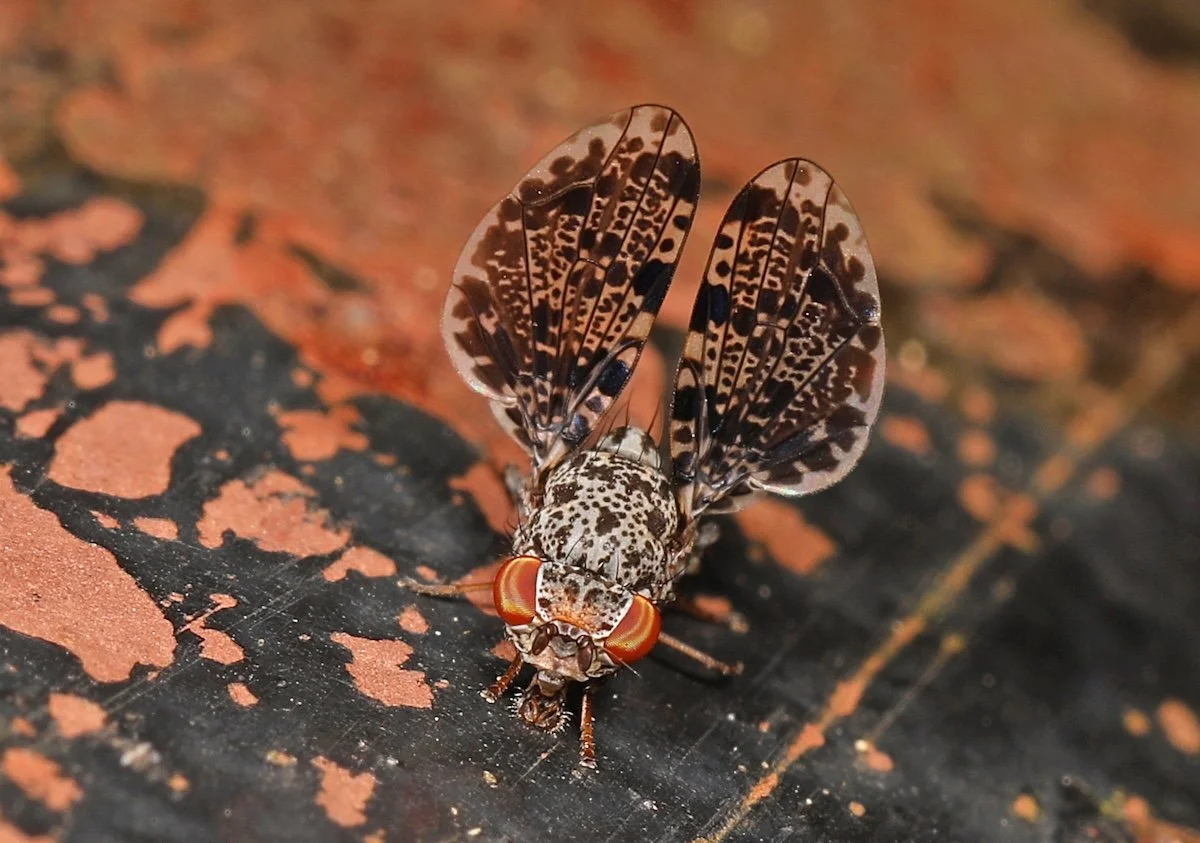
Peacock Fly displaying. Photo: Judy Gallagher
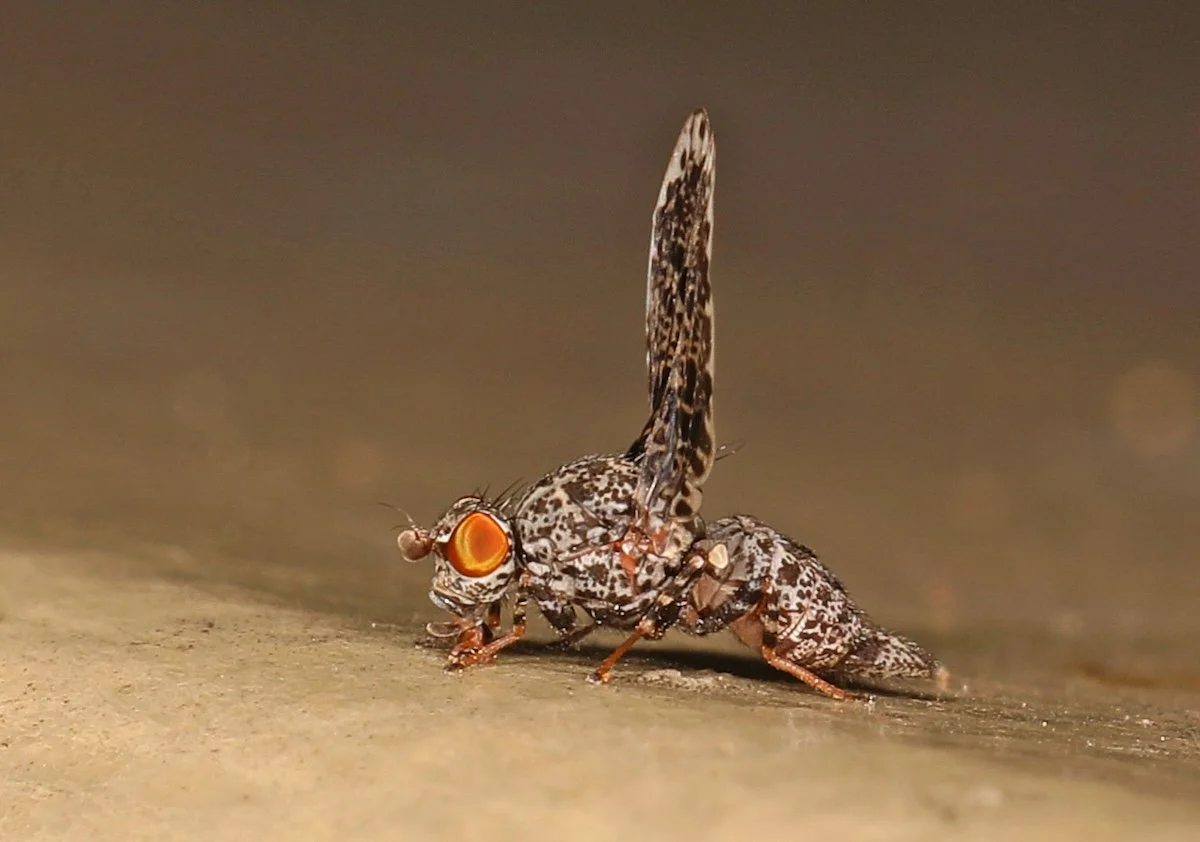
Female Peacock Fly showing off her gorgeous wings. Photo: Judy Gallagher
The next time you see a small fly dancing around, you might want to look closely. Their tiny worlds are mesmerizing!