
NVBA NEWS BLOG
Welcome to the blog for Northern Virginia Bird Alliance, a wealth of resources about northern Virginia birds, wildlife, habitat conservation and restoration, native plants, wildlife-friendly gardening, advocacy and more.
Why I Keep Coming Back: Birding and Photography Along Marumsco Creek
My favorite birding spot is Veterans Memorial Park in Woodbridge. I keep coming back for the surprises that appear around every bend in the trail.
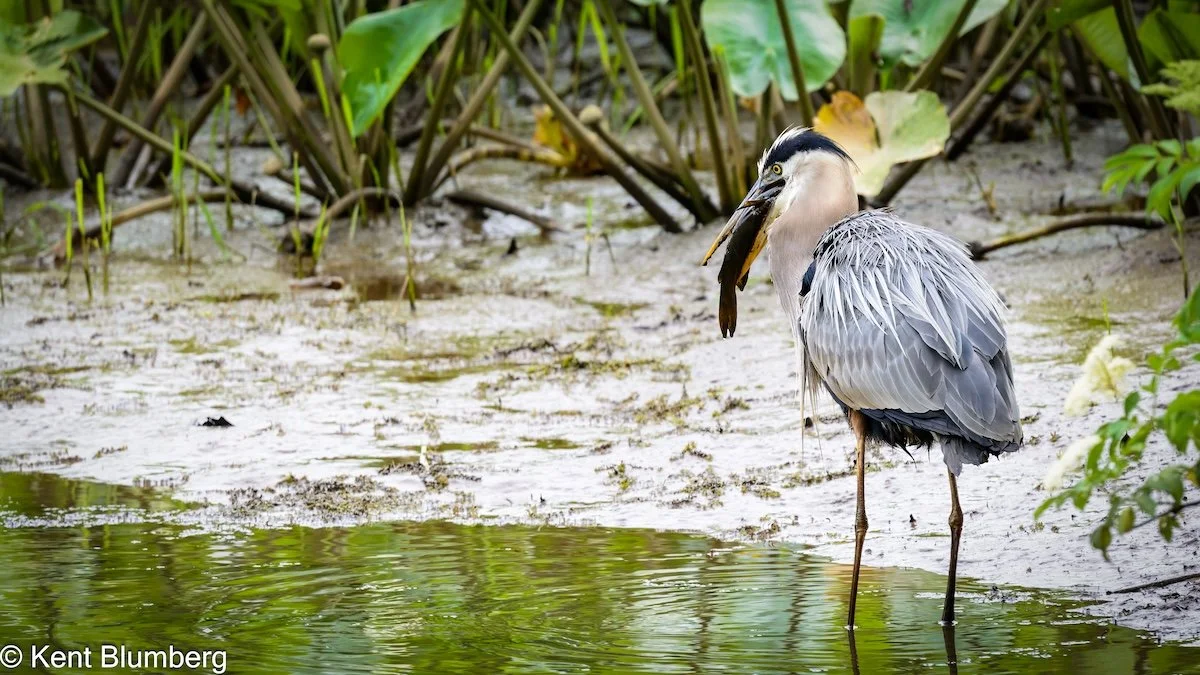
Photo: Great Blue Heron, Kent Blumberg
Kent Blumberg
My favorite birding spot is Veterans Memorial Park in Woodbridge. It’s close to my home and offers a variety of habitats: Marumsco Creek along the western edge of Occoquan Bay National Wildlife Refuge, cattail marsh, Osprey nests on light poles, and a small strip of forest that often hosts migrant songbirds.
I keep coming back for the surprises that appear around every bend in the trail.
There are several easy places to park, depending on how far you want to walk. A gravel lot sits at the corner of Featherstone Road and Bay Street, perfect if you want a longer walk along the soccer fields before heading to the creek. For a shorter visit, park near the skateboard park or at the baseball fields at the end of the road.
The trail along the creek is flat and well-maintained, making it accessible for most visitors. There’s one short section with steps near the recreation center, but otherwise it’s an easy walk.
The trail follows the creek for about a half mile. I usually walk out and back the same way. It’s always surprising how much the scenery and birds change when I turn around.
The edges of the soccer fields can be surprisingly productive. I’ve spotted migrating warblers, Ospreys feeding, and Red-bellied Woodpeckers in mid-molt, along with other surprises.
Over the years, eBird reports include more than 200 species here. Highlights of my visits include Great Blue Herons, Brown Creepers, Eastern Bluebirds, Ospreys, Wood Ducks, and many others. If you’re looking for specific species, pay attention to the tides. Low tide exposes mudflats that attract shorebirds, while high tide brings in more waterfowl.
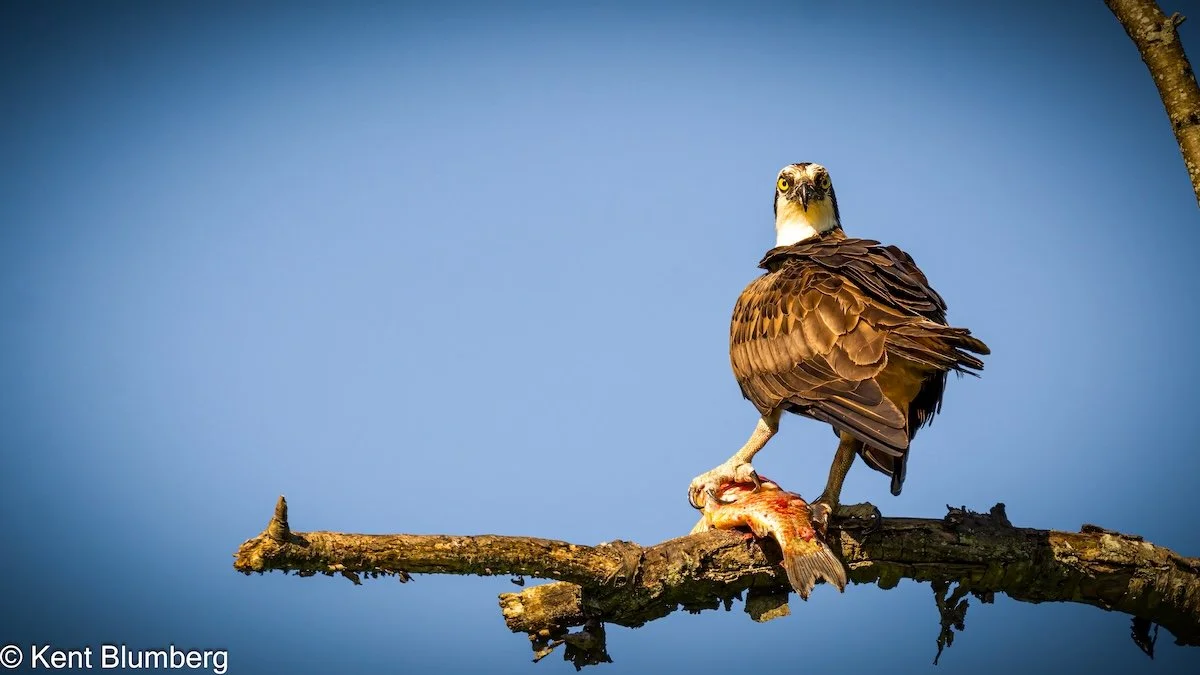
Osprey with breakfast. Photo: Kent Blumberg.
As a photographer, I’m always looking for interesting bird behavior. One morning I spent 30 minutes watching a Great Blue Heron wrestle with a huge catfish, repositioning it again and again before finally swallowing it headfirst. On another visit, I came across an Osprey enjoying breakfast in a tree next to the soccer fields. Moments like these are why I keep coming back.
The trail runs along the west side of the creek, so morning light can be tricky. I’ve had the best luck standing in the shade of a tree and shooting north or south for better side lighting.
During warmer months, the pickleball courts near the recreation center can get noisy. If you prefer a quieter experience, visit early in the morning or on a weekday.
Restrooms are available at the recreation center and baseball fields during warmer months, along with several portable toilets. Both are typically closed in winter.
If you’re looking for a peaceful place with a surprising variety of birds, consider a visit to Veterans Memorial Park. You never know what might be waiting just around the next bend.
Kent Blumberg is an MBA professor, passionate bird photographer and voracious reader.

It's Time for Birdathon!
As spring arrives in northern Virginia, we’re looking forward to Birdathon 2026, our biggest and most FUN fundraiser of the year!
As spring arrives in northern Virginia, we’re looking forward to Birdathon 2026, our annual event where teams collect pledges from friends and family and then record how many species they can identify during any 24-hour period between April 18 and May 19. In addition to being just plain fun, Birdathon helps NVBA to support outdoor education, citizen science, habitat conservation, and programs to encourage people to plant native plants and protect native wildlife. Birdathon also helps ornithologists better understand spring migration by reporting sightings through eBird, an online database of bird observations run by the Cornell Lab of Ornithology.
More information is available on our Birdathon 2026 webpage. You can plan a big day route around northern Virginia, or you can even participate from your own backyard. So, gather your birding buddies and register your team today.
Team captains, and anyone curious about joining a birdathon team, are welcome to join us on April 13th for our captain kick off event, and we we will have NVBA sponsored birdathon days as well - information coming soon.

The Birds Are Coming! It’s Time to Turn Off Your Lights at Night
Time to turn off your lights to help migrating birds coming to or through our area! Learn more about the importance of darkness to migrating birds.
Photo: Purple Martins, Keith Kingdon/Audubon Photography Awards
Over 100 million birds will migrate through northern Virginia in the next two months. Tundra Swans, Dark-eyed Juncos, and other winter visitors have departed for their breeding grounds, while warblers, tanagers, phoebes, flycatchers, and other species are making their way from Central and South America to or through our area.
Eighty percent of our migrating birds migrate at night. They use a variety of cues to keep themselves on track, including the stars, Earth’s magnetic field, geographic landmarks, and genetics. However, excessive lights at night can be deadly for them. Some birds crash into lighted buildings at night, injuring or killing themselves. The worst recent example is the McCormack Place Convention Center, where over 1,000 birds died in one night, but smaller numbers of birds die from window collisions at night throughout the country. Other birds are distracted from their migration routes by lighted buildings and fly around the lights much like moths attracted to a light. They waste the precious energy they need to get to their breeding grounds, increasing the likelihood that they will never reach them.
You can do your part to help keep migrating birds safe by turning out your outdoor lights between 11:00 PM and 6:00 AM from now through the end of May. You also can install motion sensors on your lights, so they come on only when they are needed.
You can also help birds by minimizing outdoor lights throughout the year. Scientific studies are making it increasingly clear that lights at night disturb birds’ sleep, causing them to lose weight, lay fewer eggs and have fewer baby birds that survive to leave the nest.
Would you like to learn more about the effect of outdoor lights on birds? Join us for an online program about the importance of reducing outdoor lighting. Our speakers will be Joelle Gehring, the Acting Assistant Regional Director for the U.S. Fish and Wildlife Service’s Migratory Bird Program, and Jo Anna Lutmerding, a Biologist in the U.S. Fish & Wildlife Service’s Migratory Bird Program. Joelle and Joanne are the co-leaders of the Bird Collision Prevention Alliance, a coalition of over 100 organizations (including NVBA) who are committed to making our built environment safer for birds. You can register for this free program here.
Judging a Plant by its Label
Finding natives in commercial garden centers can be challenging. Plant labels, excepting those that Plant NOVA Native volunteers have already tagged in red as “Native,” rarely offer much information and use terms that can be confusing. Here are some definitions and tips to help you find exactly what the biodiversity of the region needs.
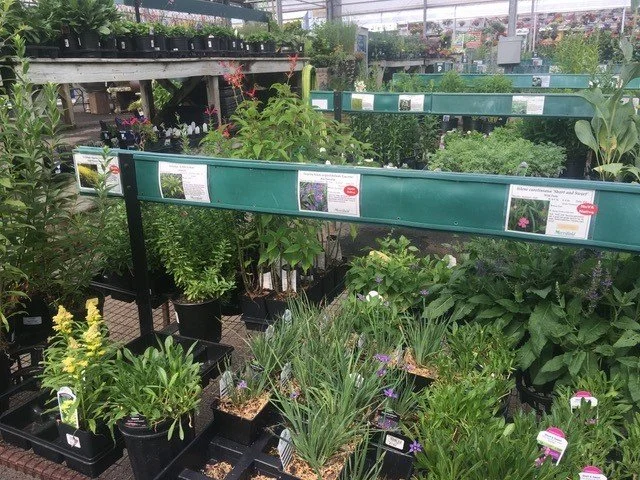
Photo: Native plants at a garden center, Margaret Fisher
Eileen Ellsworth
Are you hunting for a particular native plant, shrub, or tree? Any native plant seller near you is a terrific place to shop. A list of native plant sellers can be found on the Plant NOVA Natives website. Browsing a commercial garden center is also an option, so long as you understand how to read plant labels.
Finding natives in commercial garden centers can be challenging. Plant labels, excepting those that Plant NOVA Native volunteers have already tagged in red as “Native,” rarely offer much information and use terms that can be confusing. Here are some definitions and tips to help you find exactly what the biodiversity of the region needs.
Plant label definitions:
It’s helpful to group plant label terms into two groups: those pertaining to nature-made and those pertaining to human-made plants.
Nature-Made:
A straight species is a 100% nature-made group of similar plants that can interbreed and reproduce by seed.
A natural hybrid occurs in nature without human intervention between two native species.
A variety or form arises within one native species as a genetic mutation and causes certain distinctive traits to appear.
Human-made:
A cultivar is a strain of a specific, individual plant that growers produce in bulk for its desired commercial quality. These are usually (though not always) propagated from cuttings, which means that they are clones of each other. The name of the cultivar will be in single quotes, such as Rudbeckia fulgida ‘Goldsturm.’
A human-made hybrid or hybrid grouping is an individual plant or class of plants created by growers by crossing one species with another. They arise from similar yet complex breeding lines that all share a “hybrid” status. The scientific name on the label will include an “x” to designate hybrid status. It can be quite difficult to determine the exact lineage.
Buying tips:
Given the above terms, here are some tips on understanding plant labels before buying.
If the label provides the scientific name of a locally native species, including the genus and species, such as Monarda didyma, then this is the best choice for the local ecosystem. You can double check if a species is locally native by referencing the free Virginia Botanical Associates' Digital Atlas of Virginia Flora, which will not only advise if the plant is native to Virginia, but to northern Virginia as well. It could be the straight species, which is the most beneficial of all, or it could be a cultivar. If it is a cultivar, then it is a particular individual plant that the grower has cultivated in bulk by cloning for commercial sale. They are chosen for traits like size, color, resistance to mildew, etc. Cultivars differ from the straight native species. If the difference is only size, the cultivar will probably support wildlife well. But if the cultivar has altered the structure or color of flowers, native bees can’t access their nectar or perhaps recognize them as a source of food and shelter. Sometimes a cultivar changes the leaf color to red or purple, which also alters the plant’s chemistry. This can make them unsuitable as larval hosts for the butterflies, moths, and other insects that evolved to depend upon them. It’s best to use cultivars in locations distant from natural areas and only choose those that have not altered the straight native’s flower structure or color, fruit size, or leaf color.
If the label provides the name of a hybrid (with an X), then it is a cross between species, and the human-made version is not native, meaning you’re risking the introduction of a non-native species into the region. As you can see from the plant label definitions above, hybrids can arise in nature or be man-made. But commercial garden centers sell human-made hybrids because their growers want controlled uniformity and protection for their intellectual property. These plants must be cloned as they do not produce seeds, and only plants grown from seeds create genetic diversity and improve species’ resistance to climate change and other environmental stressors. Human-made hybrids will not improve the biodiversity of your property.
If the label provides only a brand name, then research would be needed online to figure out what it really is. It could be a cultivar or a hybrid.
The Plant NOVA Natives website has more information about plant label terms and buying tips. And you can always download our excellent Guide to Northern Virginia’s native plants to refine your shopping list of beautiful, straight-native plants.
A Closer Look: Nature All Around Us, April 2026
Judy Gallagher is an NVBA board member and a regular surveyor of local wildlife who also captures photos of what she sees, in particular the less common species.
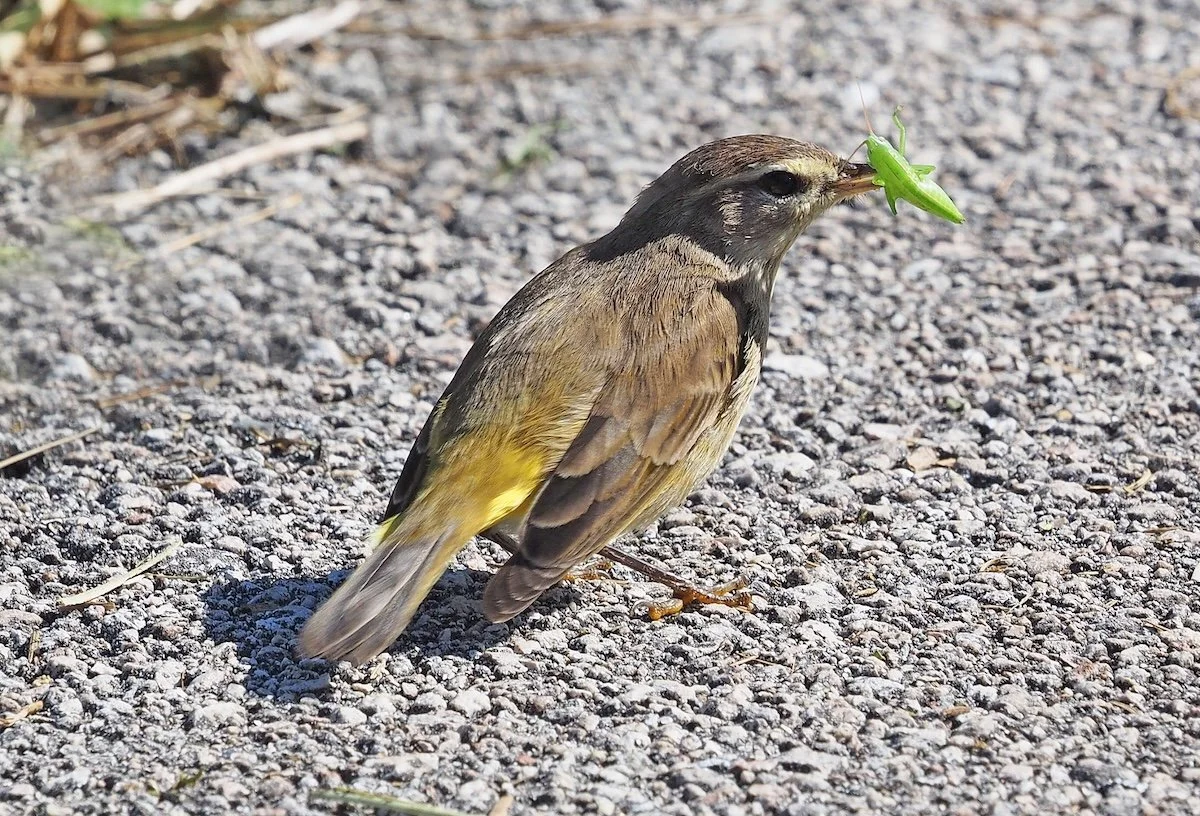
Photo: Palm Warbler with Katydid, Judy Gallagher
Judy Gallagher
April 2026
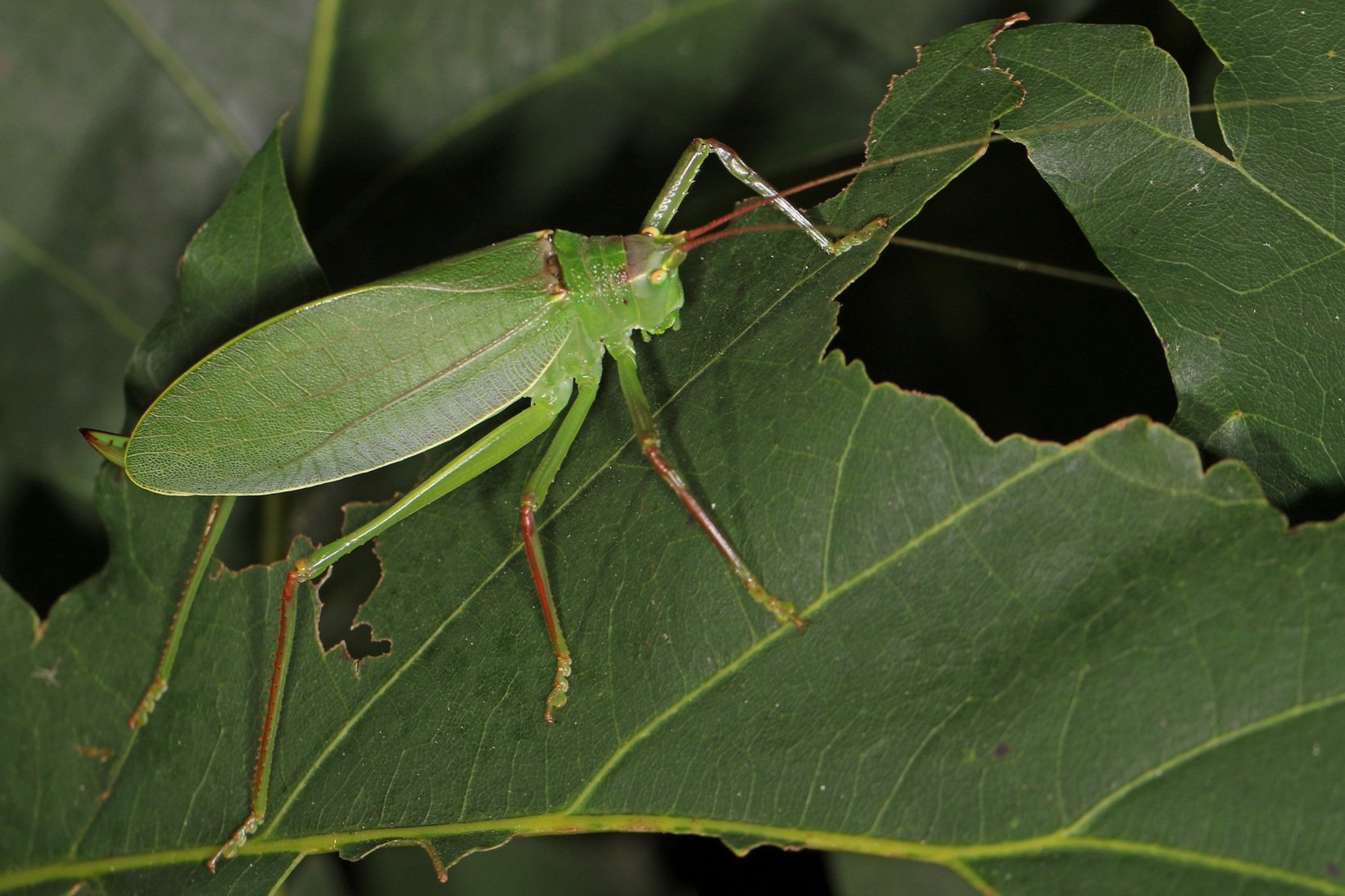
Common True Katydid, looking like a leaf. Photo: Judy Gallagher
I hear katydids more often than I see them. One reason for this is that many species are nocturnal, but many species are so well camouflaged that one doesn't always see them even when they are very close.
Katydids are named for the call of the Common True Katydid, whose males call "Ka-ty-did" when searching for a mate. But each species has its own song, and the songs are used for reproductive, territorial, aggressive, or defensive reasons. The males are usually the singers, but some females also produce sounds. The songs are produced by friction on special structures on the front wings. A few species pound on twigs, which produces vibrations that can be detected by other katydids.
Katydids are in the order Orthoptera, which also contains grasshoppers and crickets. Katydids hold their wings vertically over their body, have hearing organs on their legs, and have very long thin antennae that are often as long as their body. The antennae contain sensory receptors that facilitate them finding their way after dark.
There are around 6,400 species found worldwide, most of which are in the tropics, and approximately 270 species in the United States.
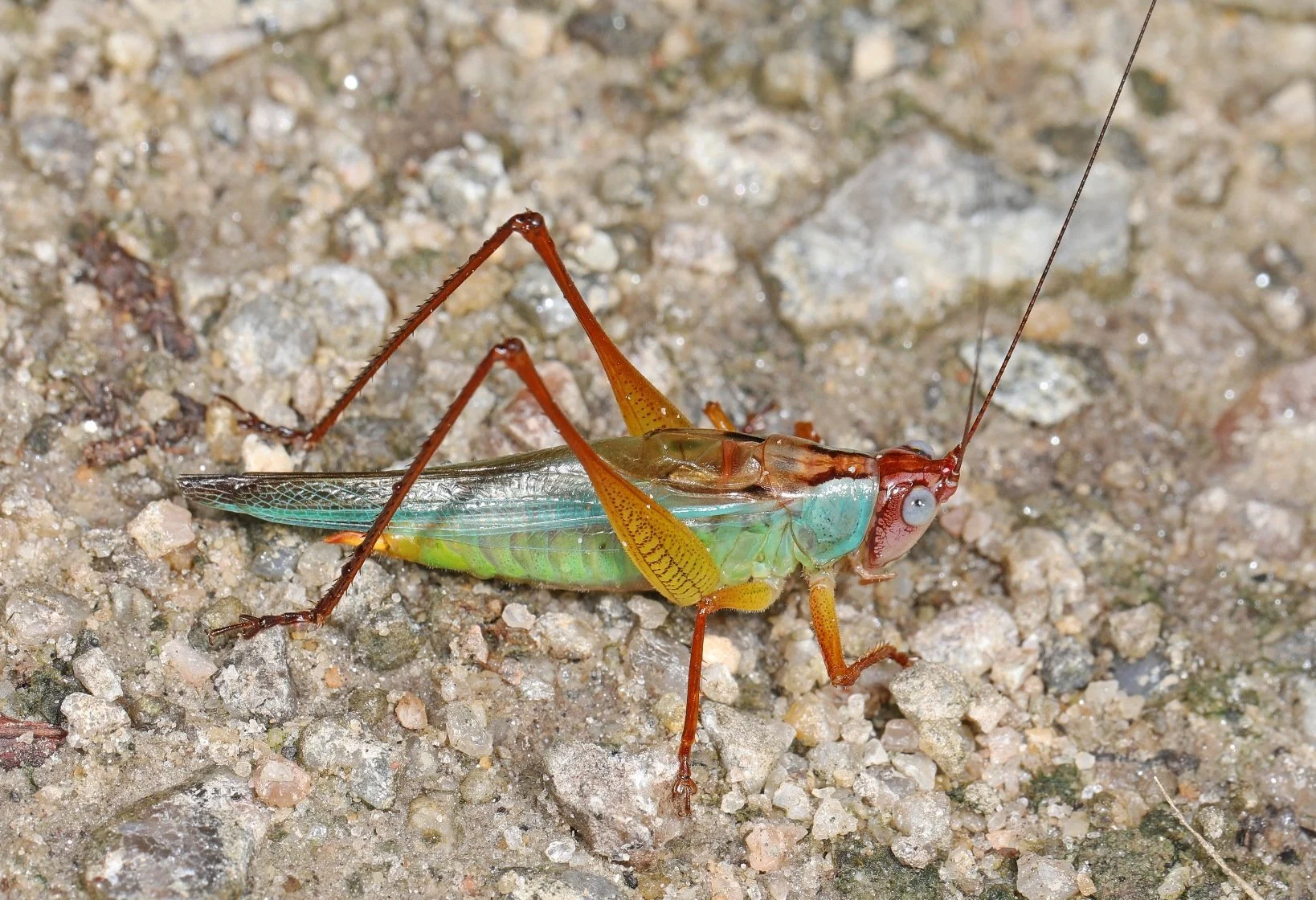
Handsome Meadow Katydid. Photo: Judy Gallagher
As I mentioned previously, most katydids are well camouflaged, but the Handsome Meadow Katydid is resplendent in a rainbow of colors. It shows up well against a gravel background, but it blends in surprisingly well in vegetation. Its genus is Orchelimum, from the Greek "meadow dancer," which aptly describes the way it moves around wet meadows.
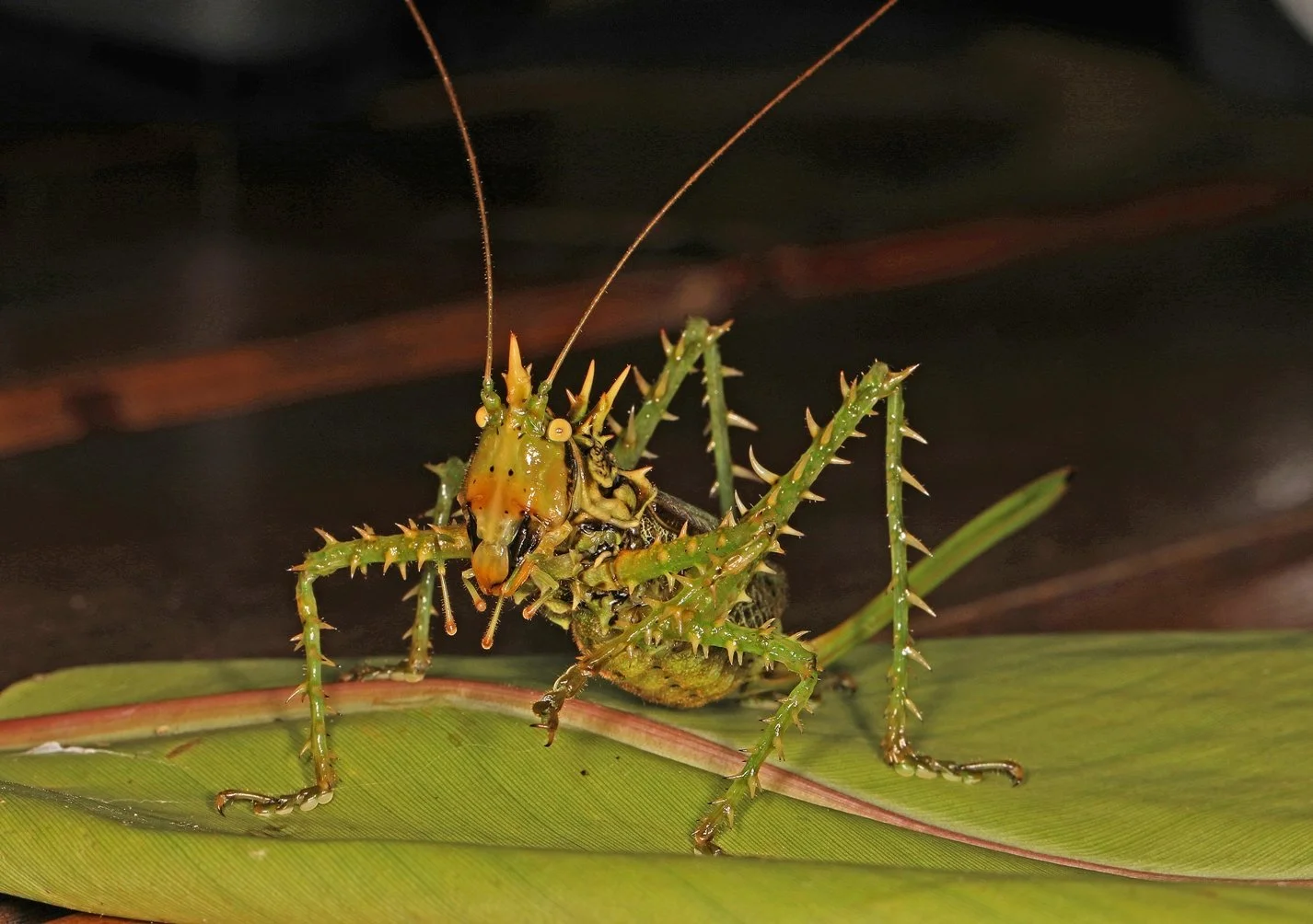
Spiny-devil Katydid, protected by sharp spines. Photo: Judy Gallagher
The spiny-devil katydids, found in Central and South America, easily blend into their environment, but they also have spines on their bodies, making it difficult for a predator to catch and eat them. When threatened, they can produce loud hissing sounds by rubbing their wings together, and they have strong mouthparts that can deliver a painful bite.
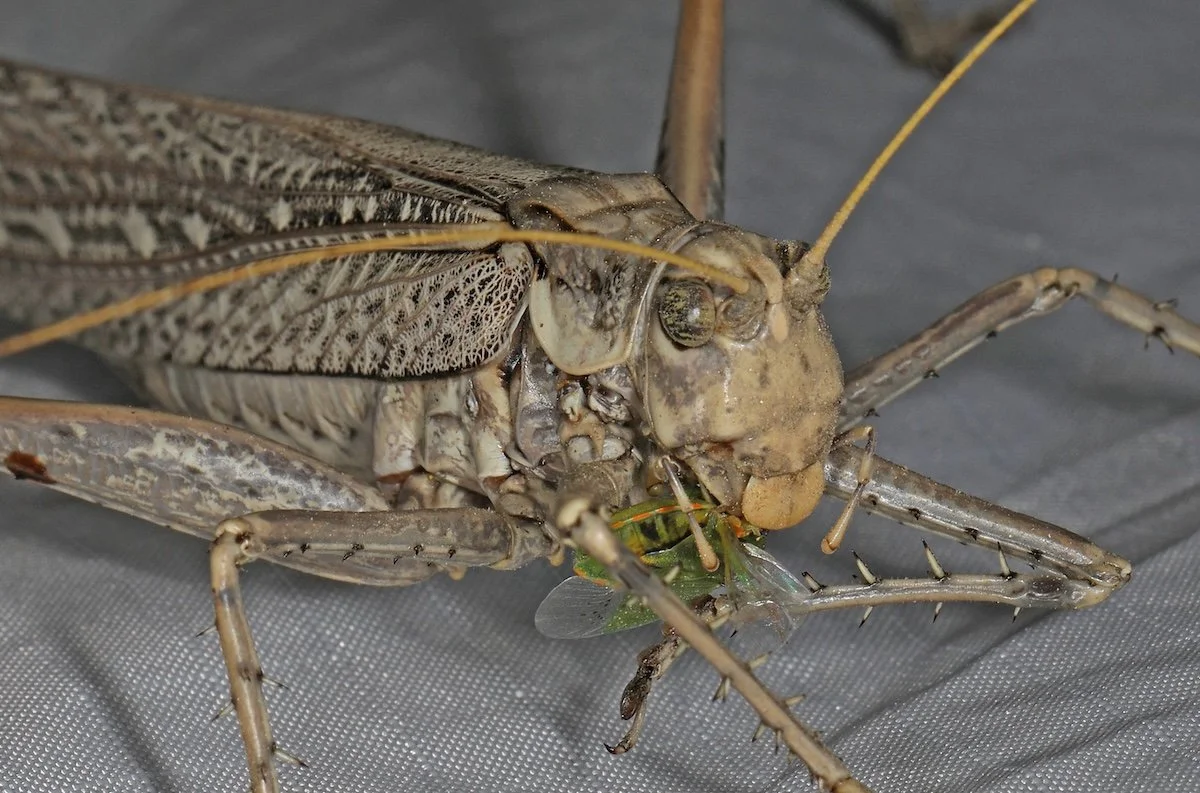
Sooty Long-winged Katydid with insect prey. Photo: Judy Gallagher
Some katydid species are omnivorous, eating whatever they can, and a few species are ferocious predators, but most katydids eat plants. Their populations are typically low enough that they don't cause extensive damage to plants, so they aren't usually categorized as plant pests.
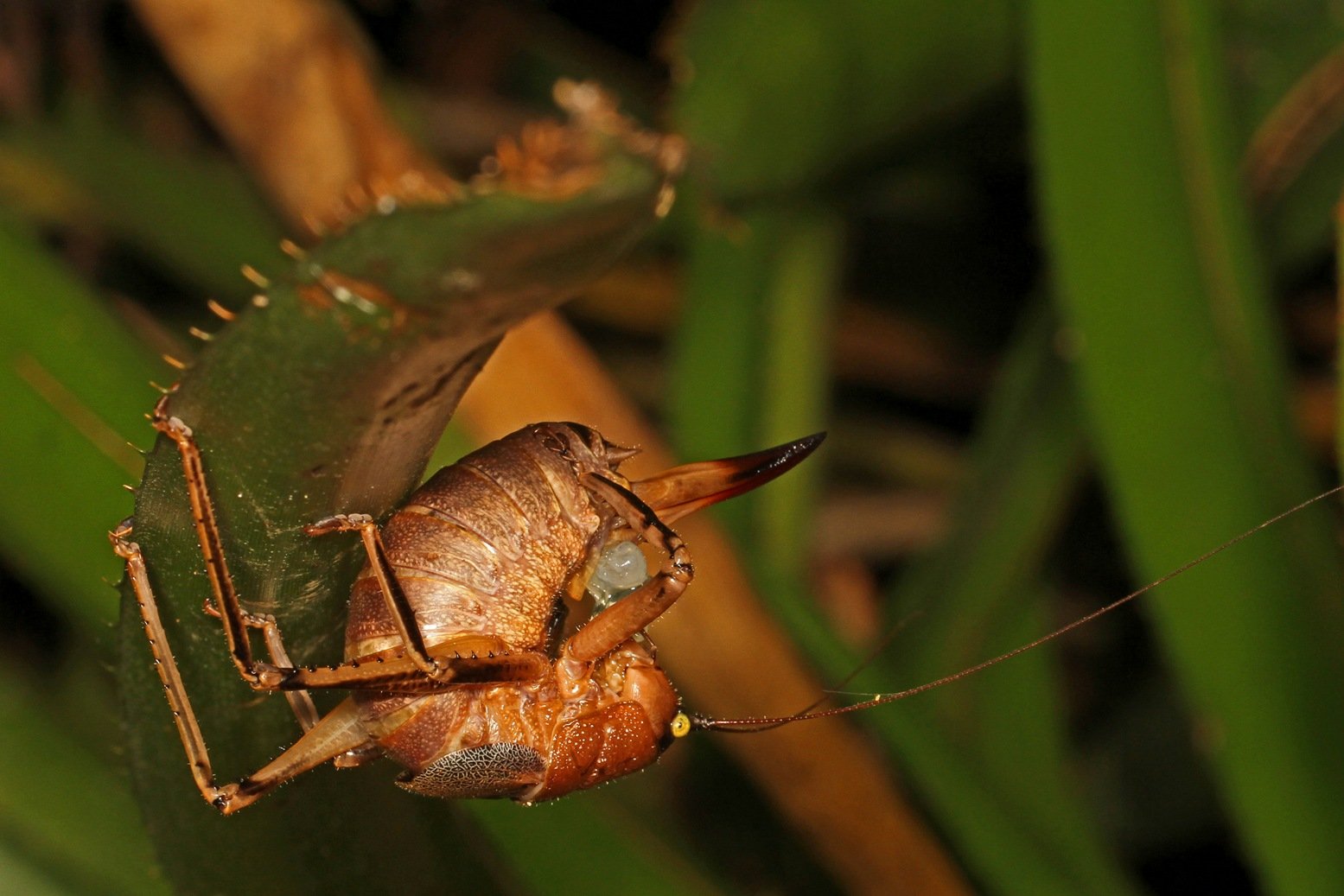
Female Shieldback Katydid with long ovipositor and nuptial gift (the jelly-like blob). Photo: Judy Gallagher
Female katydids tend to be larger than males, and they have a long ovipositor at the end of their abdomen suitable for laying eggs in plant stems or in the ground. When katydids mate, the males will sometimes provide a "nuptial gift," a sperm packet with additional protein that will help the female develop her eggs. Females prefer males that give such a gift, but it costs the male up to 40 percent of its body weight to provide it. Still, that could be worth it if it allows the male to have a greater chance of having offspring.
In our area, most katydids overwinter as eggs, which hatch in the spring. Katydids undergo incomplete metamorphosis, so the nymphs look pretty similar to the adults except they don't have wings. Nymphs typically molt five times before becoming a winged adult.
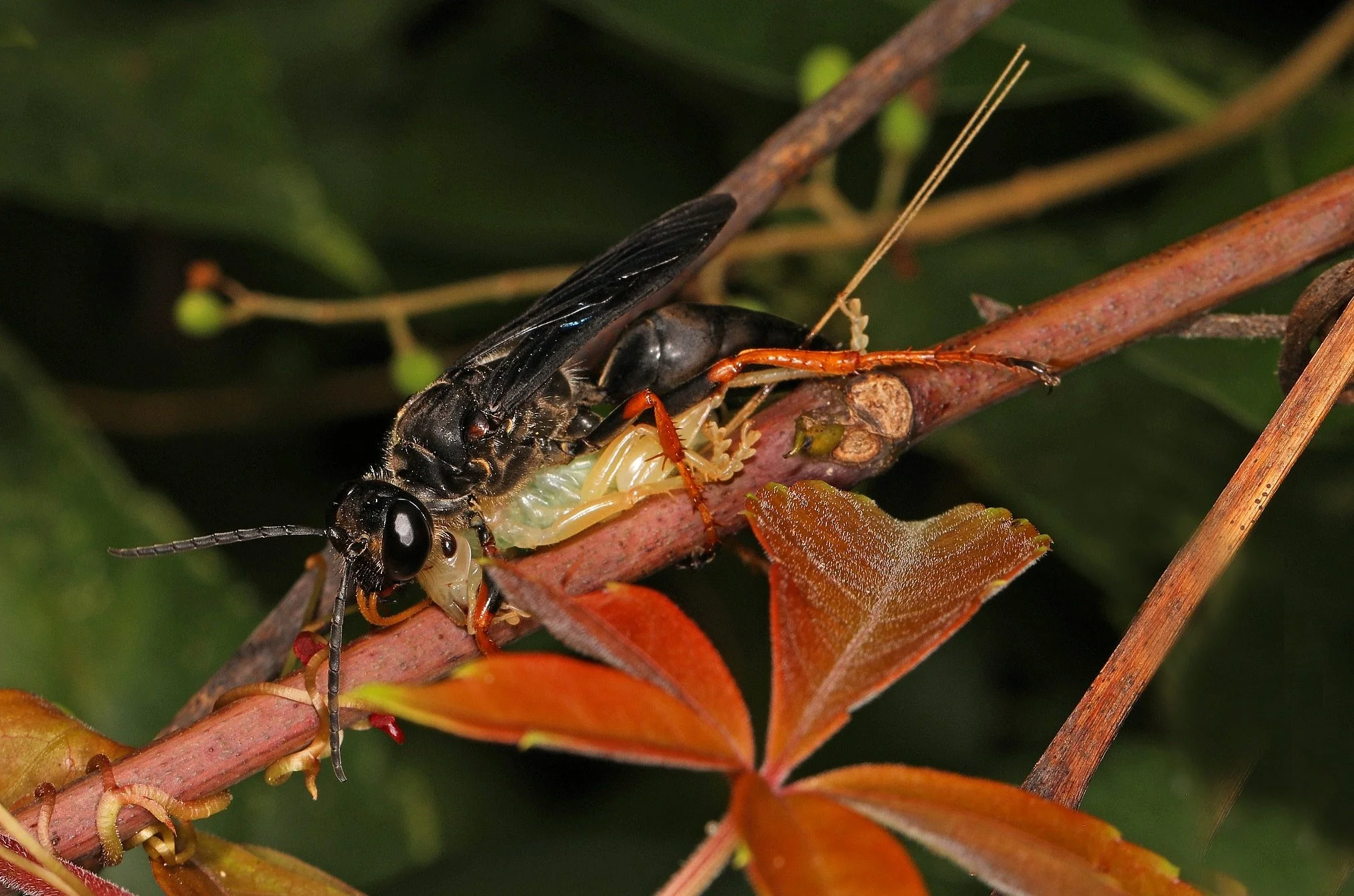
Katydid Wasp with prey (a cricket). Photo: Judy Gallagher
Katydids have a number of predators, including other insects. A thread-waisted wasp called the Katydid Wasp specializes in capturing katydids and crickets, paralyzing them and taking them to underground burrows to feed their young.
Palm Warbler with Katydid . Photo: Judy Gallagher
Bats prey on katydids, locating them by hearing their calls. Katydids also are a great food source for birds, including owls, bluebirds, kestrels and this Palm Warbler.
I'm looking forward to hearing and seeing Katydids soon. I hope you also see and hear them.
View more of Judy’s articles on A Closer Look: Nature All Around Us (formerly Observations from Meadowood).
Wildlife Sanctuary Almanac: Plant a Butterfly Nursery in the Shade
Everybody loves butterflies, but caterpillars can be less charismatic. However, without caterpillars, we don’t have butterflies.
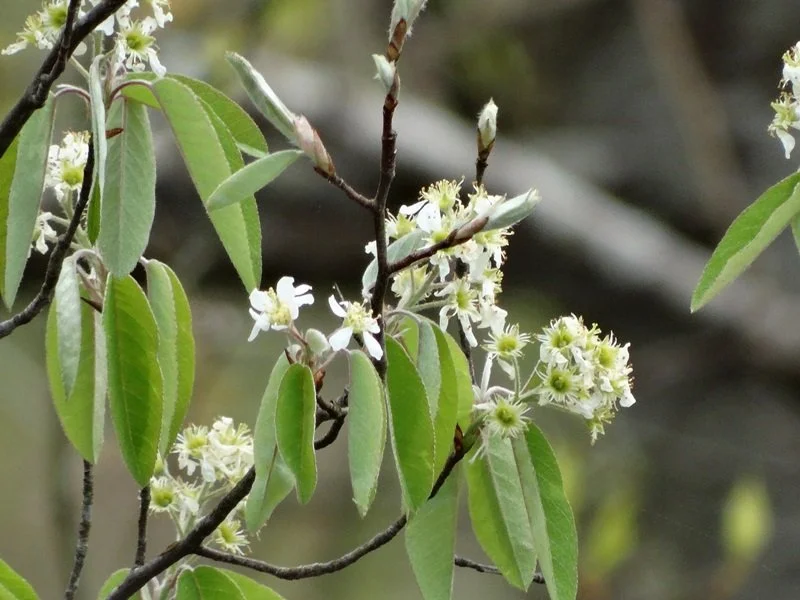
Photo: Canadian Serviceberry, USFWS/Southeast, Public domain, via Wikimedia Commons
Julie Udani
Once there was a client who hired a landscape designer to create a pollinator garden for her. It looked beautiful and she was very happy to see butterflies flitting around throughout the summer and fall. The next spring, though, she called the designer very upset. “Caterpillars have infested all my flowers,” she said, “I had to have them sprayed.” True story.
Canadian Serviceberry, a host plant for Summer Azure butterfly larvae. Photo: USFWS/Southeast, Public domain, via Wikimedia Commons
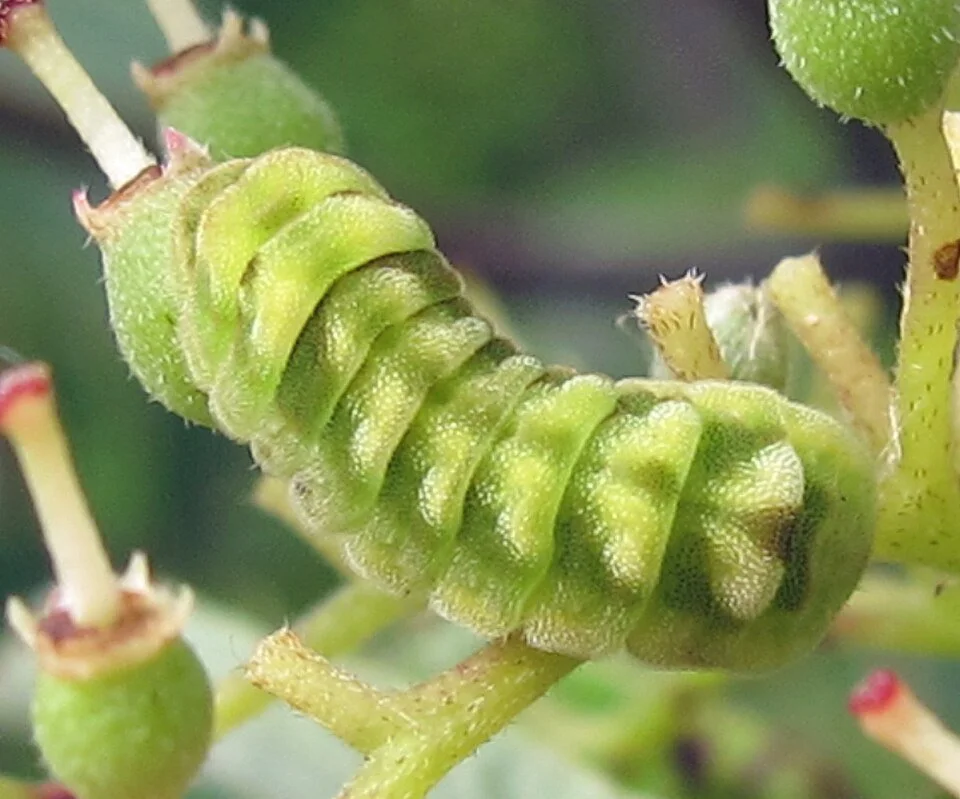
Summer Azure butterfly caterpillar. Photo: Jacy Lucier, CC BY-SA 4.0, via Wikimedia Commons
Everybody loves butterflies, but caterpillars can be less charismatic. However, without caterpillars, we don’t have butterflies. Caterpillars are important to birds, too. Baby birds don’t eat seeds and berries. Overwhelmingly, bird parents rely on caterpillars to feed their young. According to Doug Tallamy, a brood of nestling chickadees needs between 6,000 and 9,000 caterpillars to reach adulthood.
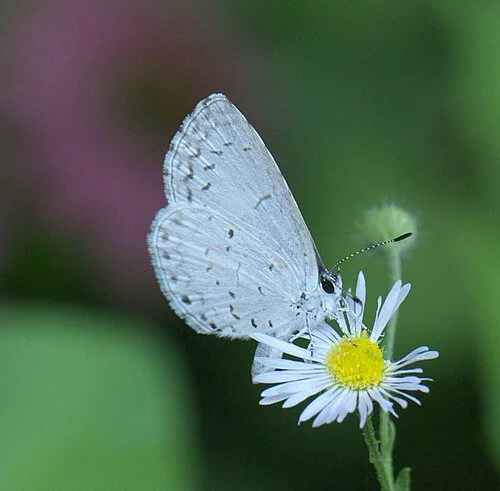
Summer Azure butterfly. Photo: xpda, CC BY-SA 4.0, via Wikimedia Commons
This is good news for those of us with shady yards who want to support pollinators. Instead of focusing on typical pollinator gardens, full of nectar-bearing flowers that need full sun, we can plant a butterfly nursery. Most butterflies can only lay their eggs on a small group of plants. Monarchs famously prefer milkweed, but other species of Lepidoptera prefer other species of plants. And many of these can grow in the shade.
Just a few examples include dogwood and serviceberry trees that host, respectively, the Summer Azure and Viceroy butterflies. Shrubs that are larval hosts include the spicebush (Spicebush Swallowtail), the mountain laurel (Brown Elfin), and the black chokeberry (Coral Hairstreak). And shade perennials can bloom in all seasons to make a gorgeous butterfly nursery garden. Spring bloomers include violets (Aphrodite Fritillary, Great Spangled Fritillary, Meadow Fritillary) and golden alexander (Black Swallowtail). Summer perennials include white turtlehead (Baltimore Checkerspot) and black cohosh (Appalachian Azure). Fall features white woods aster (Silvery Checkerspot) and blue woods aster (Pearl Crescent). Even most of the sedges are larval hosts.
Don’t leave the butterfly gardens to your neighbors. Welcome them into your shady yard - and the caterpillars, too!
Catch up on past Wildlife Sanctuary Almanac articles here.
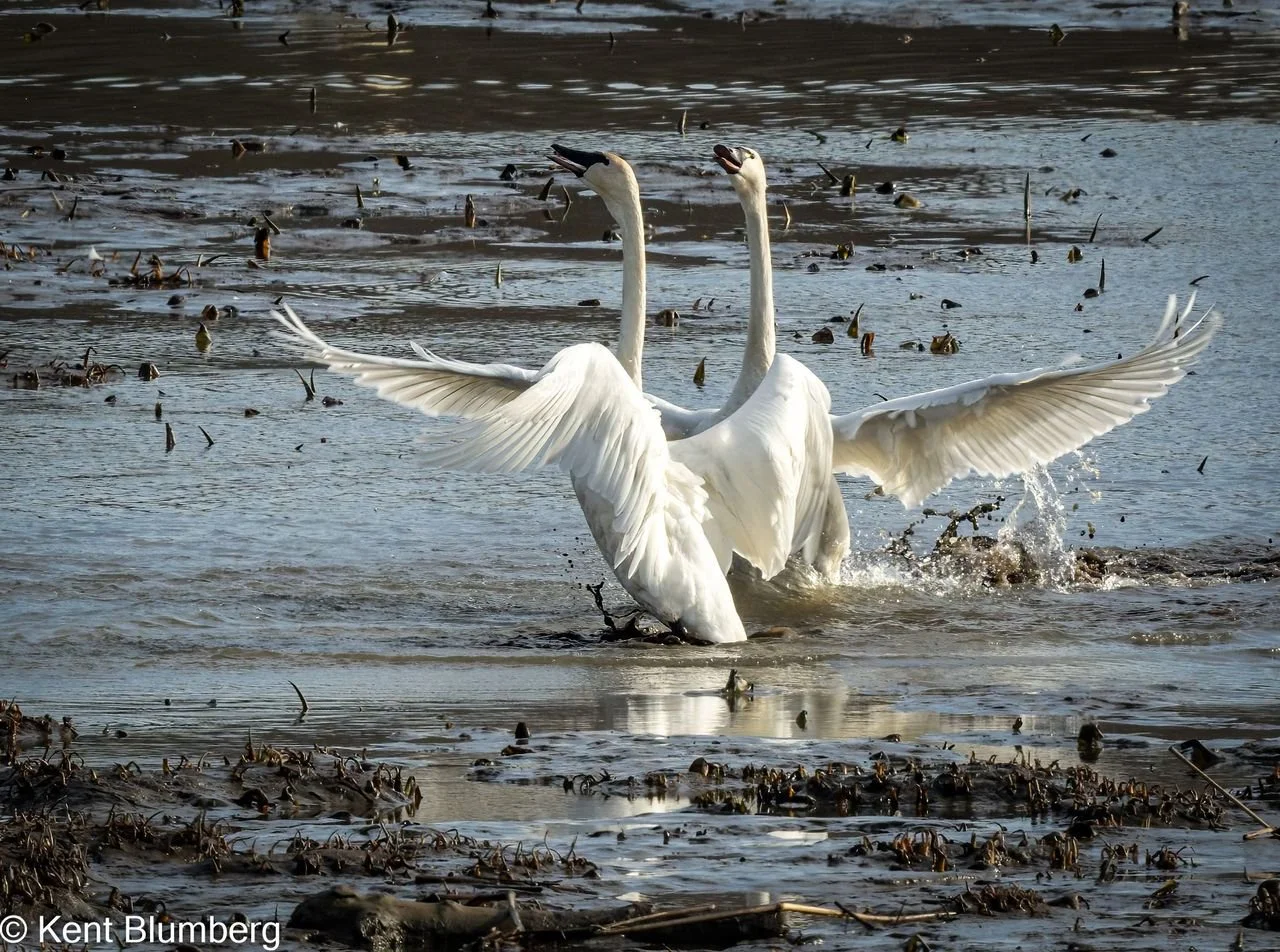
Tundra Swans
You still have time, if you’re lucky, to see one of our most spectacular winter visitors: the Tundra Swan. Hundreds of these graceful white birds spend the winter in the Chesapeake Bay and tidal Potomac from November through mid-March. When they gather in large flocks, the sight is unforgettable.
Photo: Tundra Swans, Kent Blumberg
Kent Blumberg
You still have time, if you’re lucky, to see one of our most spectacular winter visitors: the Tundra Swan (Cygnus columbianus). Hundreds of these graceful white birds spend the winter in the Chesapeake Bay and tidal Potomac from November through mid-March. When they gather in large flocks, the sight is unforgettable.
There are two native swan species in North America: the Trumpeter Swan and the Tundra Swan. Tundra Swans are far more numerous and are the species that winters with us.
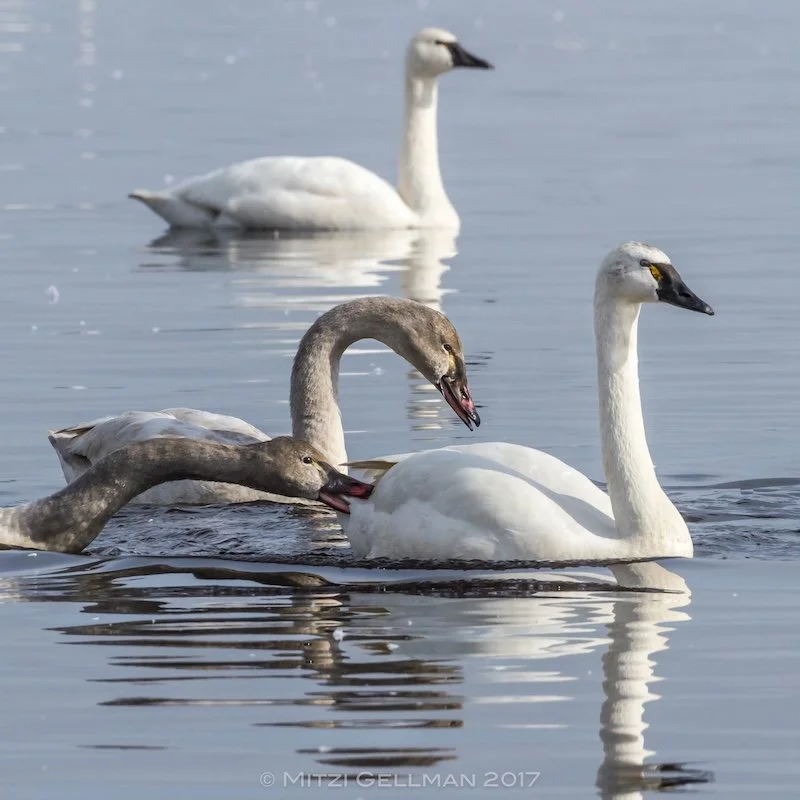
Tundra Swans. Photo: Mitzi Gellman/Audubon Photography Awards
Tundra Swans are large birds, weighing up to 20 pounds. They are 47 to 58 inches long with an impressive wingspan of six to seven feet. Their bodies are bright white, with black beaks and feet. Most adults have a small yellow spot on their bill near the eye, although this can vary. Juveniles are grayer, as if they forgot to wash after a long day playing outside.
Tundra Swans are dabblers, meaning they submerge their heads and necks to pull up underwater vegetation and roots.
They are monogamous, often courting for months before mating for life. Once paired, they usually stay together for life and migrate, feed, and raise young as a couple.
Breeding occurs in the far north of Canada and in western and northern Alaska. Each pair has one brood per year, incubating the eggs for 31 to 40 days. Cygnets are precocial, which means they can walk within hours of hatching. Their first flight is typically within 60 to 70 days. And that first flight is just a teaser for what’s to come.
In the fall, just before their breeding grounds freeze, family groups begin their long migration. They spread those huge wings and fly over 4,000 miles south and east to visit us. The journey can take nearly three months.
Swans begin to arrive here in November. This season’s first eBird report at Elizabeth Hartwell Mason Neck NWR was on November 13, 2025. At peak winter numbers, flocks can reach several hundred birds. One checklist on December 29, 2025, for example, counted 460 swans. I first saw them just one year before that, on December 29, 2024: a cold, sunny morning and a perfect way to end the year.
If you’d like to see them, check eBird for recent reports. Two trails often provide excellent viewing opportunities at Elizabeth Hartwell Mason Neck NWR. The Woodmarsh Trail is undulating and bumpy, with a large, covered viewing platform just over a mile from the parking lot. The Great Marsh Trail is paved, with an observation platform about three-quarters of a mile from the start. Try to visit around high tide, when the swans are more likely to gather where you can see them. Bring binoculars, a scope or a camera with a telephoto lens to get the best views.
If you miss this year, mark your calendar for late November and start watching eBird. The swans will be back.
You can read more about Tundra Swans on a number of Cornell Lab websites: eBird, All About Birds and Birds of the World. Another resource is the U.S. Fish & Wildlife Service, which chose the Tundra Swan as its February 2024 Bird of the Month.
Kent Blumberg is an MBA professor, passionate bird photographer and voracious reader.
The Latest on Avian Influenza
Spring migration is about to bring millions of birds north along the Atlantic Flyway, a welcome sight for Virginia bird-lovers emerging from a season of persistent cold and stubborn snowbanks. With these birds, concern is also returning about a bird flu outbreak that has been active in the U.S. since early 2022.
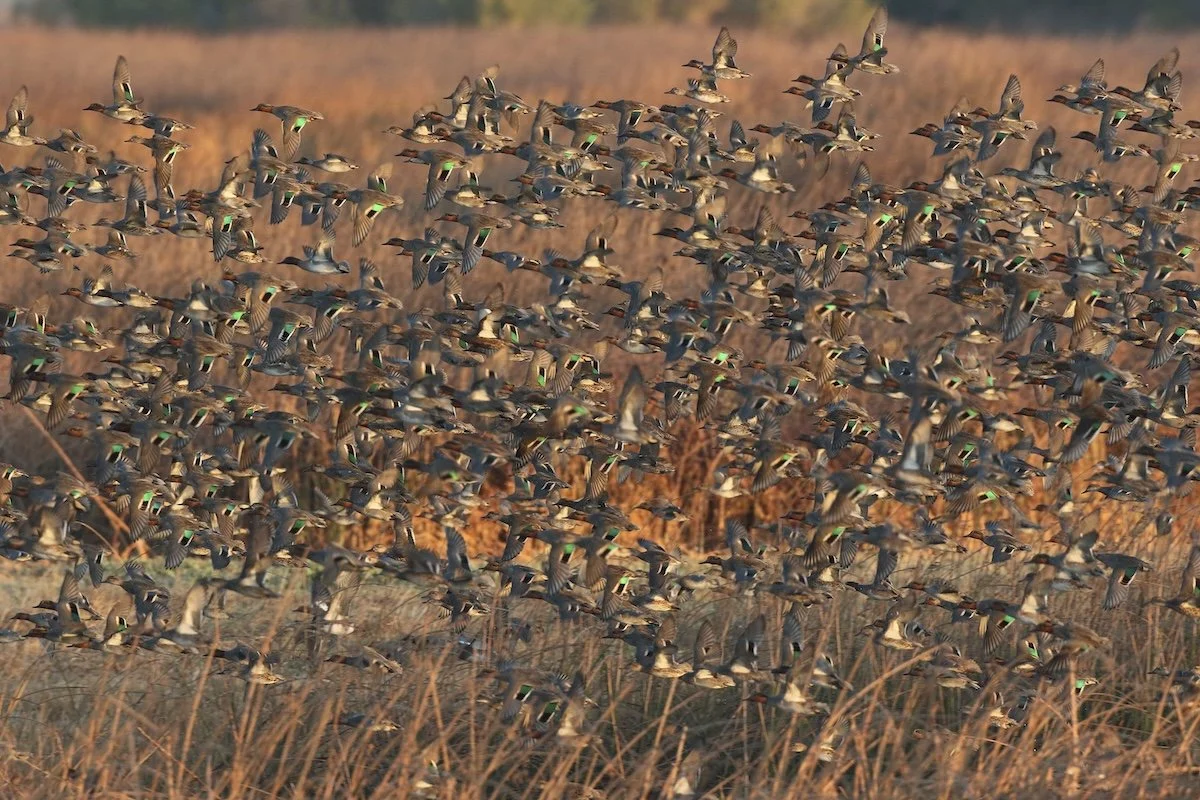
Photo: Green-winged Teal, Gary Zahm/Audubon Photography Awards
Brad Scriber
Spring migration is about to bring millions of birds north along the Atlantic Flyway, a welcome sight for Virginia bird-lovers emerging from a season of persistent cold and stubborn snowbanks. With these birds, concern is also returning about a bird flu outbreak that has been active in the U.S. since early 2022. Overall, the public health risk from the virus is low, but for certain animals and people who are likely to encounter infected birds, precautions remain important.
Bird flu, also known as avian influenza, is a broad term for illnesses caused by a family of viruses with varying impacts on different bird species. Wild aquatic birds are reservoirs for these pathogens, which means they often carry the germs but don’t get sick. Sometimes mutations and other changes in the virus populations circulating among these birds can create new strains that do cause severe symptoms or death for these host birds. Whether or not a strain makes an aquatic bird sick, the virus can be passed on and infect poultry flocks or wild land-based birds, which may have stronger reactions. Viruses are spread through direct contact or indirectly through saliva, mucus, or feces.
If you See a Sick or Dead Bird
Experts say not to handle sick or dead birds. If you must remove a carcass, wear protective gear (rubber gloves, a mask, and eye protection) and bury the dead bird or double bag it and place it in a secure, trash can to prevent scavengers from accessing it. Call the Virginia Wildlife Conflict Hotline at 855-571-9003 or email wildlifehealth@dwr.virginia.gov if you see:
Five or more dead vultures, waterfowl, shorebirds, or seabirds in the same area within five days
Sick or dead eagles, hawks, owls, or turkeys, excluding carcasses found on the road
Ten or more dead wild birds of any other species in the same area within five days
Suspected cases in backyard poultry flocks should be reported to the Virginia State Veterinarian’s Office at (804) 692-0601 or at vastatevet@vdacs.virginia.gov. You can also call the USDA toll-free at (866) 536-7593 to report suspected cases in wild or domestic birds.
Atlantic Flyway Wild Bird Infections
USDA tracking of wild bird infections shows that in the early weeks of 2026, a number of Canada Geese, Bald Eagles, crows, and Red-tailed Hawks have been found with bird flu in Fairfax County, Loudoun County, and Alexandria. Last fall, birds killed by hunters across Virginia tested positive across many species including Green-winged Teal, Ring-necked Ducks, Greater Scaup, Gadwalls, and Mallards.
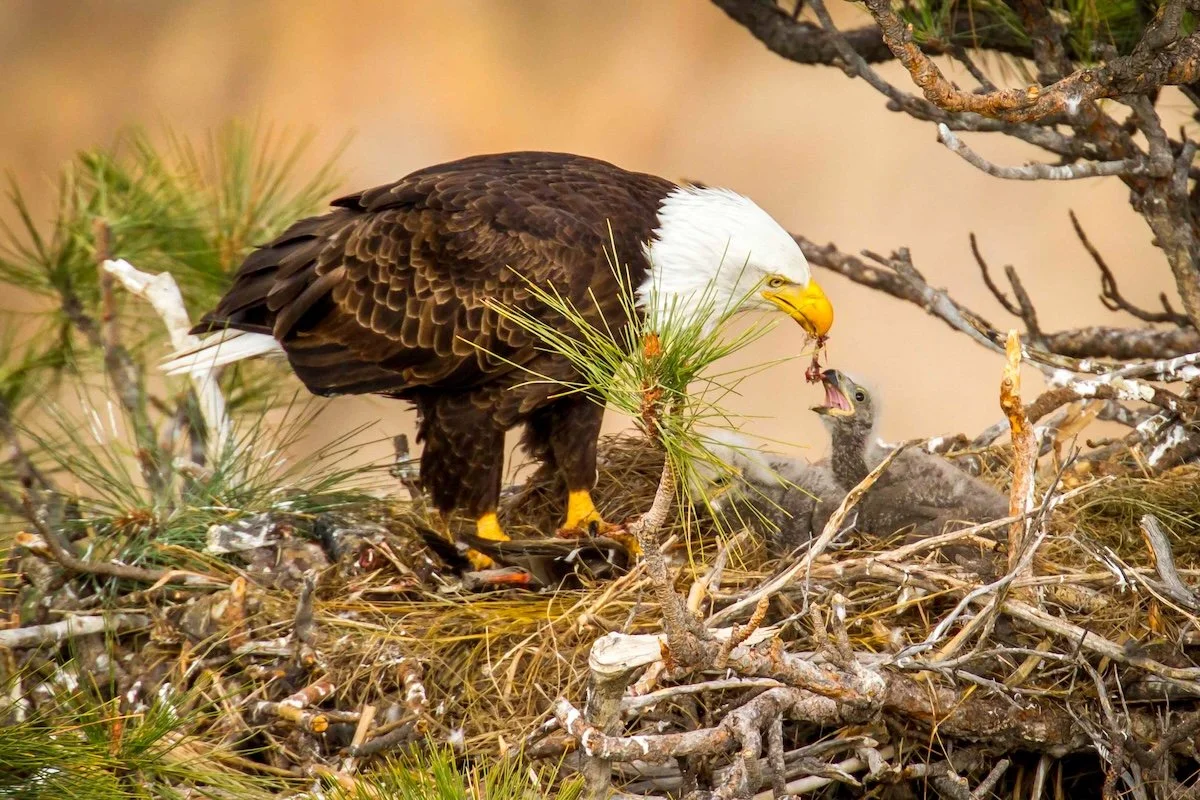
Bald Eagles. Photo: David Rein/Audubon Photography Awards
Predators and scavenger birds likely ingest the virus while feeding on infected waterfowl. Raptor infections are raising concern about the impact on population dynamics. Infected waterfowl deaths overlap with peak Bald Eagle nesting season from North Carolina to Florida and may be hindering breeding success and the recruitment of maturing birds into Bald Eagle mating populations. Some infected eagles have been observed dropping from their nests or have been found dead directly below active nesting sites.
High Risk to Farm and Backyard Poultry
Scientists tracking bird flu use the terms highly pathogenic avian influenza (HPAI) or low pathogenic avian influenza (LPAI) based on how aggressively a virus infects and kills chickens during lab testing. The virus of concern at the moment, known as H5N1, is an HPAI virus with significant risk to backyard and commercial poultry. According to an archived CDC article, the current H5N1 virus is descended from a virus that caused serious concern thirty years ago. A version of the H5N1 virus was found in domestic waterfowl in China in 1996 and caused an outbreak in poultry the following year, which eventually led to human deaths. After a lull, when cases were rarely detected, outbreaks returned in various parts of the world, eventually reaching North America.
Turkeys at a commercial facility in Indiana tested positive for the current strain in February 2022, one month after the first such infection was detected in wild birds in the United States. This broke a bird flu clean streak for the country, which had detected no infections in commercial poultry since 2020, and none in wild birds since 2016. Almost 200 million poultry have been affected since that 2022 detection, touching every state and Puerto Rico. A total of 1,137 backyard flocks and 943 commercial flocks have seen cases.
Hardest hit for the overall outbreak has been Iowa, where more than 30 million birds have been affected, but in the past month, Pennsylvania has seen the highest numbers nationwide. More than 7 million Keystone State birds have been affected in the past month, most of which were commercial egg layers in Lancaster County. The outbreak is a major reason that egg prices have soared in recent years.
Birdfeeders Are Okay, Unless You Raise Chickens
Unless you have backyard poultry, experts say there is no need to remove birdfeeders, although keeping them clean and hygienic is good practice.
The risk of a songbird passing the virus to another songbird is small. They are less likely to carry the virus than water birds and less likely to become infected if exposed. However, because chickens and other poultry are extremely susceptible to infection and contagion from this strain of flu, even a rare instance of a sick bird visiting a feeder where poultry are present could put the resident backyard flock in danger.
Spread to Other Animals
The USDA tracks cases of HPAI infections in mammals of all species. It has occurred in lions, tigers, and bears, among others. Mice and rats, minks and lynx, seals and dolphins, and other animals have been found to carry the virus. Cattle are of particular concern, and the USDA has found more than 1,000 infections across 19 states, mostly in the west, but also as close as North Carolina and Ohio.
In our area, three foxes in Loudoun County tested positive in 2025, as did a black bear found in North Carolina in 2022. In Pennsylvania, foxes have also tested positive for the virus, and in March of 2025, a domestic cat was found to be infected.
Cats, like raptors, can be exposed to the virus by eating infected birds. They can also catch it from eating raw milk, meat, or poultry, or exposure to infected farm animals or humans. Early symptoms include fever and lethargy, progressing to difficulty breathing, lack of coordination, and seizures. Up to 70 percent of infected cats die from the illness.
Spread to Humans Mostly Among Food Industry Workers
The CDC is actively tracking the bird flu, and has found 71 cases of the disease in humans, with two fatalities. Almost all of these cases have been among dairy and poultry industry workers, with the highest concentrations along the west coast. Veterinarians also risk coming into contact with infected animals and should take precautions.
The overall current public health risk is low, and there have been no cases of person-to-person spread.
Brad Scriber is an Arlington-based writer, researcher, and bird buff.
Invasive Plant Legislation Moves Forward in the Virginia Legislature
The Virginia legislature appears to be intent on taking steps to slow the environmental and economic harm that invasive plants are causing. State legislators introduced seven bills relating to invasive plants in the 2026 legislative session, and all of them are proceeding through the legislative process.
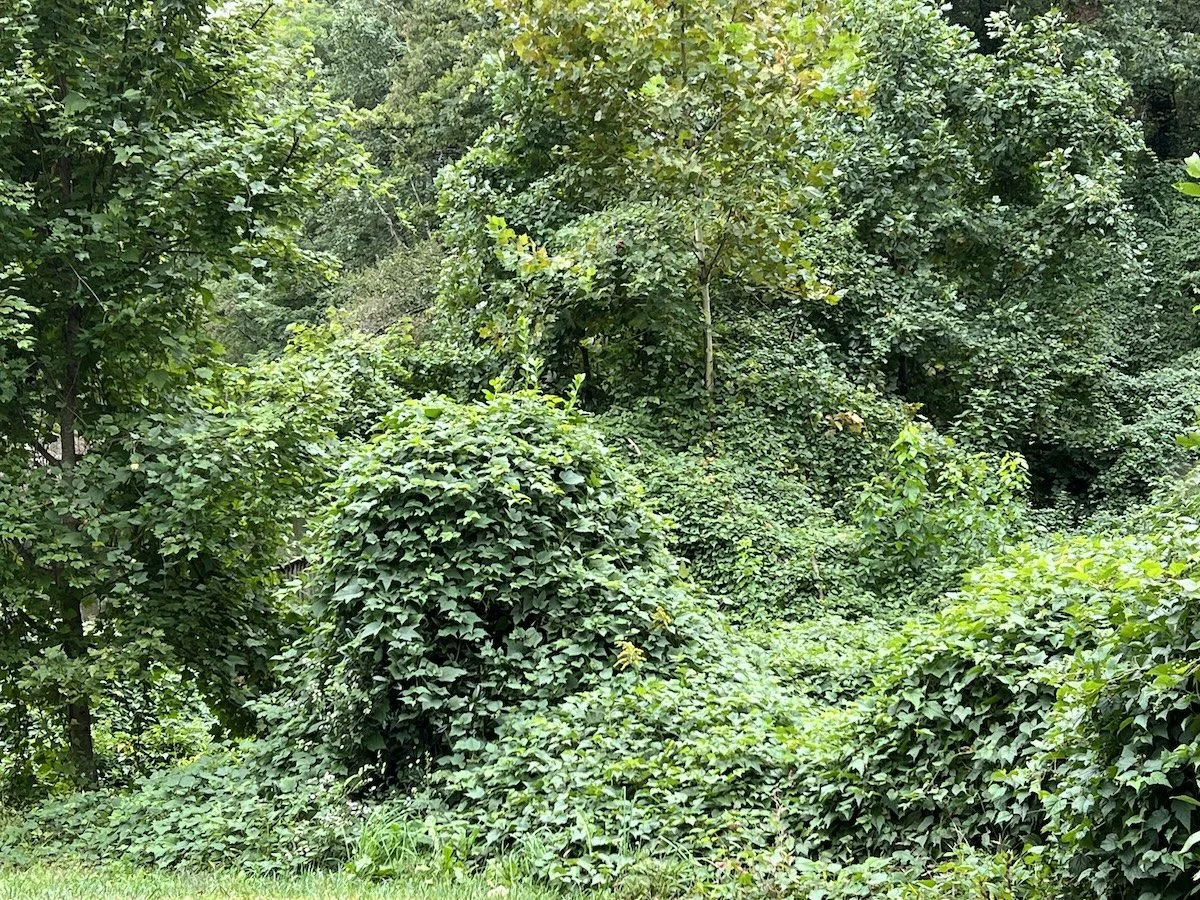
Photo: Invasive vines, Valerie Morgan
Tom Blackburn
Anyone who walks in local parks or drives the highways can see invasive plants overwhelming trees, shrubs and meadows. Invasive plants are estimated to cost the state $1 billion per year. I am pleased to report that the Virginia legislature appears to be intent on taking steps to slow the environmental and economic harm that invasive plants are causing. State legislators introduced seven bills relating to invasive plants in the 2026 legislative session, and all of them are proceeding through the legislative process.
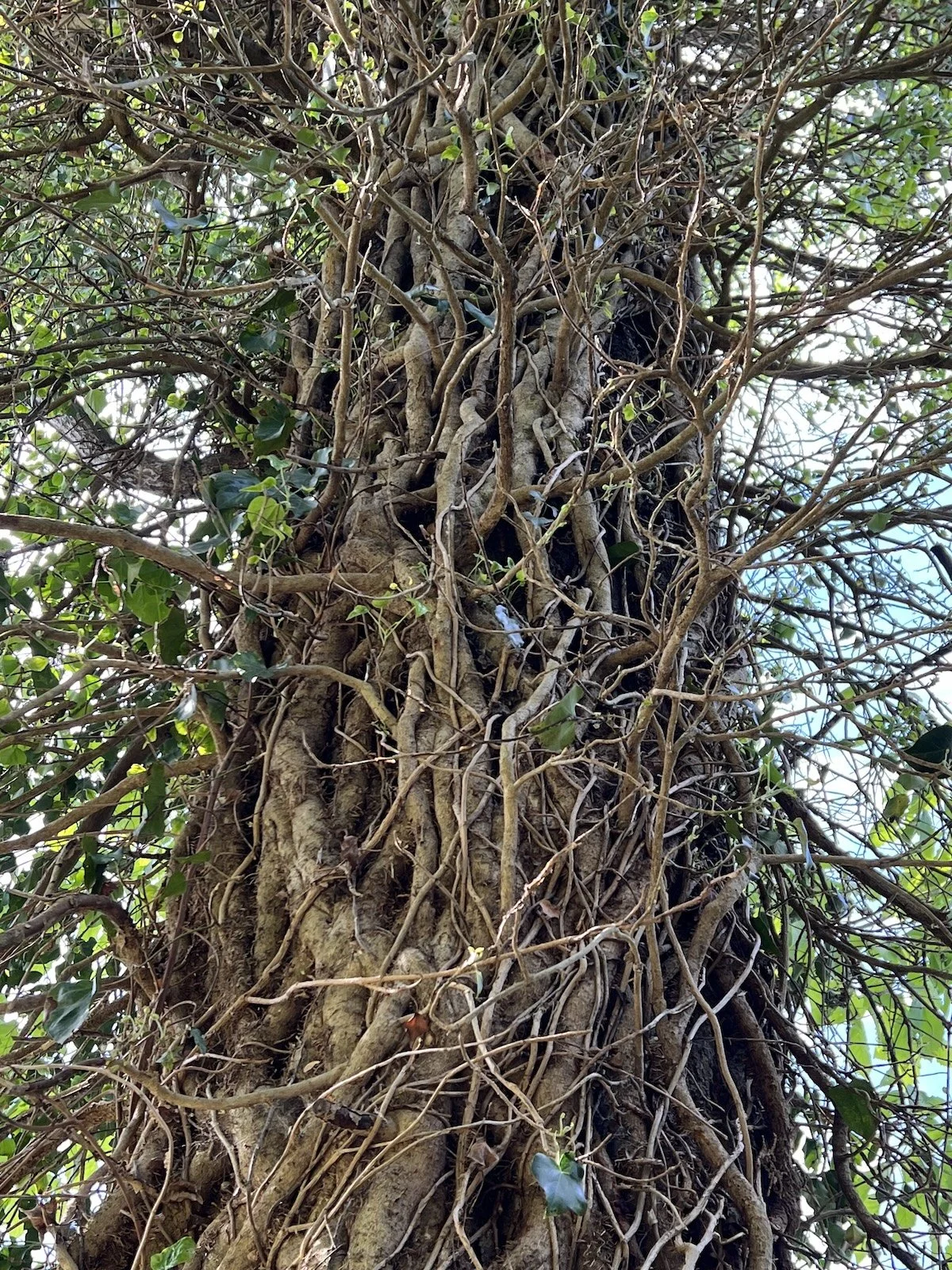
Invasive vines smothering a tree. Photo: Valerie Morgan
Local government control of invasive plants: House Bill 388 and Senate Bill 89 are essentially identical bills that would permit local governments that have established service districts to use tax revenues to control the spread of plants on the state’s list of invasive plants. The House and Senate each has passed its bill by unanimous vote, meaning that it is virtually certain that the bills will be consolidated and sent to the Governor for signature. Congratulations to the Fairfax Invasive Removal Alliance, which first championed this bill and convinced other environmental organizations to support it.
Ban on selling state-designated noxious weeds: Current law allows retailers to sell plants included on the state list of noxious weeds, even though they are the most destructive of the invasive plants, if they are commercially viable. As introduced, House Bill 109 would have banned the sale of noxious weeds outright. However, the House passed the bill by a vote of 96 to 2 with an amendment that phases in the ban over two years for grasses, forbs, and vines; four years for shrubs; and seven years for trees. The Senate Agriculture, Chesapeake and Natural Resources Committee reported the bill to the Senate, where it is awaiting final action.
Ban on invasive plants along state highways: House Bill 88 would prohibit the Commonwealth Transportation Board and Commissioner of Highways from planting any plant on the state list of invasive plants along any state right-of-way. As introduced, the bill would have required the state to establish a plan for the removal of all invasive plants from the right-of-way, but that provision was removed from the bill before the House passed it by a unanimous vote. Two Senate committees have reported the bill unanimously, and it is now pending before the full Senate.
Civil fines for failing to notify landowners before planting invasive plants: House Bill 710 and Senate Bill 383 are essentially identical bills that establish civil penalties for tradespeople who propose or install plants listed on the state’s invasive plant list without first notifying the property owner in writing. The House bill passed with only two dissenting votes and the Senate bill passed unanimously. It is virtually certain that a consolidated bill will be sent to the Governor for signature.
Volunteers’ using herbicides on state property: In the last session of the General Assembly, the legislature passed and the Governor signed legislation permitting volunteers under supervision of a certified applicator to use herbicides on property owned by local governments. Senate Bill 163 would expand that law by making it applicable to state-owned property. The bill passed the Senate by unanimous vote and the House Agriculture, Conservation and Natural Resources Committee has voted unanimously to send the bill to the full House for a vote.
Next steps: House Bills 88 and 109 must be passed by the Senate and Senate Bill 163 must be passed by the House before they can be sent to the Governor for signature.
A big thank you to the 28 members of NVBA’s Advocacy Committee and other NVBA members who have agreed to write to their delegates and senators to support environmental legislation. We will continue to write to our legislators about these three bills and other bills that preserve and enhance our environment.
This story was updated on Wednesday afternoon, February 25. For further developments on the bills, go to the Virginia Legislative Information System and type the bill number into the search box identifying the chamber (HB or SB) and the bill number.

The I-95 Landfill’s Becoming ‘Birdy’
Few people find visiting a landfill enticing, but some of our avian friends do. Grassland and other birds are using a closed portion of the I-95 landfill, according to a recently released Fairfax County report.
Photo: No-mow Area, Glenda Booth
By Glenda C. Booth
Reprinted with Permission of the Connection Newspapers
50-acre no-mow grassland provides sanctuary for some bird species of concern.
Few people find visiting a landfill enticing, but some of our avian friends do.
Grassland and other birds are using a closed portion of the I-95 landfill, according to a recently released Fairfax County report.
In 2024, at the urging of the Northern Virginia Bird Alliance and with the Board of Supervisors’ support, landfill managers designated 50 closed acres of the 500-acre landfill as a “no-mow” zone. The managers agreed to avoid mowing during grassland birds’ nesting season and to raise mower blades to an eight-inch height when they did mow.
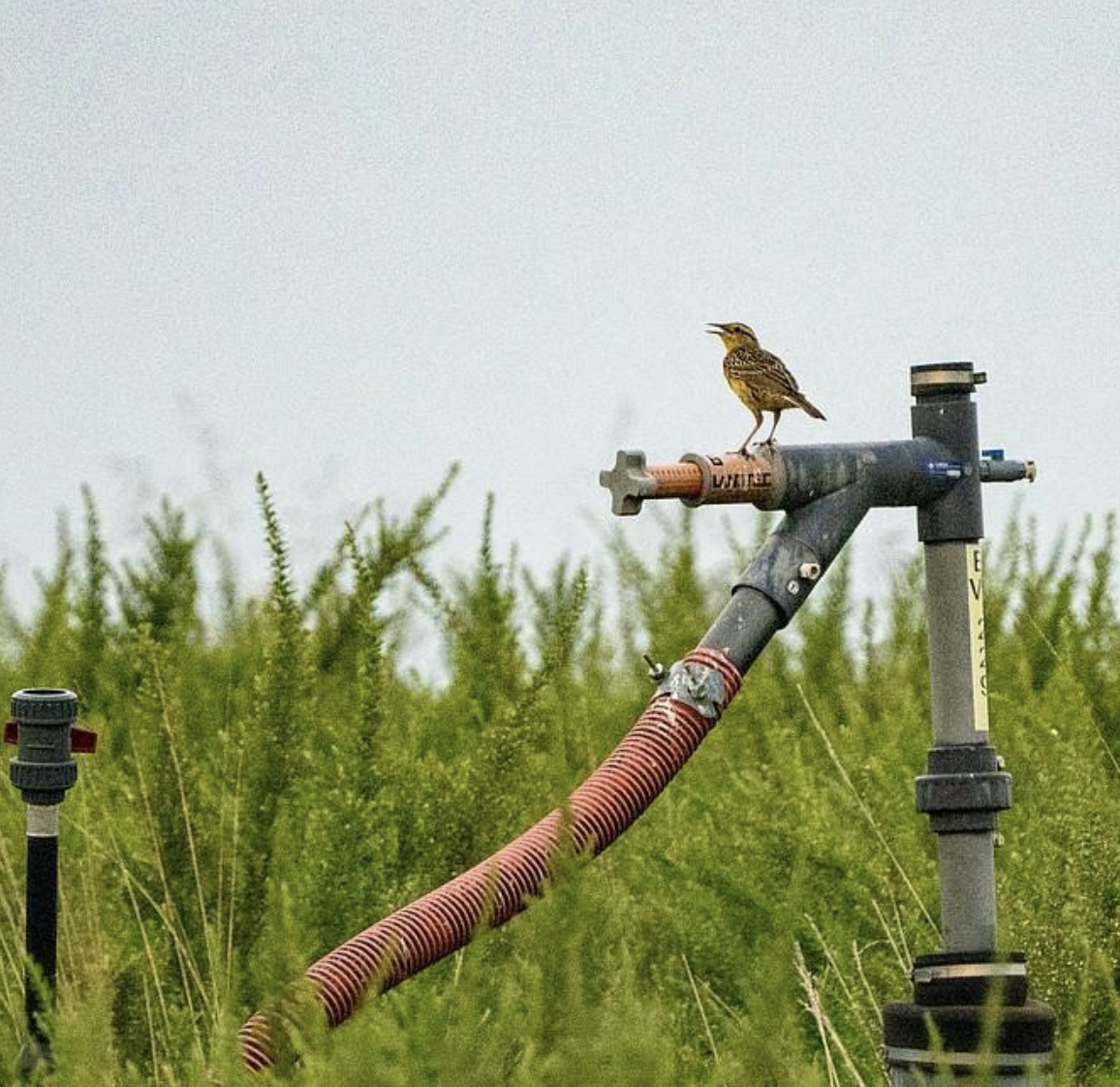
The no-mow zone continues to provide critical habitat during the peak breeding and nesting season, attracting birds like the Eastern Meadowlark, above, and Grasshopper Sparrow. Photo Courtesy of Fairfax County Department of Public Works.
County officials concluded, based on 2024 and 2025 surveys, that “overall observations confirm that the no-mow zone continues to provide critical habitat during the peak breeding and nesting season.” County staffer Kimberly Lewis wrote, “The eastern meadowlark and grasshopper sparrow, among other species, are thriving on a 50-acre meadowland atop the landfill.”
By modifying and reducing mowing, the area is in effect a grassland, albeit not a natural one. The project sought to determine which grassland birds are using the area and how.
In 2025, Blair Evancho, a county intern, staffers and volunteers conducted weekly bird surveys from May 1 to July 12 and recorded all bird species observed. They confirmed 40 bird species in this area in 2025, including four species of regional or continental concern: chimney swift, grasshopper sparrow, eastern meadowlark and bobolink. “Notably, the grasshopper sparrow, a grassland nester experiencing regional population declines, was the most detected species,” notes the county’s report. In 2024, surveyors confirmed 29 bird species.
“The County’s monitoring efforts show that the I-95 Landfill Complex continues to provide meaningful habitat for grassland birds, including several species of conservation interest,” commented Duane Wright, Director, Solid Waste Management Program. “These findings reflect our commitment to thoughtful land management that supports both environmental stewardship and long-term site care.”
“On survey days, at least one Northern Virginia Bird Alliance (NVBA) volunteer helped,” NVBA President Libby Lyons said. “We commend the County for this approach and hope this project can serve as a role model for other landfills in taking such important conservation steps,” she said.
According to the 2025 report, one glitch was “unanticipated mowing on three days in June during work on a new solar field next to the no-mow zone, which created “a noticeable decline in bird activity on those dates.” The report indicates that this mowing “conflicted with the established protocol, which prohibits mowing in the no-mow zone during the April-September breeding season, except when required for access to monitoring wells.”
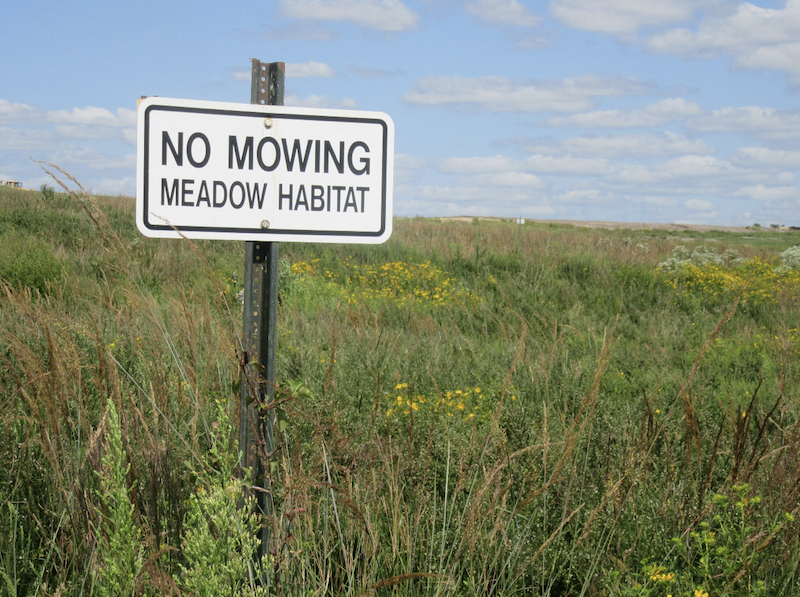
No-mow area. Photo: Glenda Booth
Grassland Birds
Grassland birds rely on grassland habitats for nesting and many species have seen marked drops in numbers. Since 1970, grassland birds have declined by 43 percent, concluded the 2025 State of the Birds report by the North American Bird Conservation Initiative. The main driver is habitat loss.
Most of the eastern United States’ natural grasslands are gone. These birds typically do not use other habitats. In Virginia, since the European colonists’ arrival in the 1600s, only a fraction of the state’s grasslands remains. “It may be less than .0001 percent,” according to biologist Justin Folks, quoted on the Virginia Outdoors Foundation’s website.
“The landfill has the largest patch of grassland in eastern Fairfax County,” ornithologist Greg Butcher said in our 2024 Connection article. Landfill managers usually put a cover on closed landfills and plant grasses to stabilize the surface.
Wright concluded, “By maintaining a clearly defined seasonal no-mow period, the County is able to support important nesting and foraging activity while also ensuring the landfill remains well maintained and protective of the environment. This balanced approach allows us to responsibly manage closed landfill areas while recognizing their value as part of the region’s broader ecosystem.”
Help Rescue Fairfax County Trees
Celebrate the end of winter by helping Fairfax Tree Rescuers clip invasive vines and dig up invasive plants to save trees!
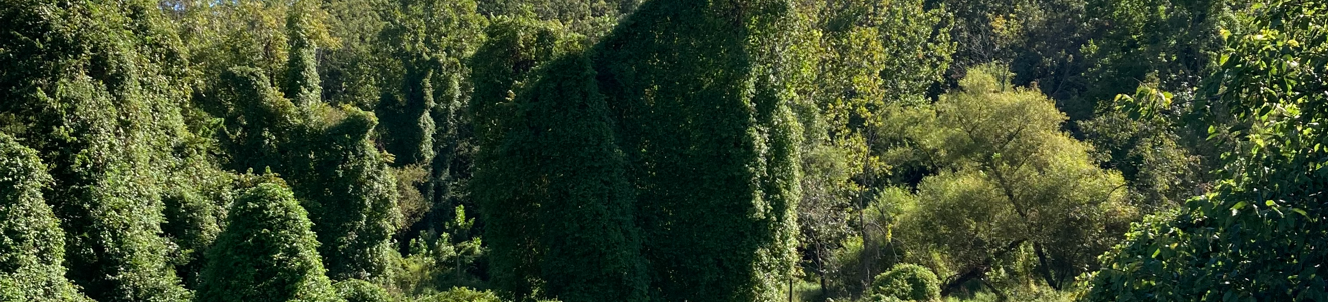
Photo: Invasive vines on trees, courtesy of Fairfax Tree Rescuers
Margaret Fisher
Fairfax Tree Rescuers PRISM (Partnership for Regional Invasive Species Management) has organized a Spring Tree Rescuer Extravaganza, with events scheduled March 21 - April 12. Participants are encouraged to celebrate the end of winter by getting out in the fresh air to clip the invasive vines or dig up other invasive plants. Registration is required. Keep checking the website listed above as more events are scheduled.
A Closer Look: Nature All Around Us, March 2026
Judy Gallagher is an NVBA board member and a regular surveyor of local wildlife who also captures photos of what she sees, in particular the less common species.
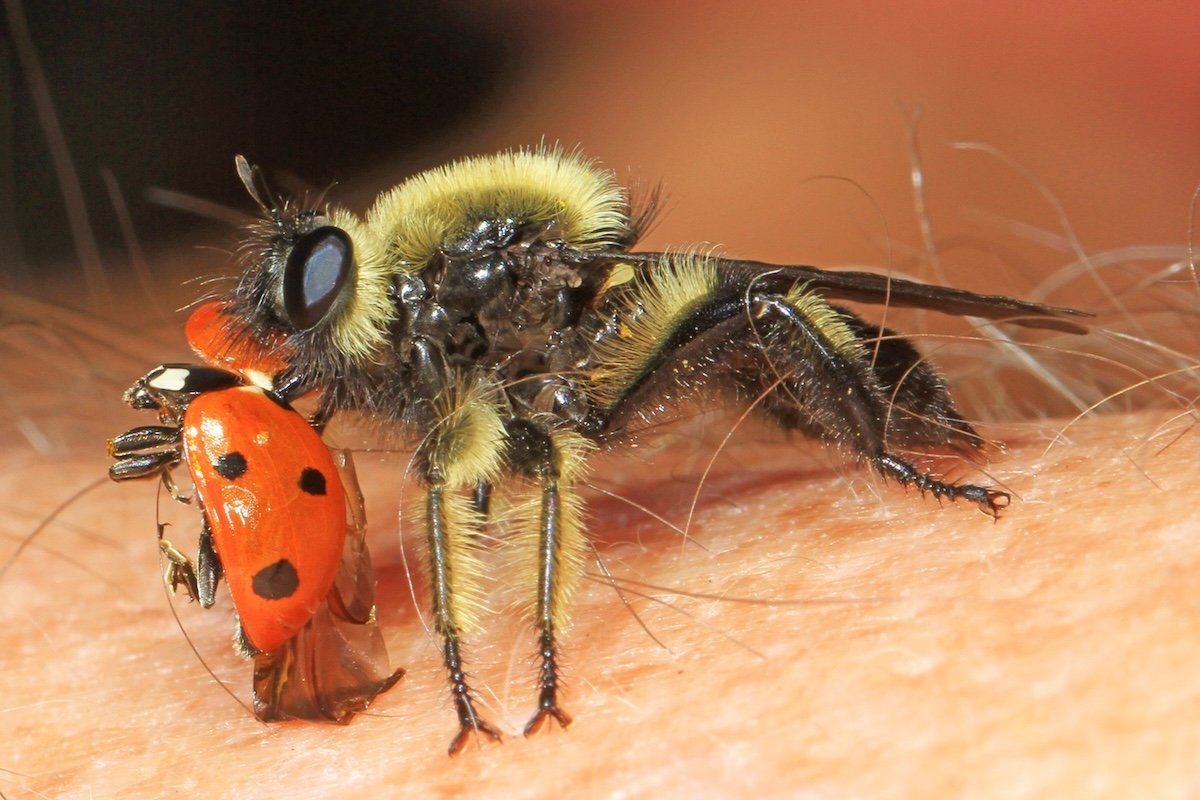
Photo: Laphria affinis robber fly with lady beetle prey, Judy Gallagher
Judy Gallagher
March 2026
I once heard robber flies described as the raptors of the insect world. As the name implies, they are flies, and according to iNaturalist, they are called robber flies because of their expert predatory habits. They usually sit in an open area, watch for insects to approach, fly out to catch them and then return to their perch to finish their meal.
Robber flies typically have a long abdomen and spiny legs which aid in prey capture. Some appear to be humpbacked, and many robber flies have mustaches called mystax, which may help protect the head and face when prey tries to fight back. Their wide-spaced compound eyes give an extensive range of view and they have long, pointed proboscises that they use to inject neurotoxins and digestive enzymes into prey. There are approximately 7,000 robber fly species worldwide, with about 1,000 species in North America.
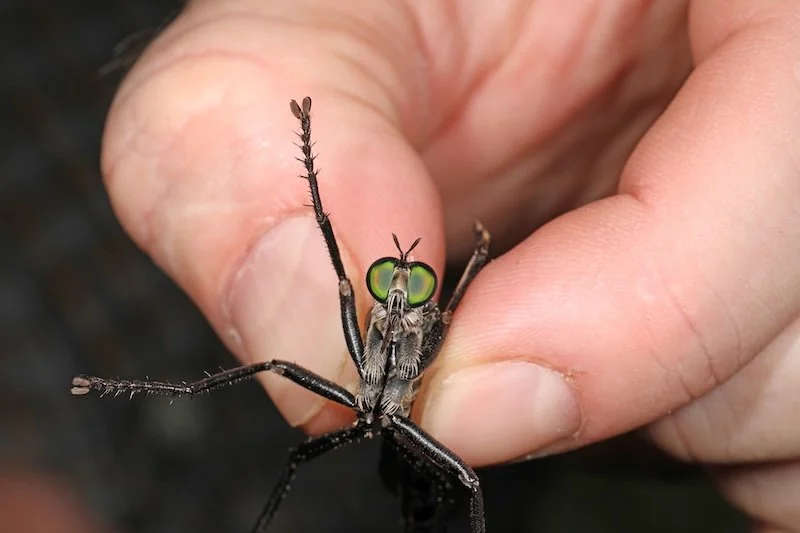
Microstylum morosum, North America's largest robber fly. Photo: Judy Gallagher
Most robber flies are between 1/2 inch to 3/4 inch long, but North America's largest robber fly, Microstylum morosum, can be 2 inches long, and a species in Madagascar is more than 3 inches long!
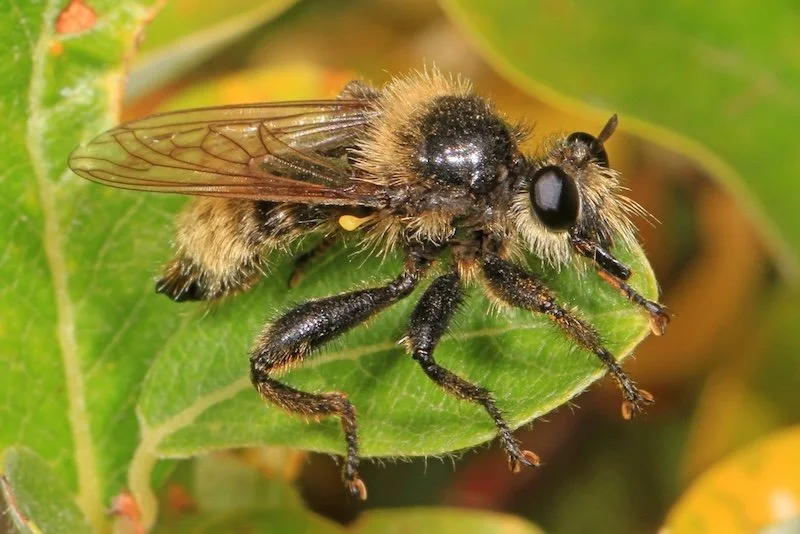
Laphria partitor, a bumble bee mimic. Note its impressive mustache (mystax). Photo: Judy Gallagher
Some robber flies are bee and wasp mimics, with black and yellow striped patterns. They sound like bees and wasps, making loud buzzing sounds as they fly. A number of robber flies in genus Laphria resemble bumble bees, and even have yellow fuzz just like bumble bees.
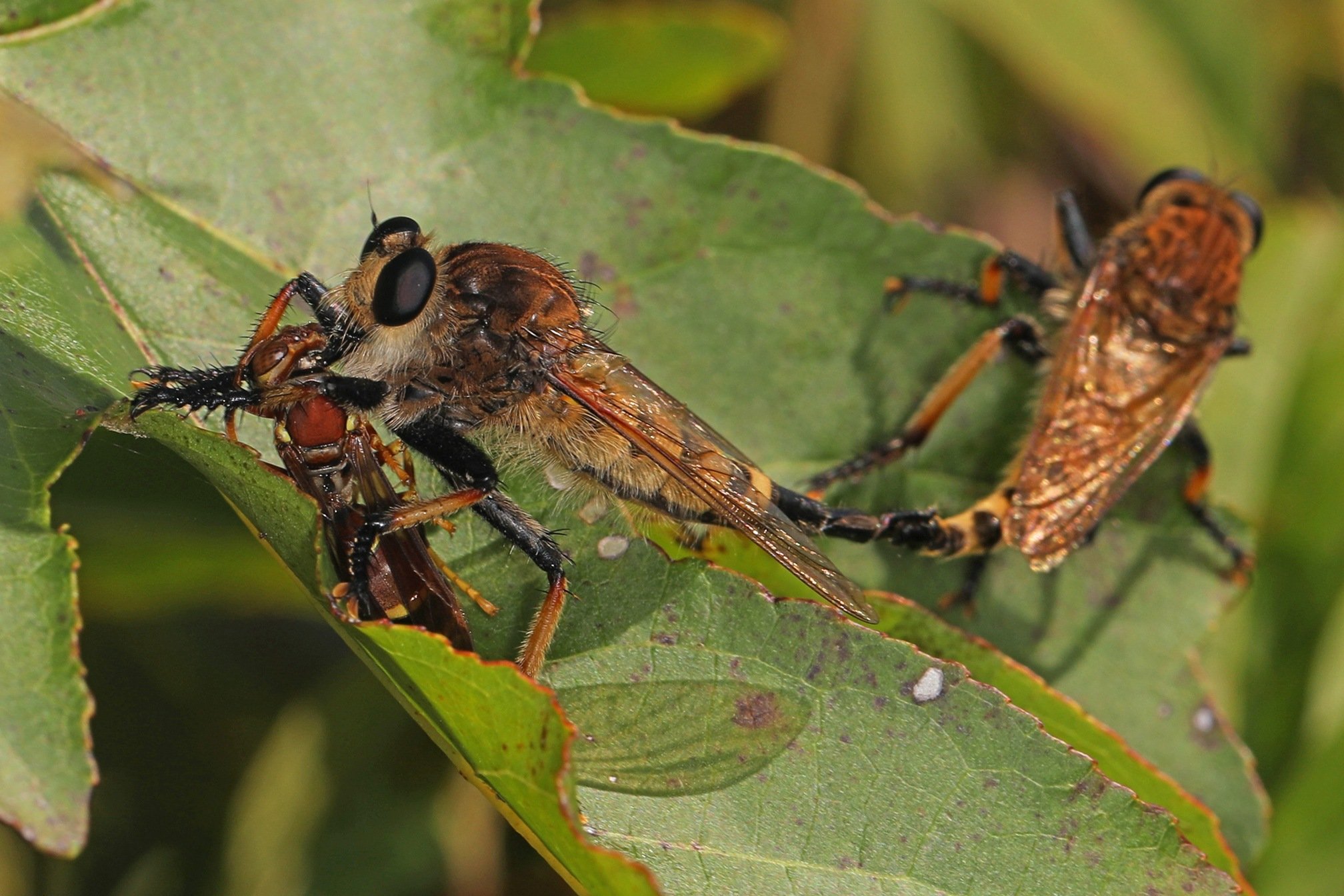
Robber flies mating, while one dines on wasp. Photo: Judy Gallagher
Robber fly males are territorial, chasing away rivals before trying to court the female. Males of some species conduct aerial displays to attract females or offer the female a "nuptial gift" of captured prey. Robber fly females have been known to play dead if they are not interested in the male's advances.
Robber flies that hunt on the ground tend to lay eggs on or in soil, and robber flies that hunt from plants usually lay their eggs in plants. The grub-like larvae live in soil, rotting wood or other decaying materials and, like the adults, are predators.
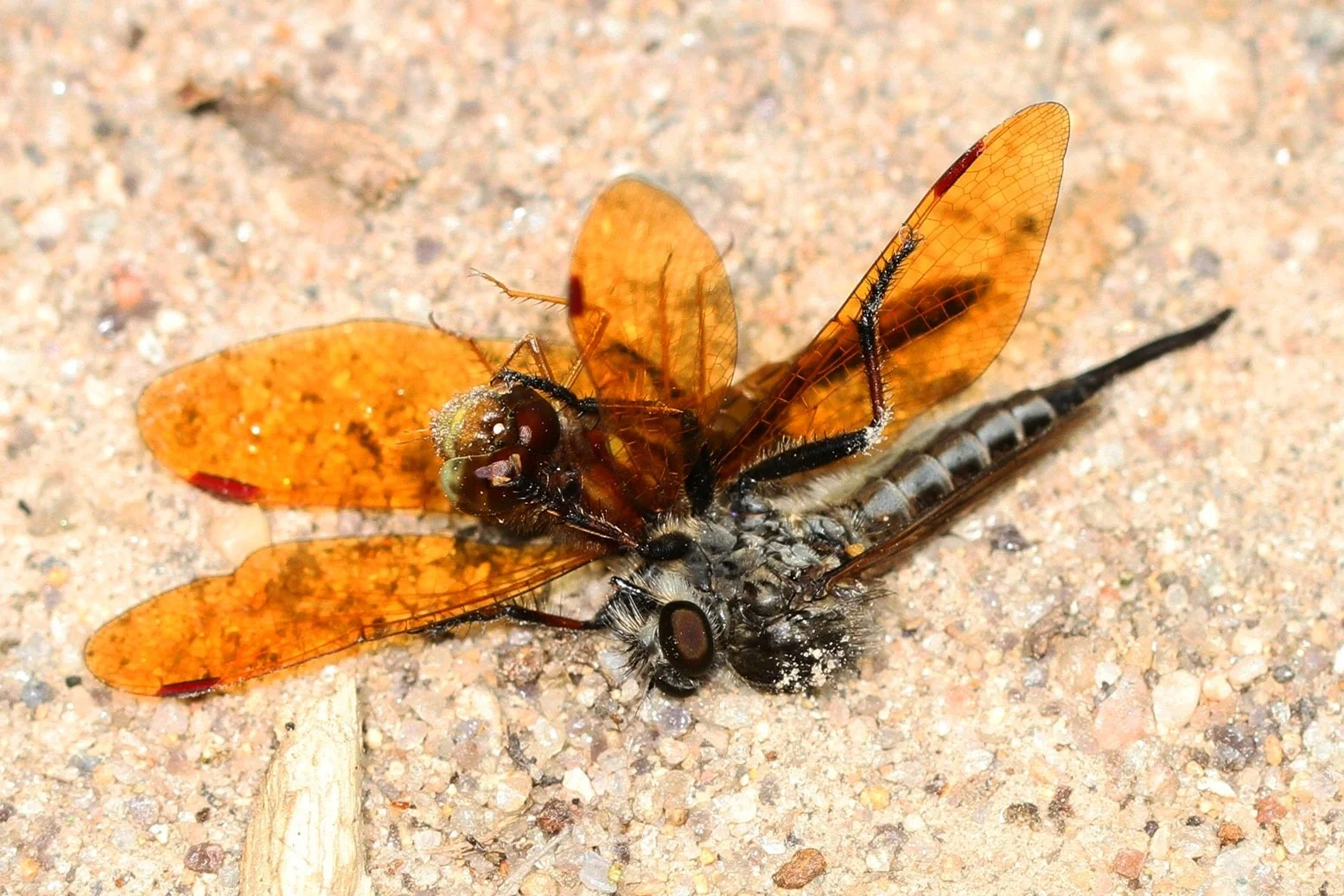
Robber Fly with Eastern Amberwing (dragonfly) meal. Photo: Judy Gallagher
Most adult robber flies attack prey that is smaller than they are, but there are exceptions, like the robber fly that attacked the dragonfly in this picture. The heavier dragonfly caused the pair to crash on the ground. After the robber fly finished its meal, it flew off, presumably to find another meal.
They consume a significant portion of their body weight each day, but the number of insects consumed depends on the weight of each prey item. Some robber flies specialize in prey like grasshoppers, but most are generalists.
Laphria affinis robber fly with lady beetle prey. Photo: Judy Gallagher
You might wonder if robber flies could be a useful biological control of pest insects. The answer is, "It depends." Yes, they eat pest insects, but they are not always discriminating in their diet, and they eat useful insects like lady beetles too.
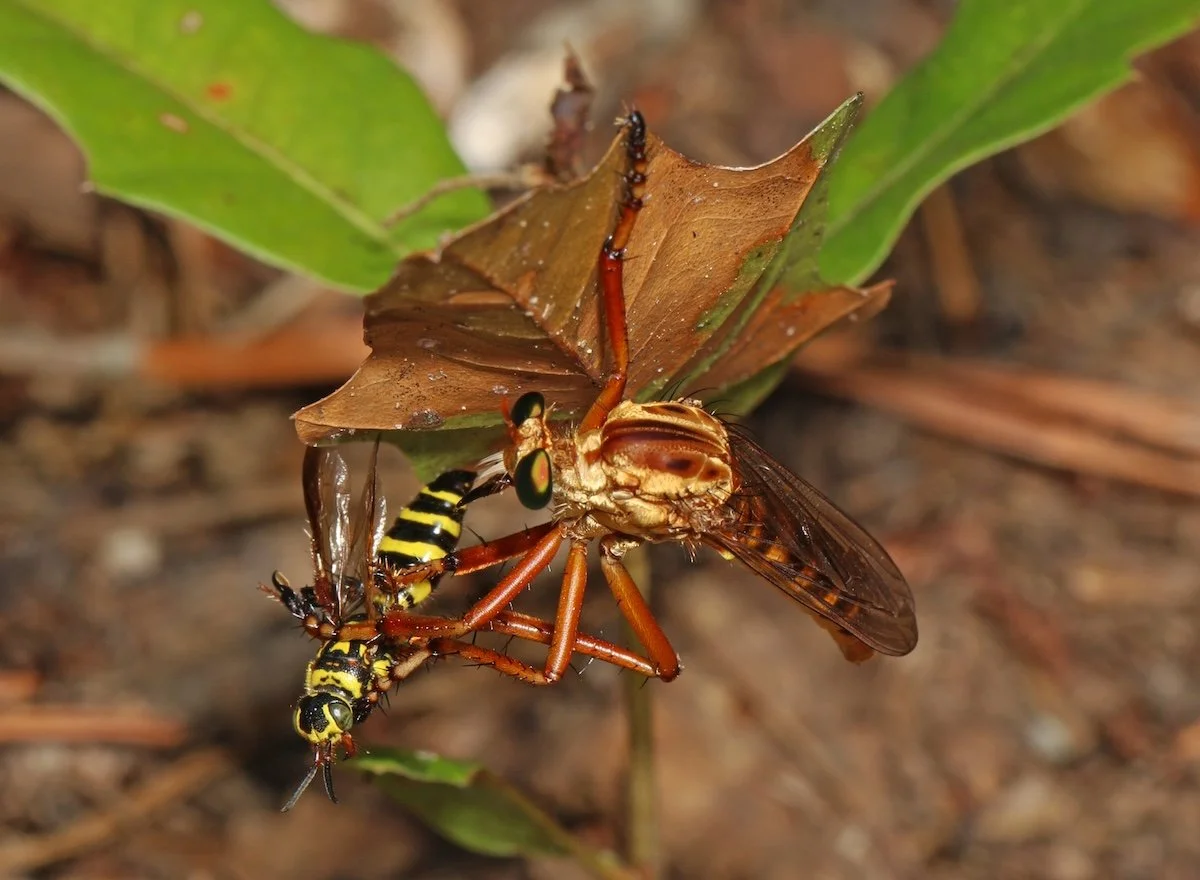
Hanging-thief with wasp prey. Photo: Judy Gallagher
Robber flies in genus Diogmites are known as hanging-thieves because, after capturing prey, they feed by hanging from plant stems or leaves suspended by one or both front legs. The other legs hold and manipulate the prey. Hanging-thieves mostly prey on Hymenoptera (wasps, bees, etc.) and can negatively impact honey bee populations. The female lays eggs in the ground, and her ovipositor has spines that aid in covering up the eggs.
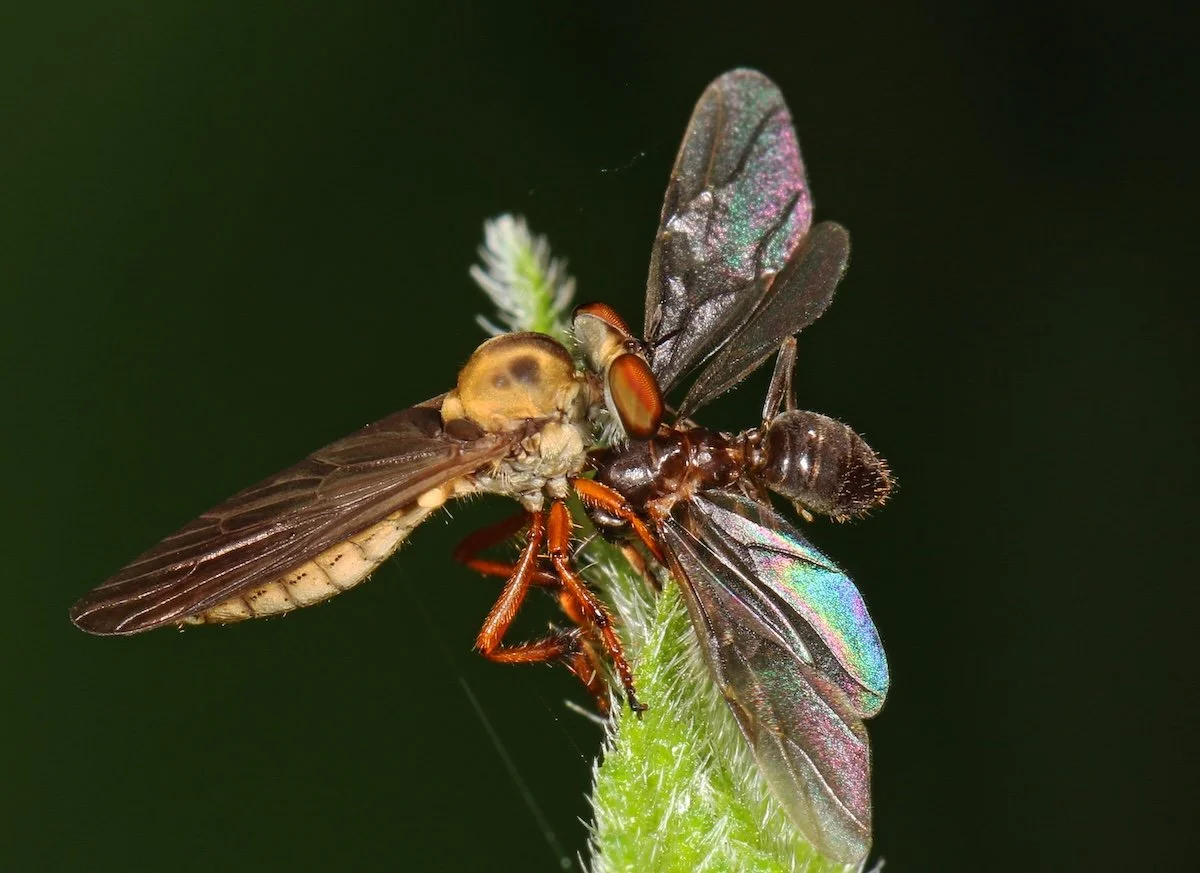
Gnat Ogre with prey. Photo: Judy Gallagher
As the name suggests, Gnat Ogres mostly prey on gnats, although the one pictured here has a tiny wasp instead. Most gnat ogres are small, between 1/8 and 3/8 inches long, and perch on vegetation tips to hunt.
Although robber flies are known for their impressive hunting skills, they can also be prey. Robber fly predators include birds, lizards, frogs, bats, jumping spiders, dragonflies and parasitic wasps.
When spring finally arrives, I hope you can observe one of these magnificent hunters in action.
View more of Judy’s articles on A Closer Look: Nature All Around Us (formerly Observations from Meadowood).
Wildlife Sanctuary Almanac: It's Spring! Is it Time to Plant?
Spring arrives on March 20. Those occasional warm sunny days that occur in early spring may signal that it is time to add to your native plant gardens. But don’t move too fast!
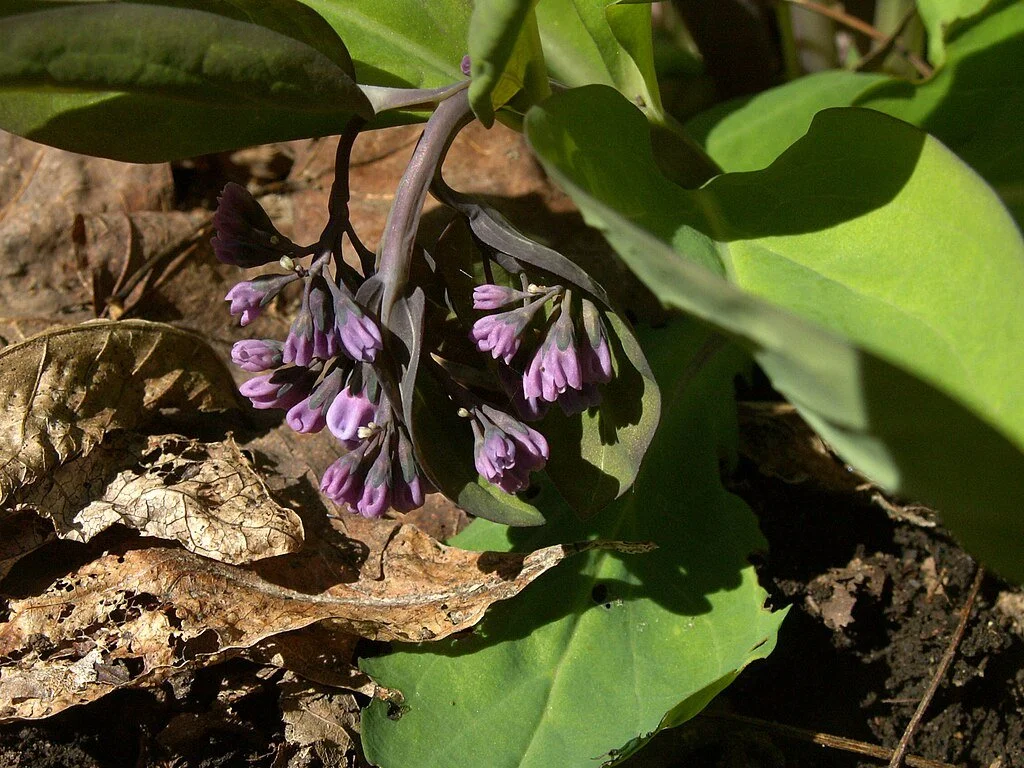
Photo: Mertensia virginica (Virginia Bluebells), Cbaile19, CC0, via Wikimedia Commons
Alda Krinsman
Spring arrives on March 20. Those occasional warm sunny days that occur in early spring may signal that it is time to add to your native plant gardens. But don’t move too fast! Despite their reputation for being able to adapt to our local climate conditions, even native plants, when newly planted, can be damaged or killed by frosts or freezes that occur after the first day of spring.
Rather than the first day of spring, the best date to use as a guide for spring planting should be the average last frost date, which varies by specific location. In northern Virginia, this date in 2026 can vary from April 1-15 in Alexandria to April 15-25 in Winchester.
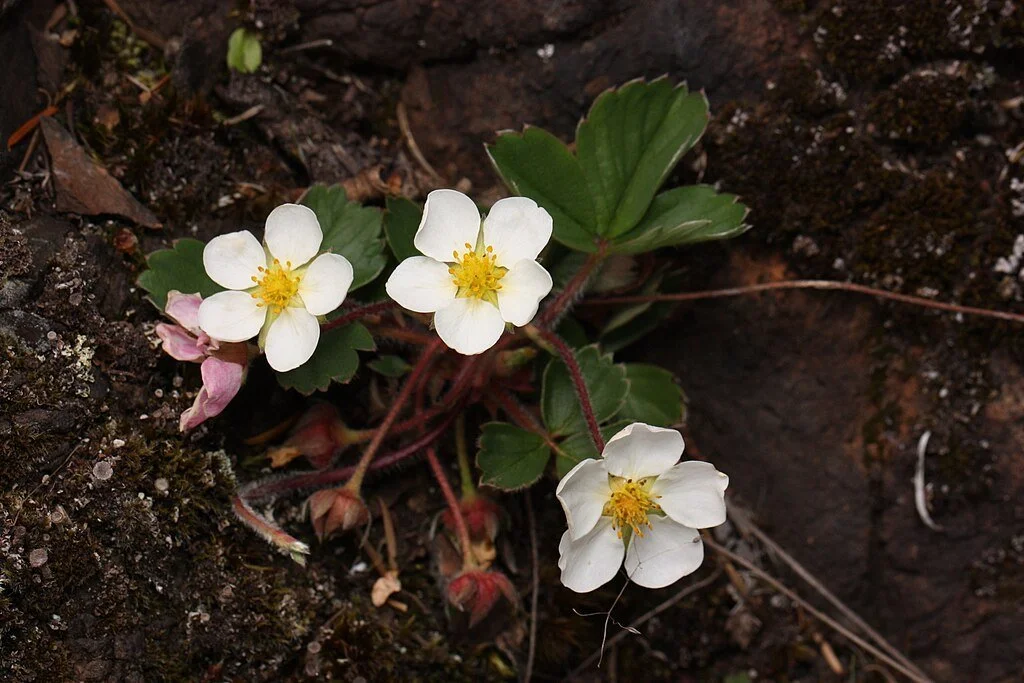
Fragaria virginiana (Wild Strawberry). Photo: Walter Siegmund, CC BY-SA 3.0, via Wikimedia Commons
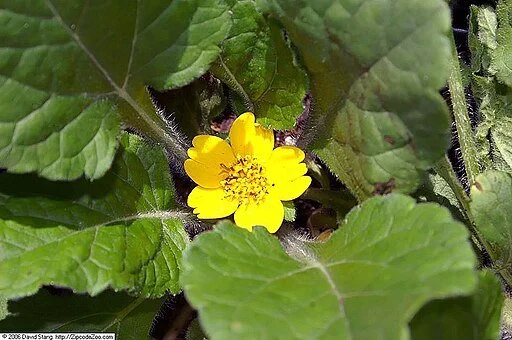
Chrysogonum virginianum (Green and Gold). Photo: David J. Stang, CC BY-SA 4.0, via Wikimedia Commons
If you plan to order native plants online, it would be best to request a shipping date after the average last frost date in your area. This is especially true if the grower is located in an area with an average last frost date that is earlier than that in your area. You want to avoid shocking plants that may be starting to emerge from dormancy by having them arrive in an area still at risk of frost or even freezing. As noted above, average frost dates can vary throughout the DMV, so even if you purchase native plants from local growers at sales in March and April, it would still be wise to hold off planting until the last average frost date for your specific locale.
Once your average last frost date has passed, also consider the soil conditions before you plant. The soil where you plan to plant should be workable. Soil conditions can vary throughout your property. If the soil is still frozen, it is too early to plant despite the air temperature. Soil in some areas of your property may still be frozen even after the last average frost date, especially in areas in deep shade. Also consider the moisture level of the soil. If water pools in the hole as you dig, it is still too early to plant. If you grab a handful of soil and it clumps and even drips when you squeeze, it is too early to plant. Planting in wet soil will compact the soil. Compacted soil deprives plants of oxygen and interferes with root growth, which can be fatal for your plant. If the soil crumbles and falls apart in your hand, it is workable, and if the last average frost date in your area has passed, it is probably safe to plant. As a final precaution, it would be wise to check the 10-day forecast for your area to ensure there are no unusual frosts or freezes predicted.
Catch up on past Wildlife Sanctuary Almanac articles here.
NVBA Helps Preserve Urban Forest in Fairfax City
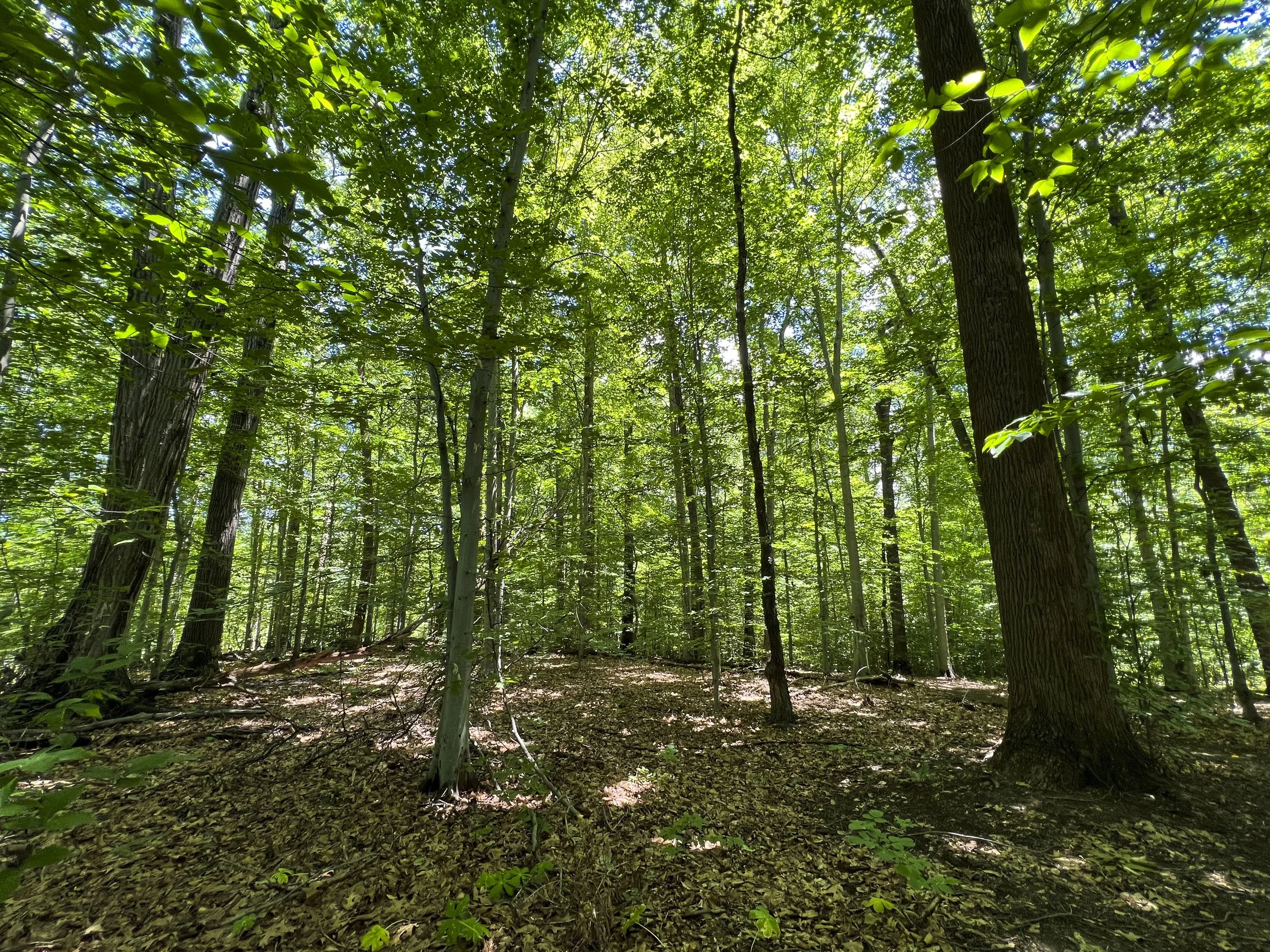
Following a long and hard-fought campaign by environmental advocates, the Fairfax City Council voted not to proceed with constructing the George Snyder Trail, which would have destroyed much of the city’s urban forest. This victory for the environment over development is a classic demonstration of the effort needed to secure an environmental “win.”
Photo: View of the path of the proposed trail, Val Morgan
Tom Blackburn, Chair, Advocacy Committee
Following a long and hard-fought campaign by environmental advocates, the Fairfax City Council voted not to proceed with constructing the George Snyder Trail, which would have destroyed much of the city’s urban forest. This victory for the environment over development is a classic demonstration of the effort needed to secure an environmental “win.”
First proposed in 2015, the George Snyder Trail project was envisioned as an at-grade natural surface or stone dust trail between Chain Bridge Road and Fairfax Boulevard costing about $200,000. City staff revised the plans to make the trail eligible for funding from a concession payment to the state by the contractor who widened I-66. The result was a radically different asphalt trail 8 feet wide with only 1/3 of the trail on existing terrain, and the rest on boardwalks, bridges, excavations and fill dirt. The projected cost of the 1.8-mile trail exceeded $20 million.
Despite an almost total lack of public notice, opponents of the trail, including the Friends of Accotink Creek and others, began mobilizing in 2018. Katy Johnson, who subsequently joined NVBA’s Advocacy Committee, was a key figure in organizing opposition. The opponents pointed out that the “free money” from the award of concession payment funds came with a substantial environmental cost, including the loss of 600 mature trees and thousands of smaller trees, and the destruction of much of the forest ecosystem and topsoil because of the construction and equipment needed to build the trail. They also explained that alternatives to the trail on existing trails and low-use neighborhood streets would avoid nearly all the environmental damage.
NVBA formally joined the opposition in October 2023 when I, on behalf of NVBA, testified using as the theme Joni Mitchell’s song “Big Yellow Taxi” (“They paved paradise, put up a parking lot”). Katy Johnson, Virginia Native Plant Society’s Potowmack Chapter, A.E.R.O., Climate Action Now, many residents and NVBA joined the earlier opponents of the trail in testifying at several Fairfax City Council hearings. They explained the importance of the mature oak-beech forest ecosystem, detailed the extent of the destruction the trail would cause, analyzed the number of additional trips on the trail by people who switch from driving to biking that would be needed to offset the loss of carbon sequestration from the destroyed trees and pointed out the impact on flooding in Accotink Creek from the loss of trees that absorb groundwater. They also addressed claims that if the city canceled the project it would have to repay $4 million that the Virginia Department of Transportation had spent on project design and related costs.
The issue was resolved on January 13, when the City Council voted on whether to appropriate an additional $4.6 million in VDOT concession funds for the trail. The appropriation was needed because the lowest bid for construction was $4.6 million higher than the previously approved appropriation. NVBA joined other environmental groups and individuals in testifying in opposition to the trail, and numerous supporters of the trail testified as well. You can read NVBA’s testimony, which includes photographs, and outlines the extent of the damage to the forest that would result from constructing the trail above and below ground here. The Council voted 3-3 on the motion to appropriate the additional $4.6 million. Because a majority vote was needed to approve the appropriation, the motion failed. The council then voted to notify VDOT that the trail had been canceled.
The dispute over the George Snyder Trail highlights the difficulty of balancing the need for trails for recreation and commuting against protecting the environment. NVBA has attempted to address the environmental issues associated with trails through natural areas by developing criteria for evaluating bicycle and multi-use trails, which you can read here. It also demonstrates the importance of conducting careful environmental reviews of proposed trails through natural areas before substantial design work has been completed – something that was not done for the George Snyder Trail. Finally, it serves as a reminder that continued vigilance and sustained involvement are critical to protecting our environment.
Winter Irruptions
An “irruption” is a large-scale movement of birds to a new area, somewhat similar to migration. However, unlike regular fall and spring migrations, irruptions are typically driven by resource availability (such as food scarcity) and thus occur more randomly, with some winters seeing big irruptions and others seeing none at all.
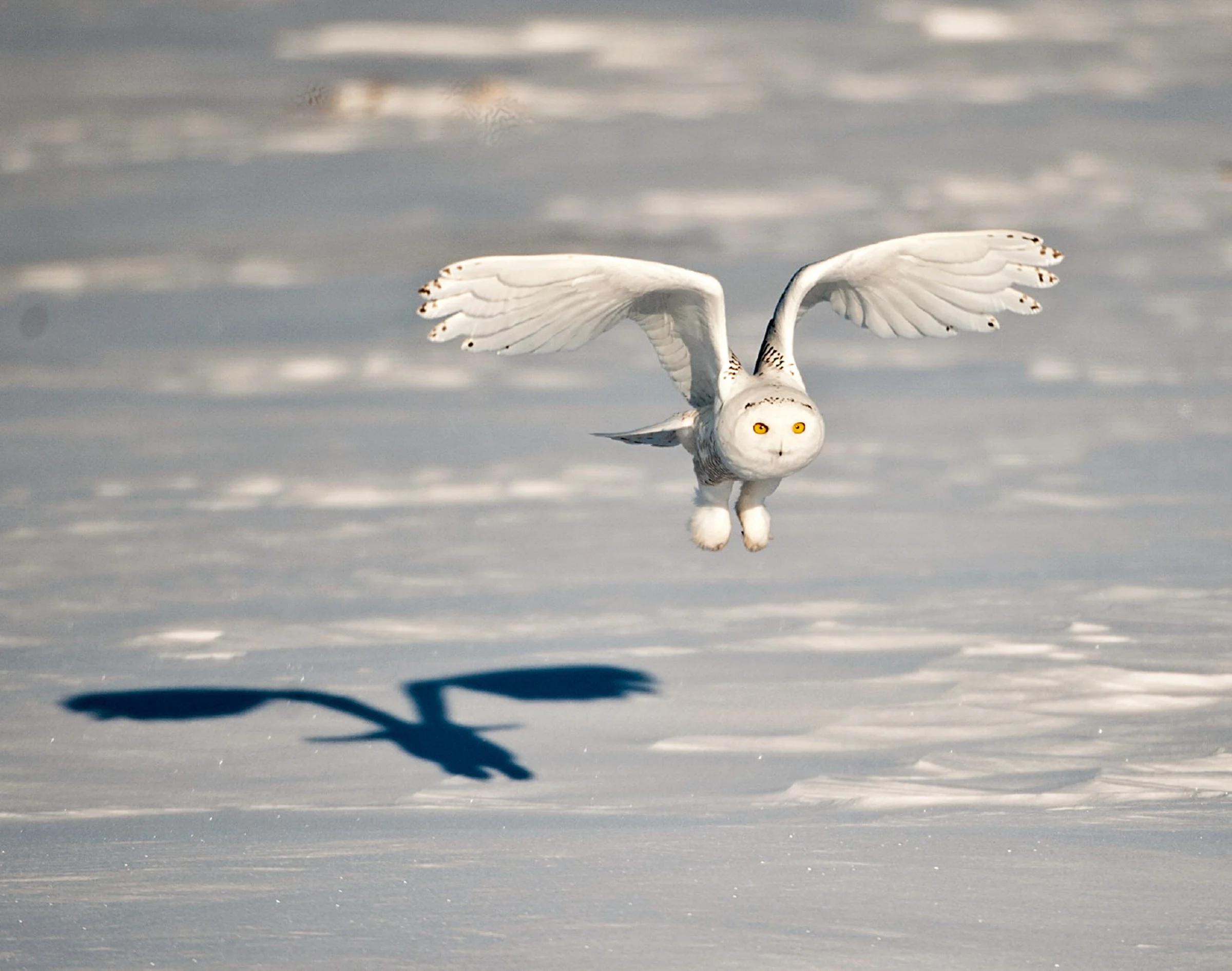
Photo: Snowy Owl, Bernard Friel/Audubon Photography Awards
Summer Delehanty
If you didn’t know any better, you could mistake her for a plastic takeout bag, washed up on the Reagan National Airport (DCA) boat ramp alongside other bits of garbage. But this splash of white was no piece of trash. At the start of the new year, a Snowy Owl caught a flight to the north side of DCA, where she lingered for about a week. Birders could glimpse her from Gravelly Point, where often only her head was visible above the dirt, or attempt to see her from across the Potomac at Hains Point using a spotting scope. Though she’s since moved on, this winter is what’s known as an “irruption year” for Snowy Owls – so you can expect the occasional sighting much further south of their typical range.
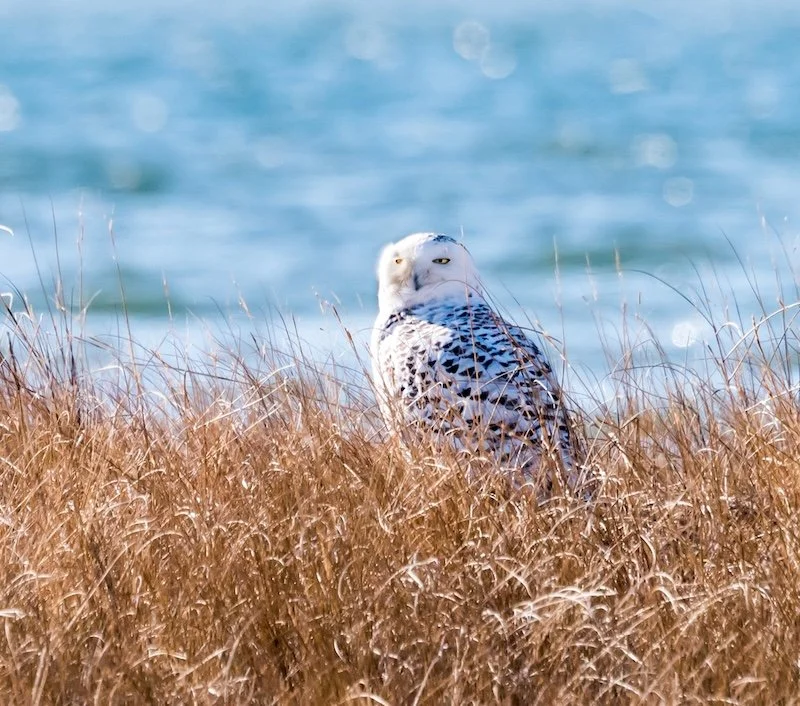
Snowy Owl, Peter Agnes/Audubon Photography Awards
An “irruption” is a large-scale movement of birds to a new area, somewhat similar to migration. However, unlike regular fall and spring migrations, irruptions are typically driven by resource availability (such as food scarcity) and thus occur more randomly, with some winters seeing big irruptions and others seeing none at all. In the case of Snowy Owls, recent research cited in Audubon Magazine reports that these influxes occur after baby booms in the Arctic, spurred by increases in prey. These young, healthy owls head south the following winter in search of a place to stay, while many adults remain in their preferred Arctic habitat. Snowy Owls favor wide, open landscapes that resemble the tundra, such as agricultural fields, beaches, and even airports, which is how one ended up at DCA in northern Virginia.
Because irruptions are irregular, they’re often hard to track and predict. Thanks to Project SNOWstorm, a long-running research project tracking Snowy Owls across North America via solar-powered GPS transmitters, we now know how extensively a single owl can travel. The same individual might spend one winter in Virginia and end up in Montreal the next, so there’s no telling where any singular owl might be. In what might be the world’s largest dataset on Snowy Owl movement, this project has tracked more than 115 birds across 17 states and provinces. Interactive maps and tagging stories are available on the Project SNOWstorm website.
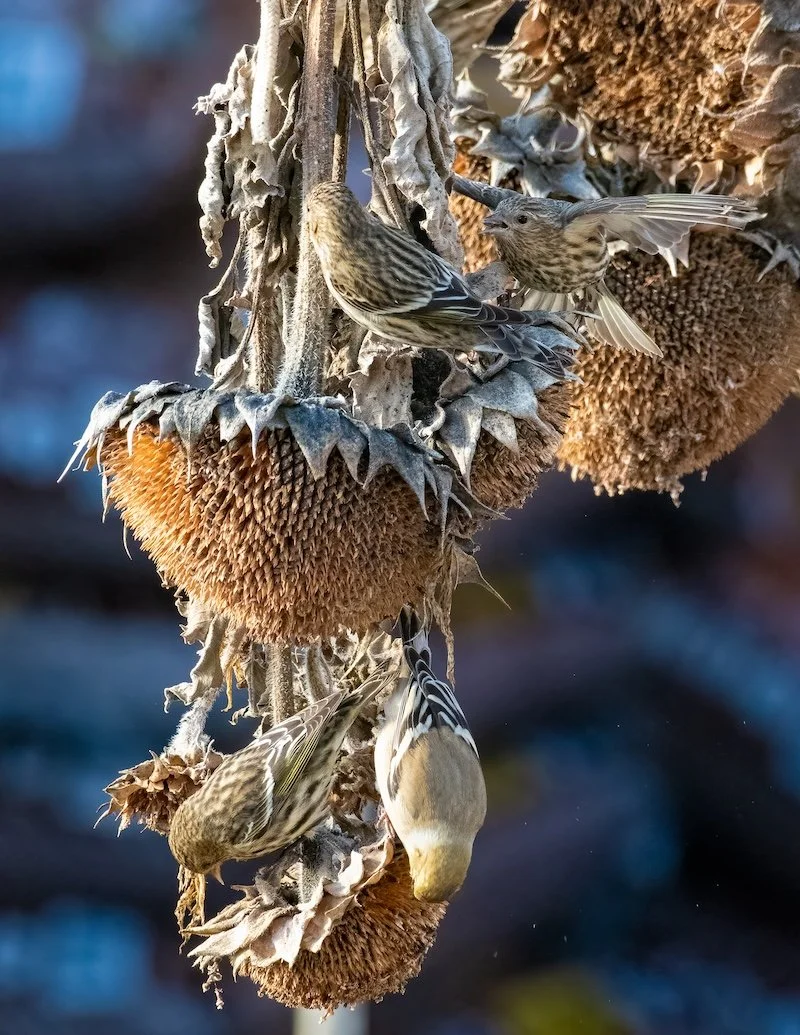
Pine Siskins and American Goldfinch, Joanie Christian/Audubon Photography Awards
Though perhaps the most popular, Snowy Owls aren’t the only species to irrupt. Other birds, especially those that depend on cone-bearing trees in northern forests, follow similar boom-and-bust patterns tied to food supply. Evening Grosbeaks, Pine Siskins, and Common Redpolls move south en masse when food is scarce in boreal forests, and Cornell's All About Birds predicted this winter to be a big one for all three on the East Coast. Early sightings in fall found them as far south as West Virginia, Georgia, and Pennsylvania, respectively. Forecasters estimated this past winter would be the biggest flight year since 2020-2021. Winter finches are easily enticed by a full bird feeder, but you can also keep an eye on nearby sightings with an eBird account.
Even familiar backyard birds like chickadees, Blue Jays, and Red-breasted Nuthatches show irruptive behavior, moving south after poor breeding seasons or food shortages. The moving northern populations often intermingle with resident flocks and can appear at feeders in higher numbers. Though more subtle than a Snowy Owl perched at an airport, these movements reflect shifting resources and serve as a reminder of how interconnected different regions are. A changing climate can alter snow cover, prey adaptability, and forest productivity in increasingly unpredictable ways, affecting the intensity and frequency of irruptions. Suitable habitat and food sources don’t only support regular winter residents – they also offer refuge for species displaced from the North.
For birders, irruption years offer rare opportunities to see species far from home, often in unexpected places. However, it’s important to remember these journeys are driven by necessity, and these visitors can be especially vulnerable if they’re young or hungry. The warmest welcome we can give them is to maintain a respectful viewing distance and protect the landscapes where they temporarily reside.
Summer Delehanty is a product designer with a passion for birdwatching.
Updating the Virginia Breeding Bird Atlas
Breeding bird atlases have a long history in the United States, where they are typically conducted at the state level. Like road atlases, at their core they are centered around maps, but the maps relate to the geographic distribution and abundance of breeding bird species—that is, where they are found on the landscape and in what numbers.
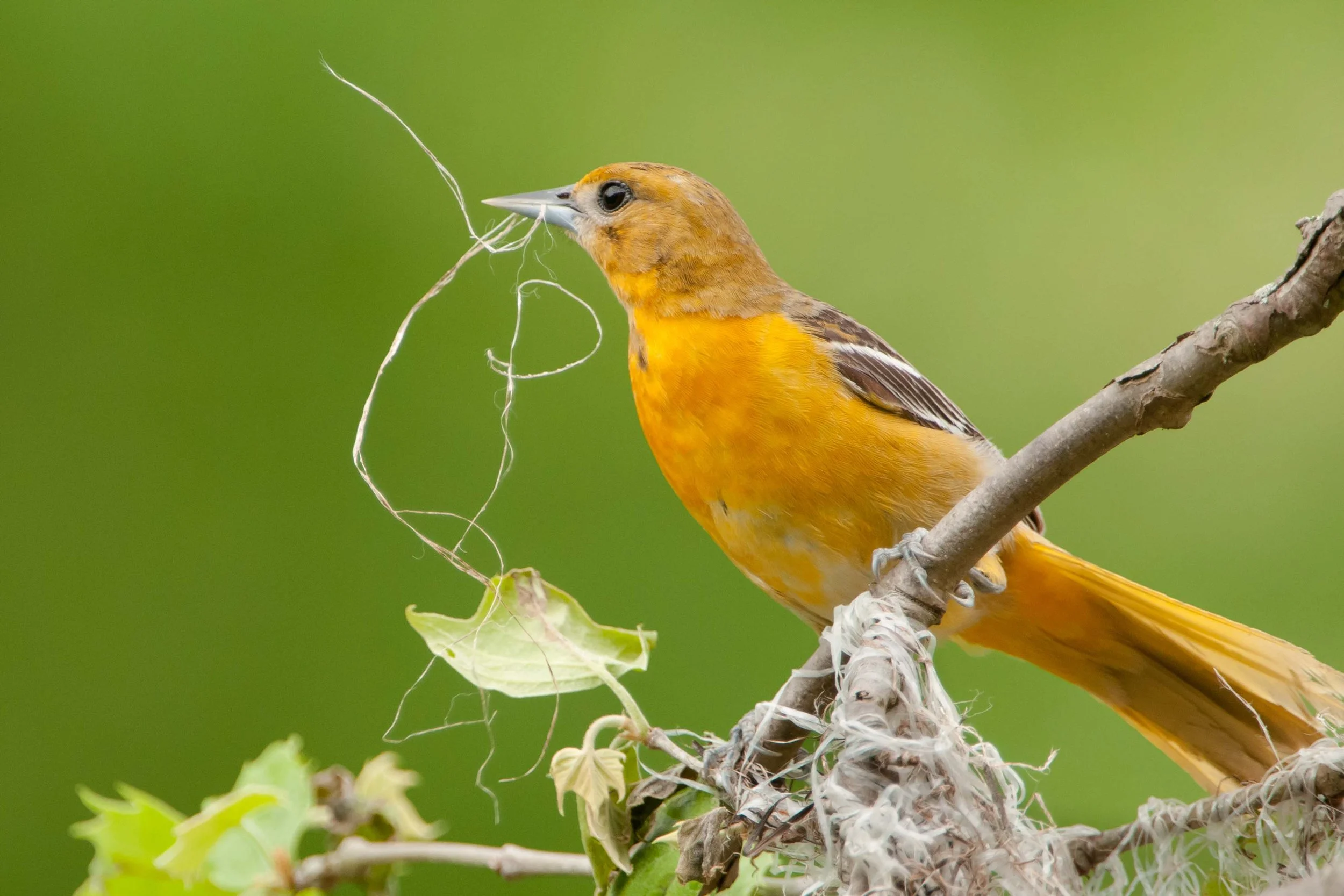
Photo: Baltimore Oriole, Mark Boyd/Audubon Photography Awards
Glenda C. Booth
Reprinted from DWR’s Virginia Wildlife, January/February 2025
Breeding bird atlases have a long history in the United States, where they are typically conducted at the state level. Like road atlases, at their core they are centered around maps, but the maps relate to the geographic distribution and abundance of breeding bird species—that is, where they are found on the landscape and in what numbers. Last fall, a website was published describing the results of the Second Virginia Breeding Bird Atlas (Atlas), a five-year survey that served as a follow-up to the First Atlas (1985-1989). This Second Atlas was a product of a partnership among the Virginia Department of Wildlife Resources (DWR), the Virginia Society of Ornithology (VSO), and the Conservation Management Institute (CMI) at Virginia Tech.
Ashley Peele, PhD, an avian ecologist now working for the Appalachian Mountains Joint Venture, served as the Atlas Coordinator, recruiting, training, and guiding volunteers to collect bird data according to Atlas guidelines. Nearly 1,500 volunteers contributed to the Atlas between 2016 and 2020, making it one of the largest citizen-science projects in the state. This effort involved groups like bird clubs, Audubon chapters, Master Naturalists, outdoor organizations, wildlife biologists, college students, and others. “Without the volunteer component, this project is one that could never have been carried out by Virginia’s natural resource professionals alone,” said Sergio Harding, a DWR nongame bird conservation biologist.
How They Did It
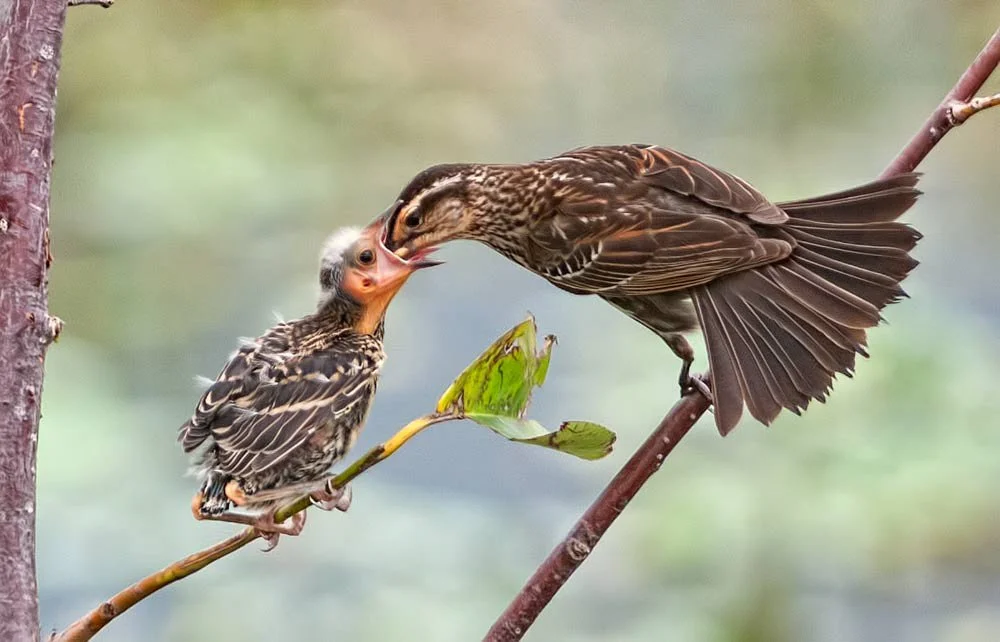
Red-winged Blackbirds, Ken Lassman/Audubon Photography Awards
Atlas surveys took place within Atlas blocks, using the same statewide block grid as the First Atlas. Each quadrangle within the U.S. Geological Survey’s topographic map series for Virginia was subdivided into six blocks of approximately 10 square miles in area. Volunteers recorded as many species as possible within a block, entering their observations into a customized Virginia Atlas portal of the popular online eBird application.
While the peak breeding season for many migrant birds is typically May to July, volunteers surveyed for breeding birds throughout the year. In the late winter and early spring, for example, birds like owls, hawks, and falcons begin breeding activity. Bald Eagle (Haliaeetus leucocephalus) courtship can start as early as December in Virginia. Great Blue Herons (Ardea herodias) typically start nest building in rookeries in February in the state.
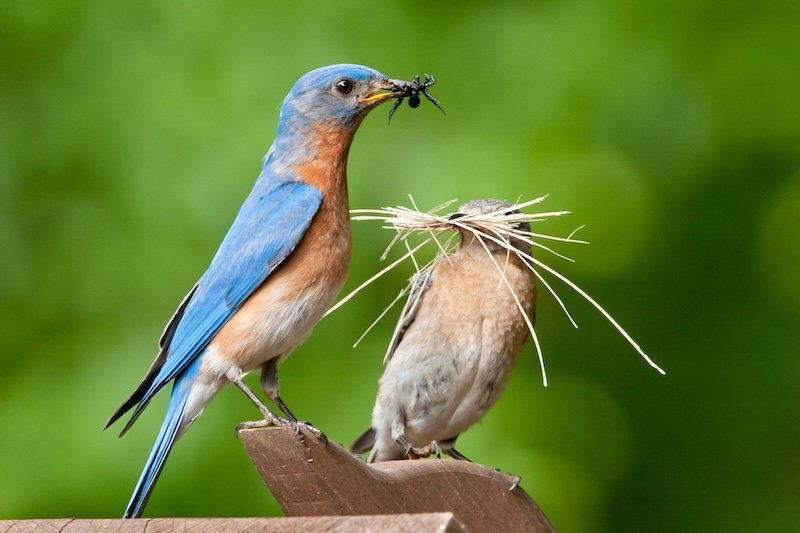
Eastern Bluebirds, Mark Boyd/Audubon Photography Awards
“Breeding bird atlas surveys collect behavioral information, unlike other bird surveys that typically only identify and count numbers of species,” remarked Peele. This helps to distinguish birds that are breeding from those that are migrating through or finishing their winter stay. Volunteers reported evidence of breeding, using standardized breeding codes, based on behaviors they observed for each species within a block. Individual observations of birds were then categorized as representing possible, probable, or confirmed breeding. Examples of breeding behaviors include singing, copulation, carrying nesting material, incubating eggs, and feeding young.
Atlas Highlights
The total number of species with breeding evidence was 205 for the Second Atlas and 203 for the First. For confirmed breeders only, the totals were 196 for each Atlas. Austin Kane, the Managing Editor of the Second Atlas, who works with Virginia Tech’s Conservation Management Institute, cautioned, “It is important to note that although the number of confirmed breeders stayed the same, their composition changed slightly between Atlases.” These changes reflect changes to Virginia’s avifauna over the past 30 years, with some breeding species having been gained and others lost:
Eight species were confirmed as breeding that were not detected during the First Atlas: the introduced Trumpeter Swan (Cygnus buccinator) and Eurasian Collared Dove (Streptopelia decaocto), as well as Black-necked Stilt (Himantopus mexicanus), Anhinga (Anhinga anhinga), Mississippi Kite (Ictinia mississippiensis), Merlin (Falco columbarius), Yellow-rumped Warbler (Setophaga coronata) and Painted Bunting (Passerina ciris).
Two species that bred during the First Atlas were not detected at all during the Second Atlas. Bewick’s Wren (Thryomanes bewickii) is believed to be extirpated across the eastern United States. Bachman’s Sparrow (Peucaea aestivalis) breeds more regularly south of Virginia and has not been documented in the state since 2003.
Five additional breeders during the First Atlas were reported without breeding evidence during the Second Atlas. They include Blue-winged Teal (Spatula discors), Green-winged Teal (Anas crecca), Ring-necked Pheasant (Phasianus colchicus), Upland Sandpiper (Bartramia longicauda) and Sedge Wren (Cistothorus stellaris).
Certain species saw their distribution diminish within the state. This includes Kentucky Warbler (Geothlypis formosa), American Barn Owl (Tyto furcata) in the Coastal Plain and Northern Bobwhite (Colinus virginianus) and Yellow-breasted Chat (Icteria virens) west of the Blue Ridge Mountains.
“The second Atlas gives us a more detailed picture of where breeding birds are distributed across Virginia and how that has changed since the mid-1980s,” said Peele, who coordinated the data collection and analysis component for the second Atlas. “These data provide a quantitative way to evaluate how bird populations have shifted over the last 40 years.”
The Atlas website features over 200 individual Species Accounts of game and nongame birds. For species with sufficient data, they provide maps of breeding distribution and of changes in distribution between Atlases, based on predictive models; breeding evidence maps based on data collected by volunteers; maps of predicted abundance; population estimates and population trends; and a summary of relevant conservation efforts. The maps are complemented by interactive maps and by a narrative providing interpretation.
The website also includes a guide to reading the Species Accounts and sections on Atlas methodology and results. The website will be expanded in early 2026 with additional results, content on analytical methodology, information on Virginia’s geography and habitats, and a section on the role of the Atlas in bird conservation.
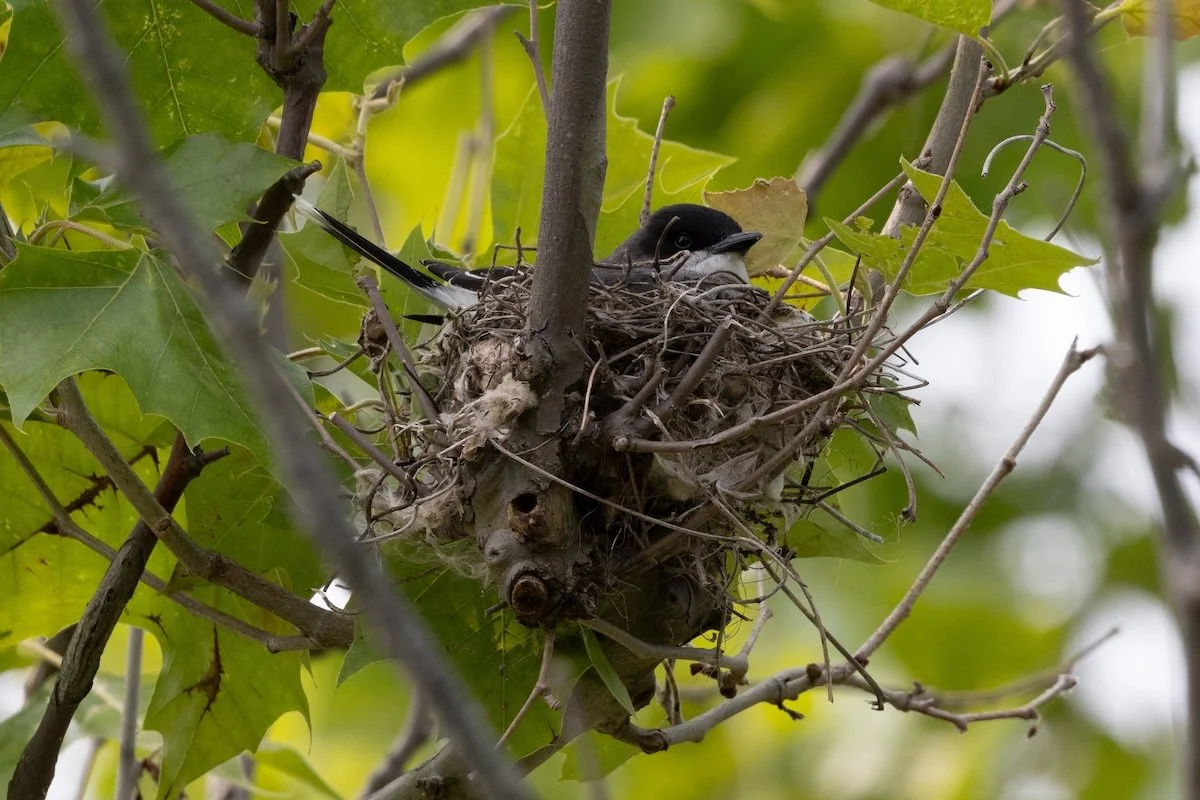
Eastern Kingbird on nest, Dixie Sommers
Why is the Atlas Important?
As a centralized source of information, the Atlas website is an educational resource for people to learn where breeding birds in Virginia are found and in what numbers. But most importantly it is a conservation tool. As Kane noted, “[The Atlas] is a statewide effort that, when paired with the results of the First Atlas, shows where our birds occur on the landscape and how that has changed over time, helping us understand the health and status of their populations and providing an important tool for conservation. When we know where they are, we can better protect them.”
Atlas data can inform decision-making by policy makers, land planners and natural resource professionals. For example, DWR used Atlas results to fill in data gaps during its update of the list of avian Species of Greatest Conservation Need in the 2025 Virginia Wildlife Action Plan. Distribution data can help target potential new habitat projects, and abundance maps can aid in identifying areas with larger or smaller concentrations of priority bird species for conservation work. For landowners, Atlas information on the timing of breeding activities by different species can help guide land management. For example, knowing when to avoid tree work and field mowing can minimize impacts to nesting birds.
Changes in the distribution of species reflect habitat changes, climate change impacts, and many other factors. Ultimately, having a good grasp of changes in bird populations and on their underlying causes is key to being able to conserve them. As Peele noted, “Some population declines happen quietly and we learn too late.”
Glenda C. Booth, a freelance writer, grew up in southwest Virginia and has lived in northern Virginia more than 30 years, where she is active in conservation efforts.
The Depths of Winter: What's a Gardener to Do?
February is a daunting, cold month for sure. But winter dormancy is for plants, not humans, and February can be the perfect time to plan additions to your native plant garden. It is also a great time to remove some invasive non-native species.
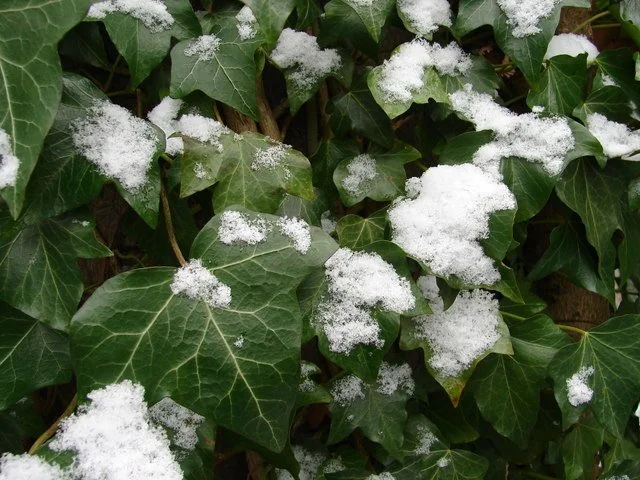
Photo: Invasive English Ivy with new year snow, Ian Paterson via CC BY-SA 2.0
Eileen Ellsworth
February is a daunting, cold month for sure. But winter dormancy is for plants, not humans, and February can be the perfect time to plan additions to your native plant garden. It is also a great time to remove some invasive, non-native species.
First, planning the spring garden. Native plants can be expensive, especially if you’re looking to cover a large area. Starting plants from seed has probably occurred to you, but it won’t happen without some advanced planning. It isn’t easy to grow native plants by sowing seeds directly in the ground, as explained more fully on the Plant NOVA Natives website. Growing them first in pots may be advisable. Also, many seeds require cold-stratification, or exposure to cooler temperatures for a specific period, before they can germinate. A popular alternative is to buy flats of small landscape plugs, which are easy to handle and cost-efficient.
Supplies are high and demand is low for both seeds and plugs at the moment. Here is a handy list of local and somewhat-local sellers. Not all of them accept orders in February, but their websites provide contact information for direct inquiries.
Plug Sellers
Seed Sellers
You can also order seeds and plugs from mail-order sellers.
Next, removing invasives. If you were determined to remove some invasives this fall but never got to it, there is good reason to do it now when there are no leaves, no ticks, cooler temperatures, and less poison ivy. The Plant NOVA Natives website can help you prioritize your efforts. Here are a few examples of invasive species that are found in many people’s yards.
Amur Honeysuckle: This woody, non-native invasive degrades native environments by rapidly forming dense thickets that shade and choke out native plants. Here is a link to a YouTube video on how to identify it in winter. Smaller specimens are easy to dig or pull up at the root, but larger ones require a more heavy-duty tool, like a weed wrench, to pry them out.
Burning Bush: Once a darling of local landscapers, this shrub is now considered a high-threat invasive in Virginia. It tolerates deep shade and adapts to many soil and light conditions. Small specimens come up easily with a shovel or fork, and larger ones with a weed wrench. If it’s too big to pry out at the root, cut the stem near the ground and immediately apply a concentrated herbicide such as triclopyr or glyphosate, ideally within 15 minutes to ensure absorption. Tips on herbicide use can be found on the Fairfax Tree Rescuers PRISM website.
Autumn Olive: This ubiquitous, woody invasive shades out native plants while changing the chemistry of the soil around it with nitrogen-fixing root nodules. This adaptation gives it a big advantage, allowing it to thrive in poor soil while aggressively invading new ground. Once established, it prolifically produces seeds that birds eat and spread widely. The removal advice provided above for burning bush also applies here. Cut stumps of Autumn olive can vigorously resprout, which can be avoided by using the cut-stump method described above.
English Ivy: Conveniently, this tree-killing vine stays green in the winter and so is easy to spot. Cut the vines at the base of trees (using loppers or a saw to cut the thicker vines), then create a bare ring around the tree by cutting the vines again further up, which severs the root connections. The vine above will simply die and dry out over time. Never try and remove the upper portion of the severed vines, as pulling them down can damage the tree.
Oriental Bittersweet: This highly invasive vine is often found tightly twined around trees, shrubs, and fences. Females in winter have distinctive berries that look like bright yellow capsules that split to show the red berries within. Smaller specimens can be pulled or dug up at the root, which has a distinctive orange hue. You can cut larger specimens near the ground and treat them with herbicides as described above.
There’s no need to waste a cold winter day if biodiversity is calling! Order some plugs of native flowering perennials. Remove an invasive shrub or vine. It all adds up to a splendid, bee-buzzier, bird-happier native space.
Our 2026 Scholarship Winner
This summer NVBA is sending Carrie Lombardi, science coach at Arlington’s Barrett Elementary School, to “Sharing Nature: An Educator’s Week” at National Audubon Society’s Hog Island Camp in Maine.
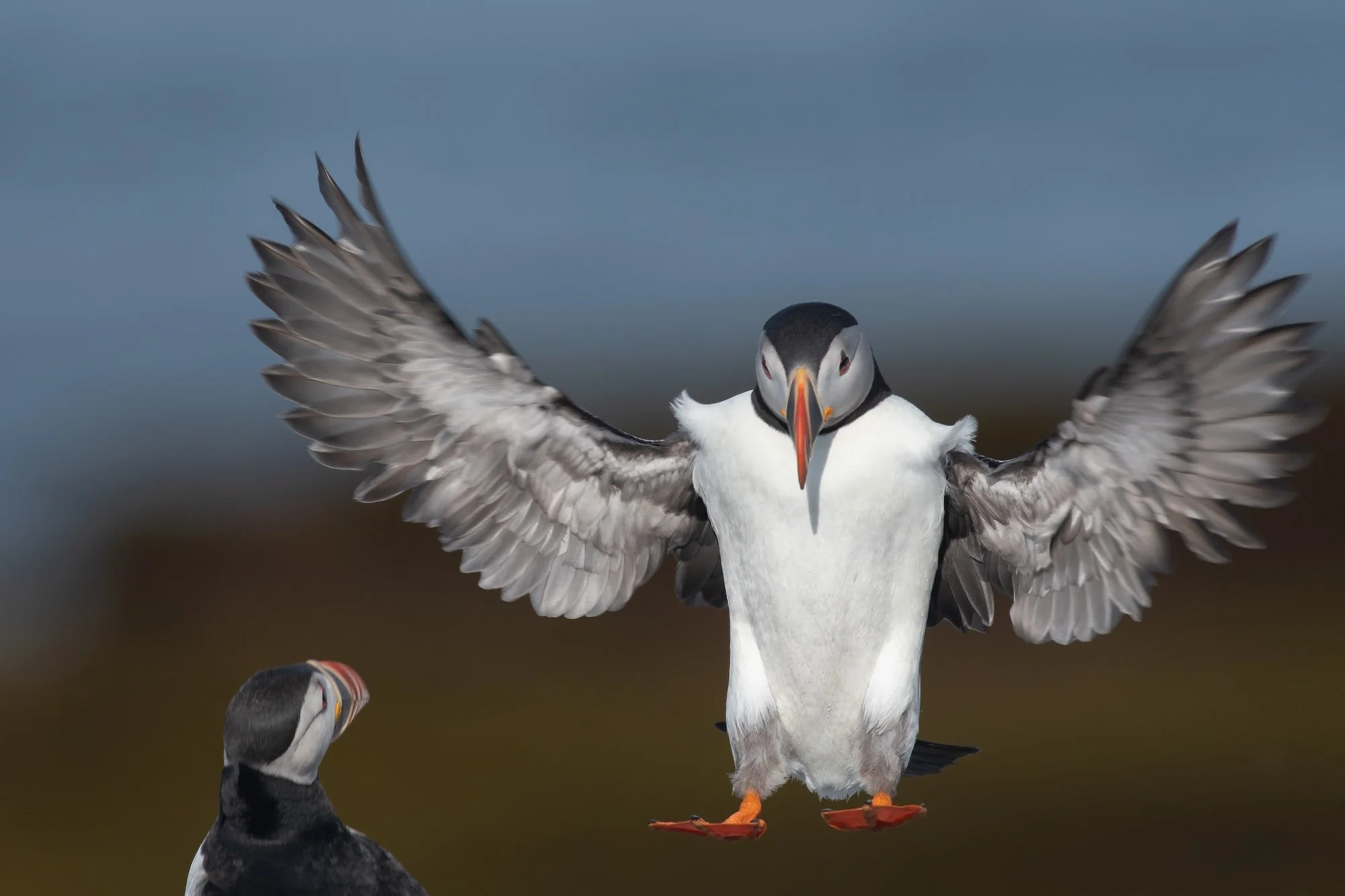
Photo: Atlantic Puffins, Walker Golder/Audubon Photography Awards
This summer NVBA is sending Carrie Lombardi, science coach at Arlington’s Barrett Elementary School, to “Sharing Nature: An Educator’s Week” at National Audubon Society’s Hog Island Camp in Maine. Carrie has been an educator for over 15 years, primarily in upper elementary grades. Her interest in science began early in her career at Burgundy Farm Country Day School, where she experienced the value of outdoor education and began incorporating nature-based learning into science lessons.
Carrie has been at Barrett Elementary for the past four years where, as science coach, she collaborates with teachers across grade levels to strengthen science instruction. She also teaches Project Discovery, a hands-on science lab, to fourth- and fifth-grade students, where students engage in inquiry, experimentation, and observation.
Outside of school, she is a mom to three girls, ages 13, 11 and 9. With her husband and girls, she enjoys traveling and exploring national and state parks, which she reports has reinforced her belief in the importance of learning through real-world and outdoor experiences.
She is looking forward to her time at Audubon’s Hog Island Camp and bringing back what she learns to her colleagues and students.
The 2026 Audubon Photography Awards are now open!
Attention photographers! National Audubon Society kicked off its 17th annual photography awards on January 15.
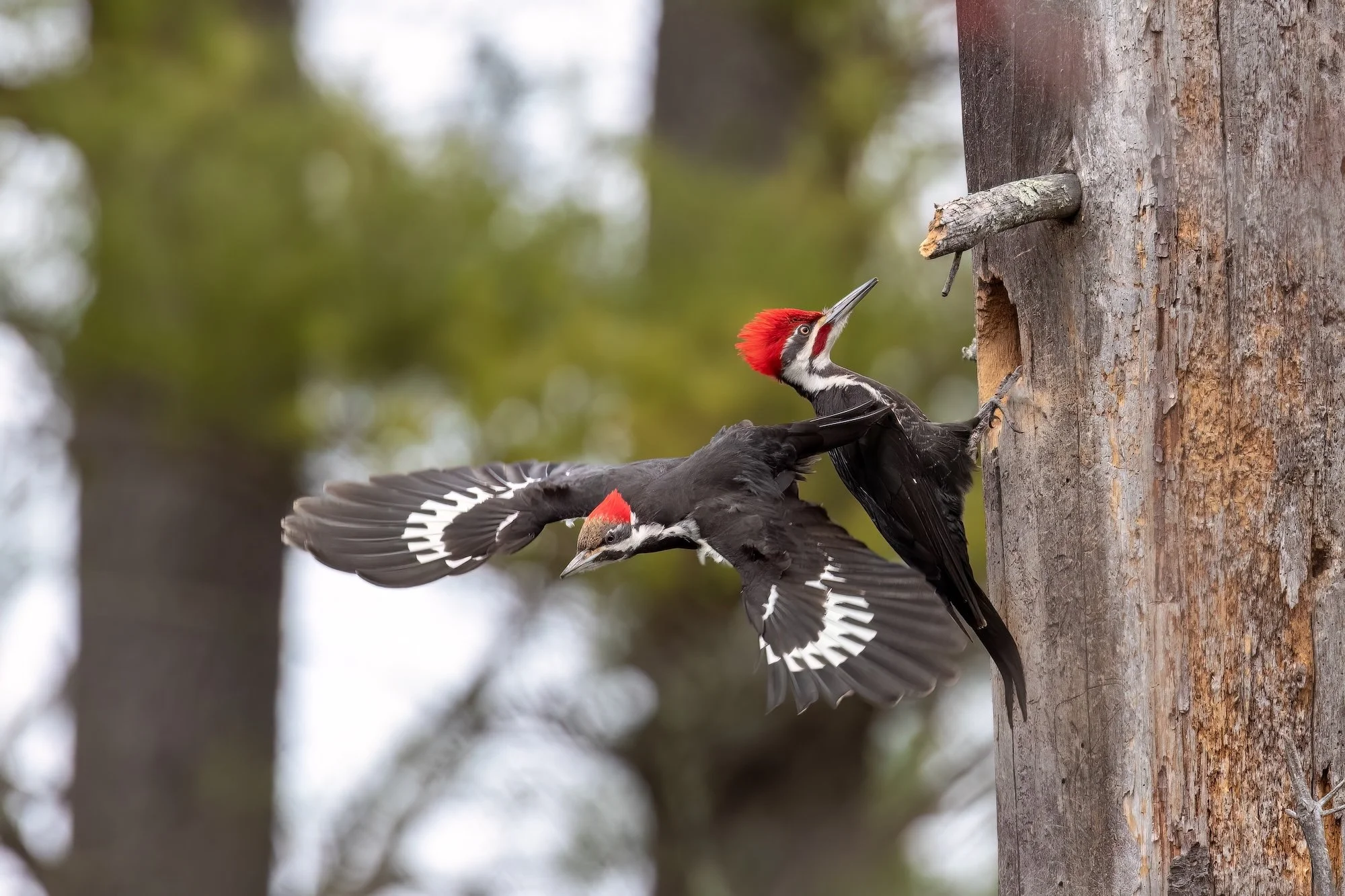
Photo: Pileated Woodpeckers, Wayne Wetherbee/Audubon Photography Awards
Attention photographers! National Audubon Society kicked off its 17th annual photography awards on January 15. The contest is open for submissions of photographs and videos until Wednesday, March 4, at 12 p.m. (noon) U.S. Eastern Time.
The Grand Prize winners will receive $5,000 and a voyage to Antarctica. Youth entrants can win a trip to Hog Island Audubon Camp in Maine. There also will be prizes for the best visuals featuring migratory birds, landscapes and native plants that birds rely on, female birds, and conservation challenges. Winning photos and videos will be published in the Fall 2026 issue of Audubon magazine and on the Audubon website.
Complete rules and tips for capturing the perfect moment are available on the 2026 Audubon Photography Awards page.
A Closer Look: Nature All Around Us, February 2026
Judy Gallagher is an NVBA board member and a regular surveyor of local wildlife who also captures photos of what she sees, in particular the less common species.
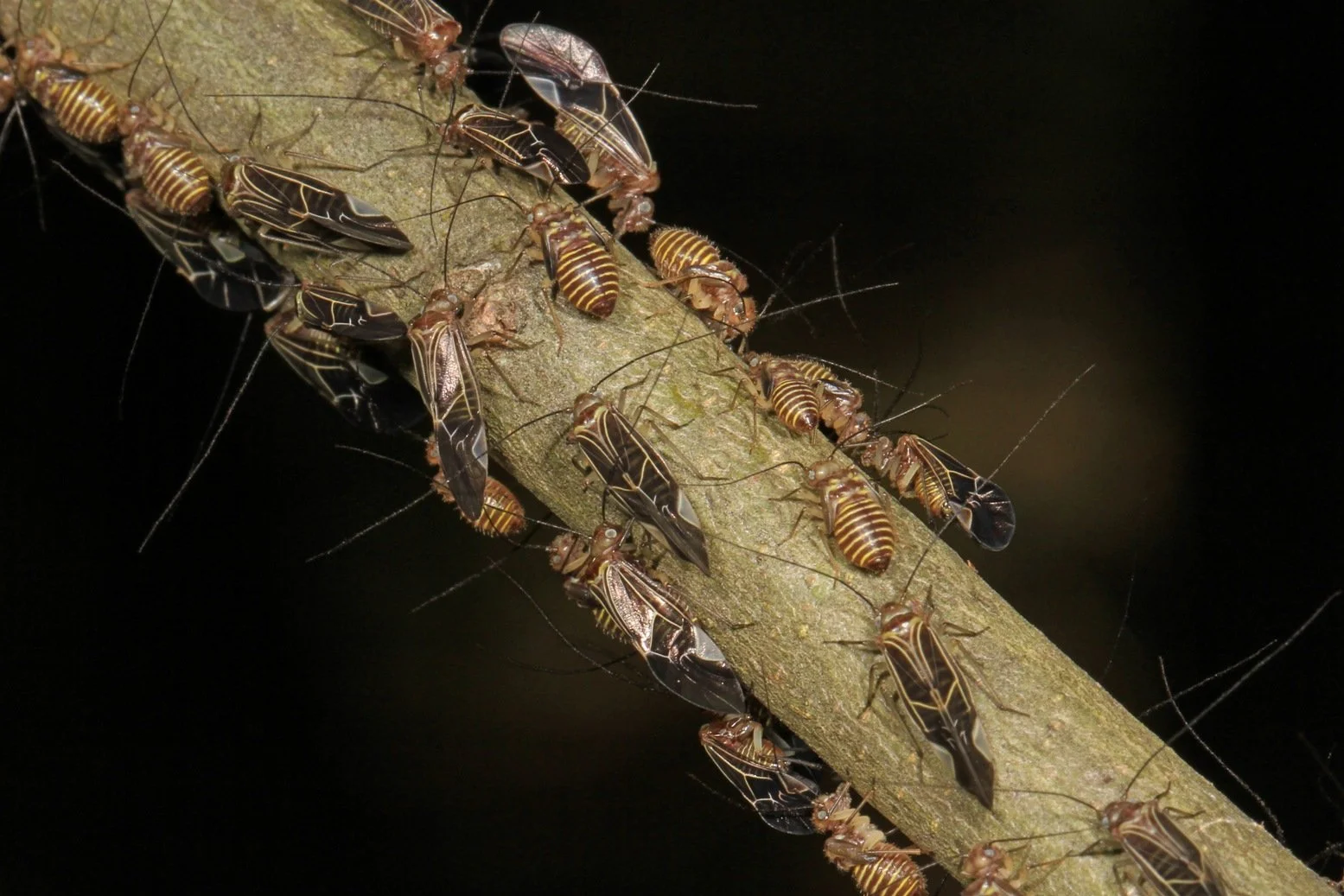
Photo: Tree Cattle, Judy Gallagher
Judy Gallagher
February 2026
It's challenging to find insects at this time of year. Many insects overwinter as eggs or pupa, and the ones that overwinter as adults are typically in hiding, trying to keep warm underneath bark or leaf litter. But I saw several adult barklice recently on a warm January day. They had likely just emerged from a protected spot. Barklice are members of insect order Psocoptera, which also includes booklice and parasitic lice.
Booklice are wingless and are usually found inside homes, where they feed on mold, fungi, grains, insect fragments and starchy materials like glue in the binding of books. They are found in moist environments, and rarely survive when humidity is less than 50%. They are not harmful to humans.
Parasitic lice, as the name implies, are parasites that feed on blood and other secretions of warm-blooded hosts like mammals and birds.
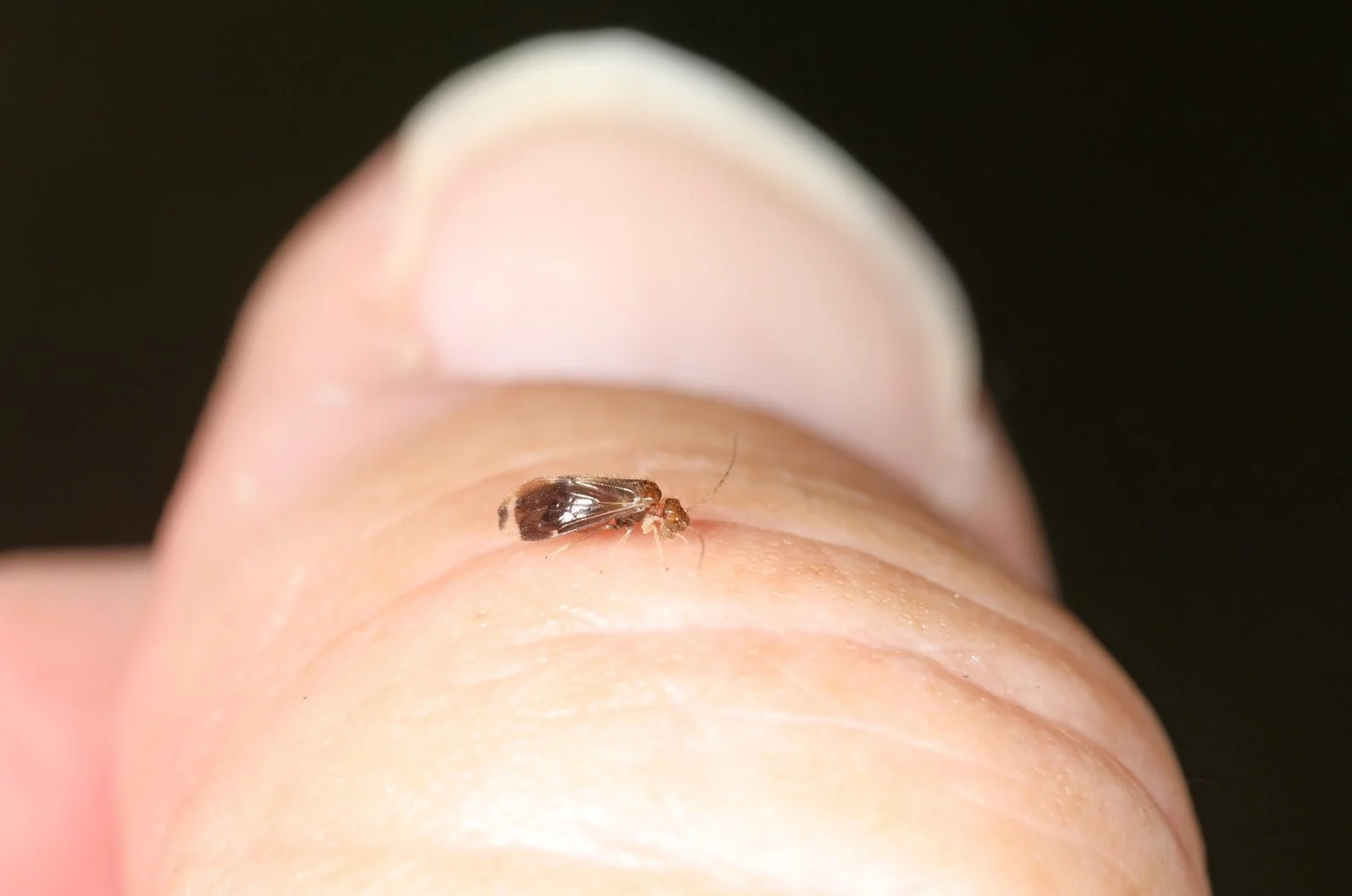
Corrupt Barklouse (Polypsocus corruptus) on my thumb, showing its small size. Photo: Judy Gallagher
But this article is about barklice. There are more than 300 species of barklice in 26 families in North America. They are detritivores, feeding on fungi, algae and lichens, contributing to the recycling of organic material. Barklice normally don't damage the plants they live on, although an Australian species' nymphs bore holes in wood instead of living in existing burrows. Barklice tend to be small and inconspicuous. They have chewing mouthparts and a sort of slender rod extending from the jaw that helps brace the barklouse while it is scraping up its food. Unlike their parasitic cousins that have legs suitable for gripping their host, barklice have legs that are adapted for jumping. Most adult barklice have wings and have two wing-coupling mechanisms, one that joins the forewing and hindwing in flight, and one that keeps the wings in place when the barklouse is resting.
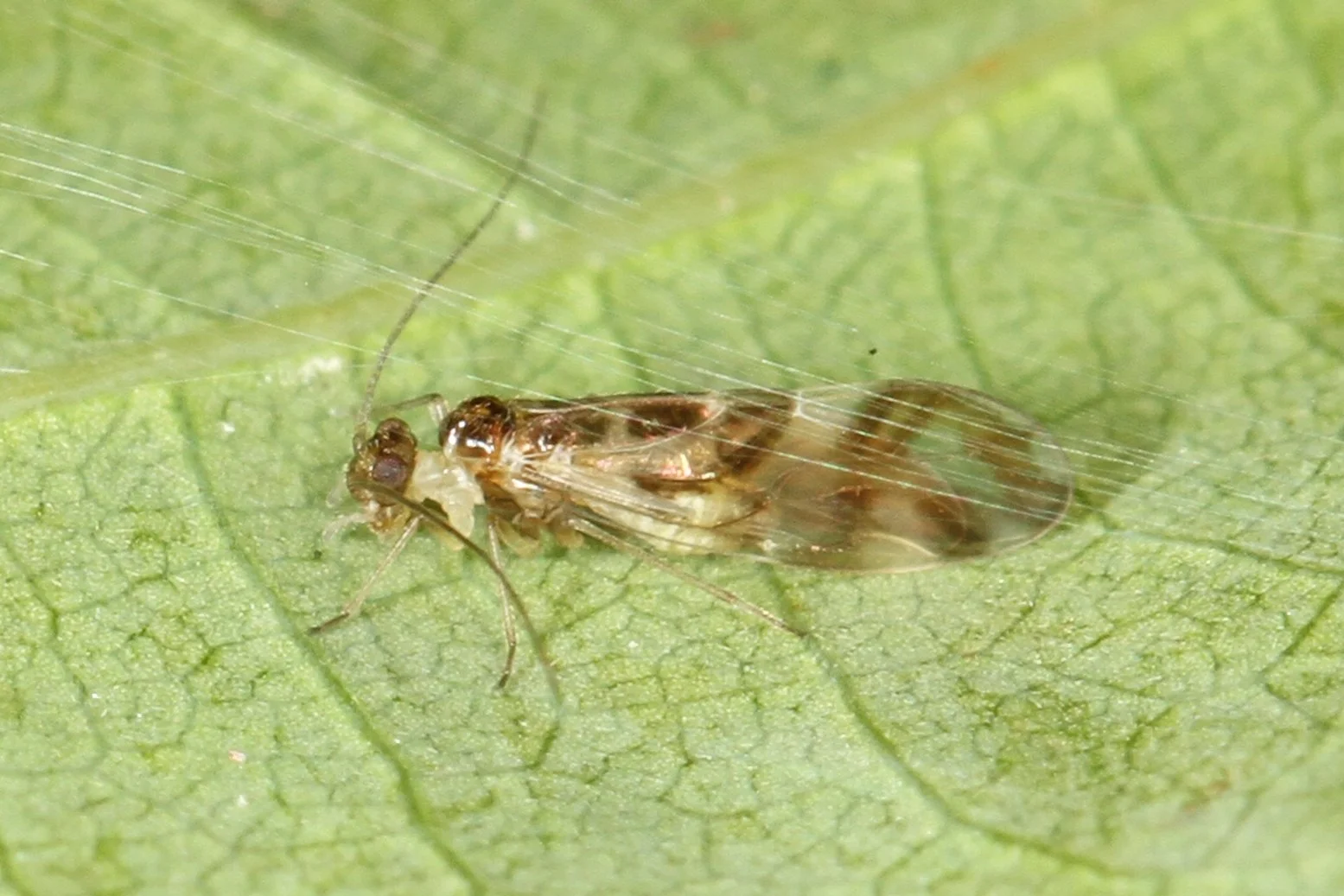
F-winged Barklouse (Graphopsocus cruciatus) with silk. Photo: Judy Gallagher
Some species produce silk from glands in their mouths, and a species that is found in the southern U.S. can swathe large trees with its silk. Some local species produce silk, but not in that volume. The web protects the barklice from predators while feeding, and does not damage the tree. Some barklice species eat the silk when the need for it is done.
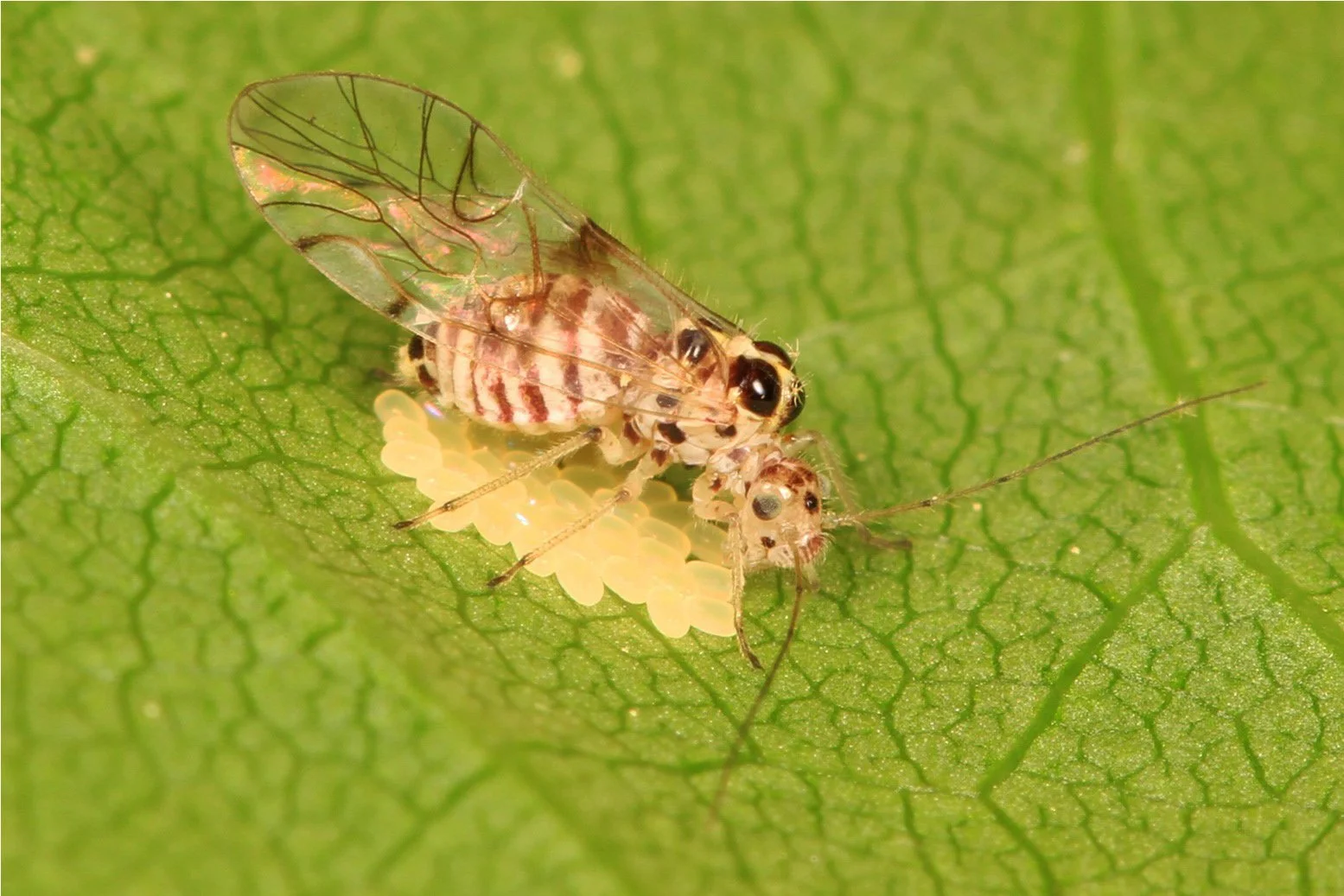
Shaggy Barklouse family - Teliapsocus conterminus female with eggs. Photo: Judy Gallagher
Most barklice lay their eggs in small crevices in bark or on foliage, but there are at least two species that have live young. Barklice aren't known to guard their eggs, but the picture above makes me wonder if some do. Eggs and other life stages can be parasitized by tiny wasps.
Some barklice species reproduce asexually (parthenogenesis), and the resulting young are genetically the same as the adult female. Most species also reproduce sexually, and male barklice sometimes do a courtship dance, making sounds with their legs to attract a female.
Barklice undergo incomplete metamorphosis. The young look much the same as the adult, except they don't have wings or reproductive structures. They usually shed their external skeletons about six times before becoming a reproductive adult.
If you look closely at the rear end of the barklouse in the above photo, you can see a yellow hairy anatomical feature called a sensorium or sense cushion. Scientists theorize that the sensorium may be used to detect wind currents, which might help the barklouse when in flight.
Tree Cattle. Photo: Judy Gallagher
A Common Barklice family species, Cerastipsocus venosus, forms herds on smooth-barked trees. The adults have wings, and the nymphs have distinctive yellow and black striped abdomens. They are commonly called Tree Cattle.
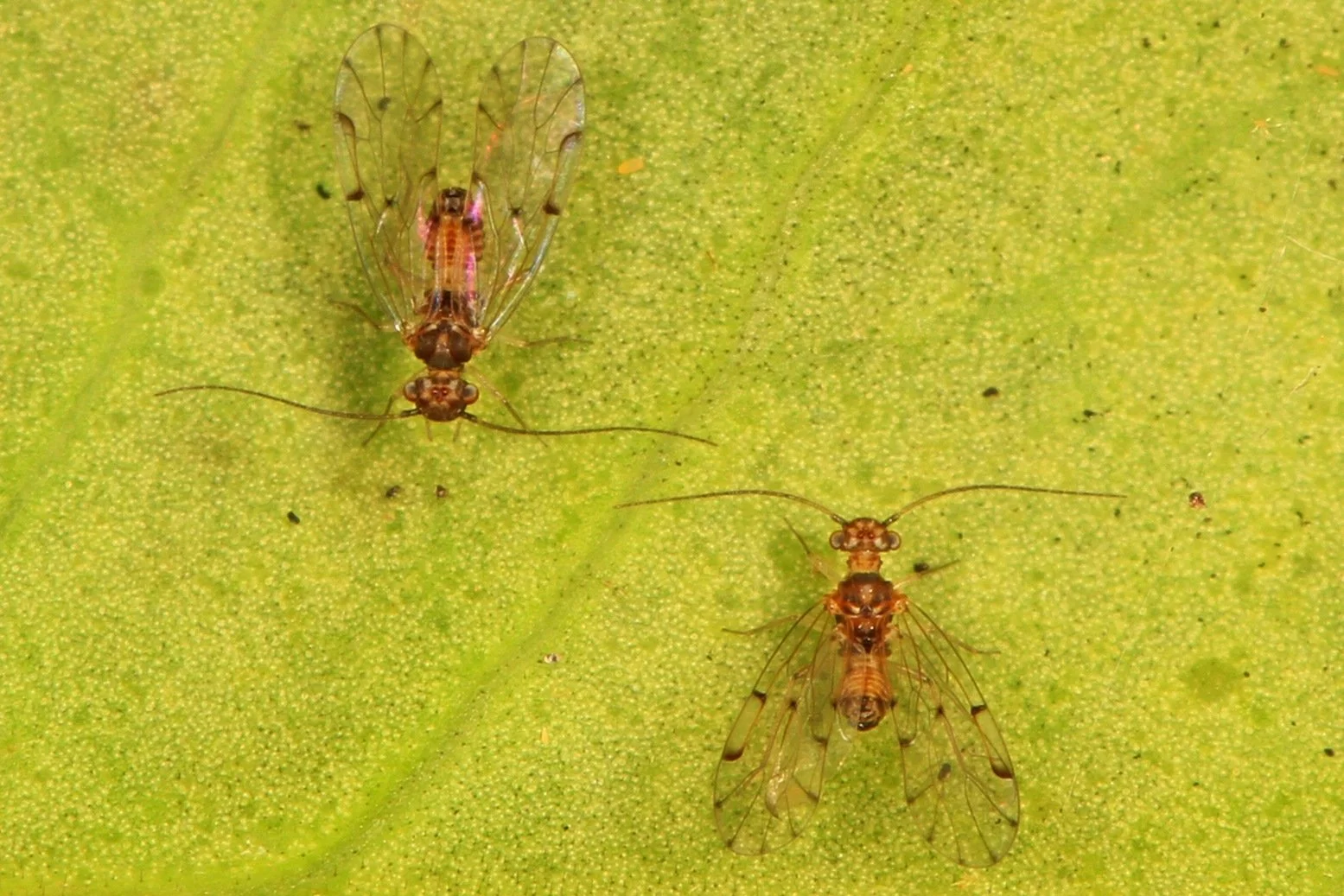
Outer Barklice family species Ectopsocus californicus. Photo: Judy Gallagher
Outer Barklice have been found in bird feathers, leading scientists to theorize that they may disperse by hitch-hiking rides on birds.
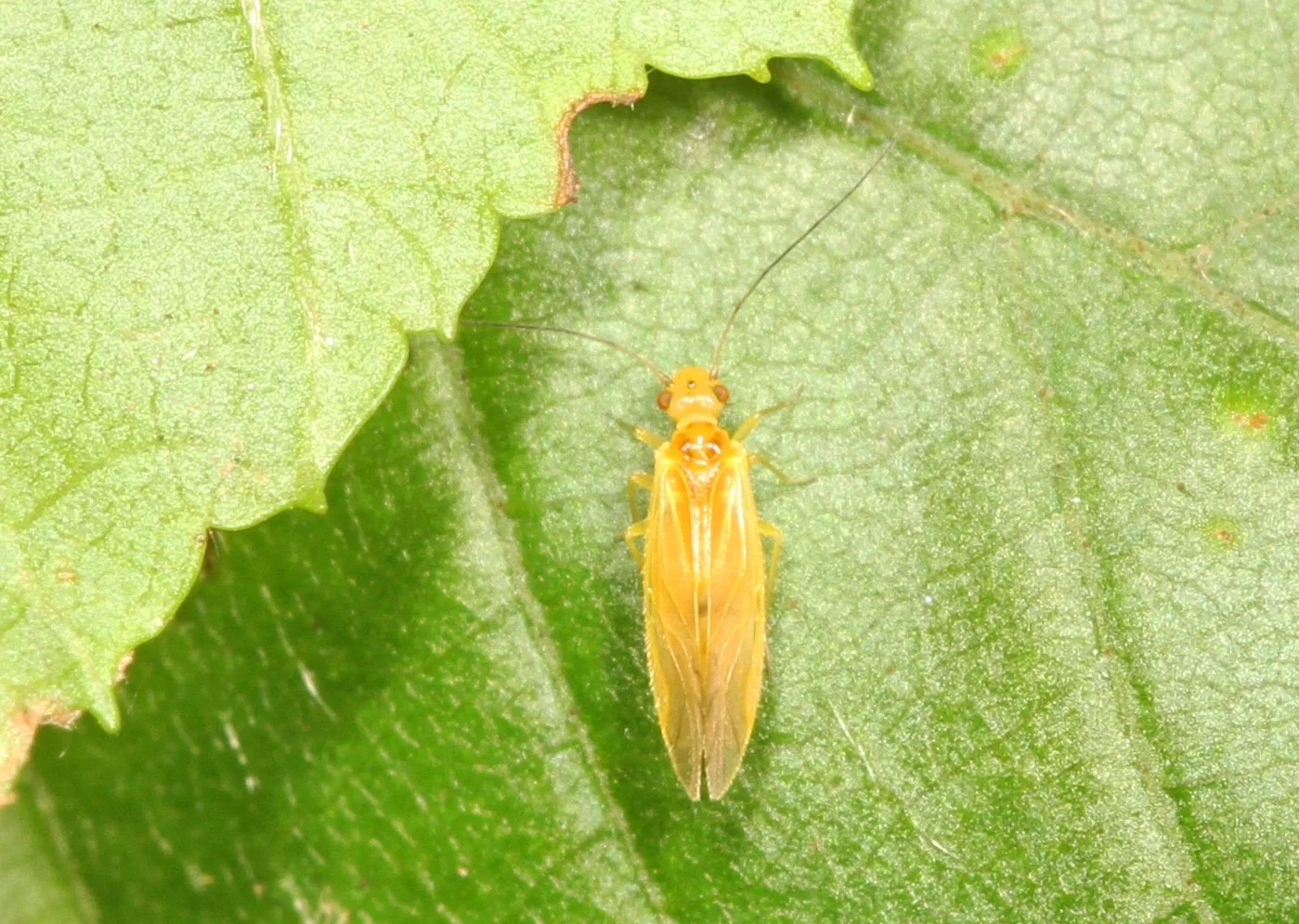
Lizard Barklouse family species Valenzuela flavidus. Photo: Judy Gallagher
There are a number of other barklouse families including Ancient Barklice, Hairy-winged Barklice, Narrow Barklice, Fateful Barklice, Loving Barklice, and the intriguingly named Lizard Barklice and False Lizard Barklice, which aren't closely related. I couldn't find information on why the family names are so unusual, but the Lizard Barklouse above does not resemble a lizard.
I hope you've learned a little about these intriguing creatures and have enjoyed my louse-y pictures. Sorry, I've never been able to resist a good pun
View more of Judy’s articles on A Closer Look: Nature All Around Us (formerly Observations from Meadowood).