
NVBA NEWS BLOG
Welcome to the blog for Northern Virginia Bird Alliance, a wealth of resources about northern Virginia birds, wildlife, habitat conservation and restoration, native plants, wildlife-friendly gardening, advocacy and more.
Wildlife Sanctuary Almanac: Tree and Shrub Pruning that Won't Harm Birds
Pruning can be good for the tree and good for us, but it isn’t always good for birds. Done wrong, it can disturb nesting sites, remove protective cover and prevent plants from flowering or fruiting. Here are a few tips for bird-friendly pruning this winter and spring.
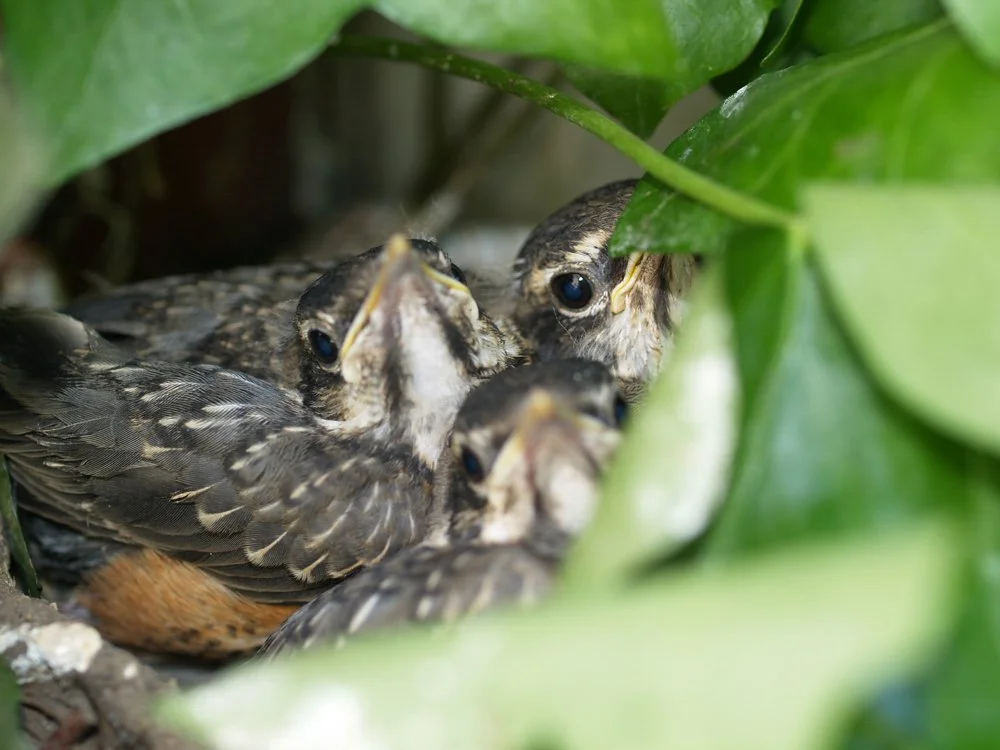
Photo: American Robins, William Harris/Audubon Photography Awards
Julie Udani
Pruning can be essential to the health of a tree or shrub.
We prune trees to remove dead or diseased branches or to prevent disease by opening up the interior of the plant to allow for airflow. A large limb stretched over a utility line or rooftop can be pruned away to remove a potential hazard. Pruning can be good for the tree and good for us, but it isn’t always good for birds. Done wrong, it can disturb nesting sites, remove protective cover and prevent plants from flowering or fruiting.
Here are a few tips for bird-friendly pruning this winter and spring:
Don’t prune during nesting season.
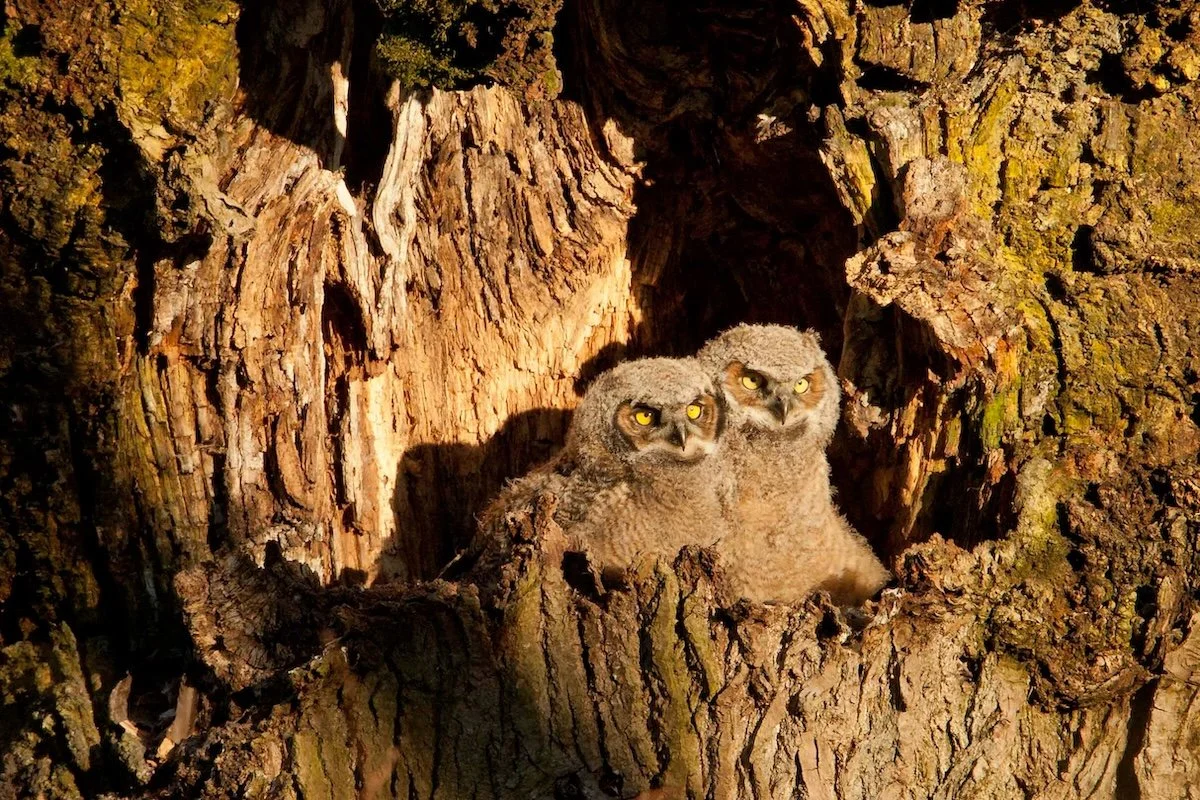
Great Horned Owls, Tracey Kidston/Audubon Photography Awards
In Northern Virginia, nesting generally begins in mid-March for our year-round species. We want to prune most of our trees in late February anyway, because we need to do it while they are dormant. One exception is spring-blooming trees and shrubs. If those are pruned too early, it might remove flower buds. Not only does that make the plant less attractive to us, but it means no nectar for pollinators and no fruit later in the season for the birds. Spring blooming shrubs and trees should be pruned immediately after flowering, but look carefully for nests before doing any work. If you find one, do not move it, and reschedule your pruning. The Master Gardeners of Northern Virginia website has good information on when and how to prune your trees if you have to delay pruning.
Don’t prune too much.
Sometimes we need to remove interior branches to allow air to flow through a shrub or tree in order to prevent fungal diseases. Just remember that birds need some of those internal branches and leaves for habitat and protection from weather and predators. As a rule, don’t remove more than necessary for the health of the plant. While some shrubs can be trimmed all the way to the ground and come right back, most trees and shrubs can’t lose more than about a quarter of their mass at one time.
Don’t be too neat.
Leave some litter on the ground and don’t remove dead trees entirely. Birds use twigs and small branches to construct their nests. Some birds are ground-dwelling and appreciate a nice brush pile. If you need to remove a dying tree, consider leaving a safe portion of the trunk standing (called a “snag”). Snags attract many different insects to break down the tissue of the tree and can be vital sources of food for birds. Chickadees have been known to nest in snags as short as four feet tall. If you can’t leave it standing, a log left to rot on the ground can be almost as beneficial.
Catch up on past Wildlife Sanctuary Almanac articles here.
Perspective on the Dreaded Spotted Lanternfly
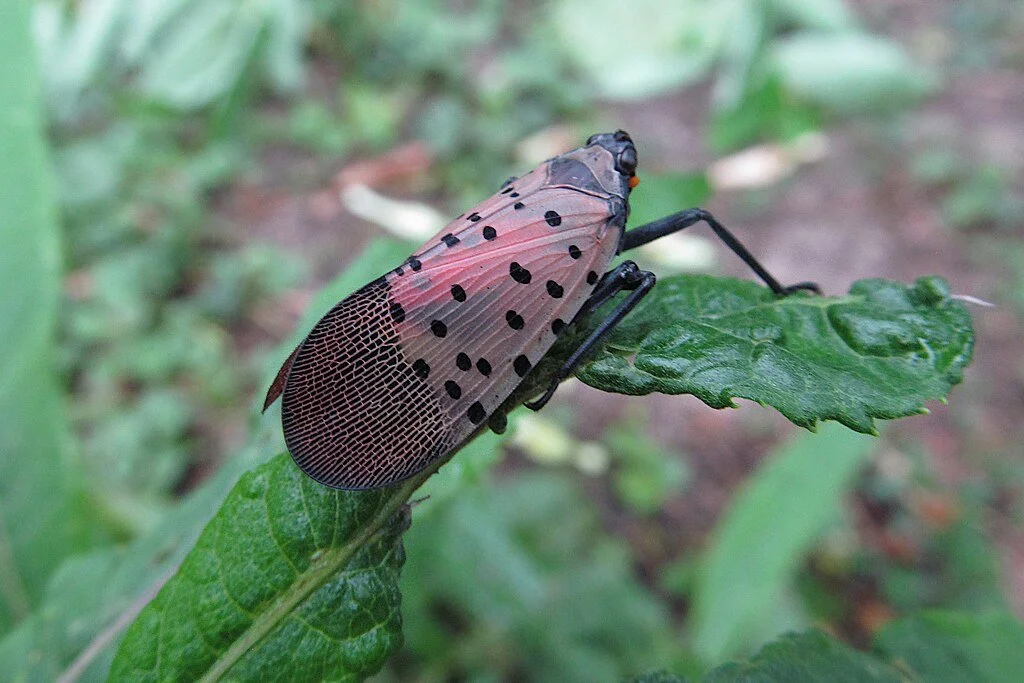
Since the spotted lanternfly first made its presence known in Virginia in 2018, we have been faithfully stomping, squashing and squishing the invaders, which the Virginia Department of Wildlife Resources describes as a “vampire in a black tuxedo, white shirt, and red bowtie.”
Photo: Adult Spotted Lanternfly, Cbaile19, CC0, via Wikimedia Commons
Nicole Patrick
Since the spotted lanternfly first made its presence known in Virginia in 2018, we have been faithfully stomping, squashing and squishing the invaders, which the Virginia Department of Wildlife Resources describes as a “vampire in a black tuxedo, white shirt, and red bowtie.” The now infamous invasive species has made its home throughout the northeast and mid-Atlantic and is present in at least 19 U.S. states.
The damage spotted lanternflies can do to native plants is well-documented; they feed on a wide variety of our native species, including grapevines, fruit trees and hardwood trees, and they have few natural predators. To date, Fairfax County has spent hundreds of thousands of dollars attempting to control the spread of the spotted lanternfly by targeting its preferred host, the invasive Tree of Heaven. But is the thinking around how to approach this widely-decried pest beginning to shift?
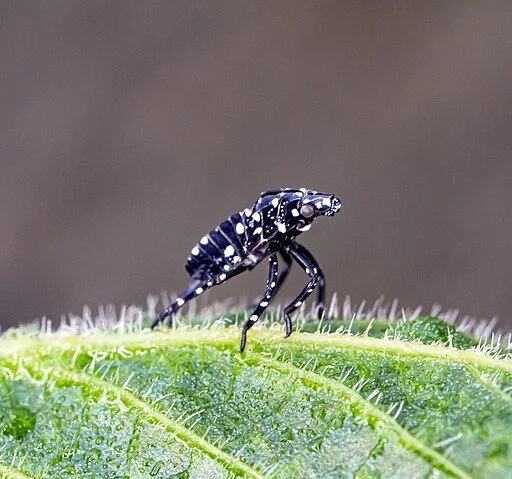
Spotted Lanternfly nymph. Photo: WanderingMogwai, CC BY-SA 4.0, via Wikimedia Commons
Smithsonian Entomologist Greg Ose reports that he and his team receive a high volume of reports and questions related to spotted lanternfly activity and their ongoing presence in our area – but, he says, they are no longer a cause for alarm. In November 2025, Ose wrote in an article in the Smithsonian Gardens newsletter that he expects the spotted lanternfly to “drift into obscurity,” hopefully becoming simply another garden “nuisance.”
Further, while “not easily containable, [spotted lanternflies] are treatable and in severe cases, select treatments are warranted.” Ose’s recommendations? Regular inspection and prevention (e.g., removal of Tree of Heaven), destroying egg masses, and yes – squishing and swatting adults when they appear in your garden. To destroy egg masses, Ose recommends using a stiff card to scrape egg cases into a plastic bag filled with a little hand sanitizer or rubbing alcohol, then throwing the bag in the trash.
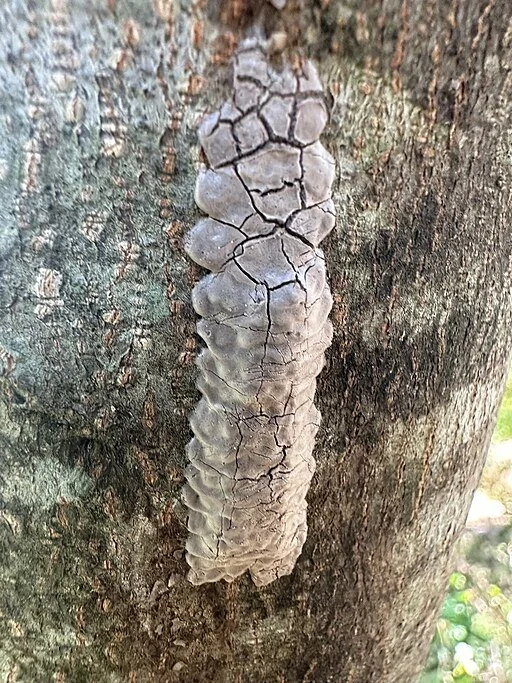
Spotted Lanternfly egg sac. Photo: aberkov, CC BY 4.0, via Wikimedia Commons
Importantly, he notes that pesticides available to treat spotted lanternflies also will kill other insects, including pollinators and would-be predators. According to Ose, the risk of harming these beneficial species is not worth it. And you should never, ever use sticky glue traps, which may unintentionally ensnare birds and other wildlife. There are other ongoing control efforts available to monitor and manage the presence of the lanternfly, including public education campaigns and non-chemical removal.
Even more promising, potential new natural predators, such as bats, are emerging. Birds also can play a critical role in helping us control the spread of spotted lanternfly populations going forward. Evidence suggests that birds could become a significant natural predator – with a little encouragement. Using iNaturalist, community scientists have logged observations of more than 33 different species eating the lanternfly. Some of the best ways to help birds along are well-known to us: provide water for drinking and bathing, nesting sites and native plant species.
Invasive plant removal also has a part to play in ongoing management of the lanternfly. The aforementioned Tree of Heaven is known to make the lanternflies taste bitter to birds; removing the invasive tree may make the lanternfly a more appealing food source to birds and other native predators.
Perhaps, then, the best thing we can do going forward as stewards of our native environment is to educate ourselves and others. While spotted lanternflies are not to be ignored, it is time to stop panicking and start directing our efforts toward supporting the native species that can have a meaningful impact on lanternfly populations.
Learn More:
Spotted Lanternfly, Fairfax County Public Works and Environmental Services, available at https://www.fairfaxcounty.gov/publicworks/trees/spotted-lanternfly
Greg Ose, “Garden Foe: The Spotted Lanternfly,” Smithsonian Gardens, Nov. 24, 2025, available at https://gardens.si.edu/learn/blog/garden-foe-the-spotted-lanternfly/
Carlyn Kranking, “Birds Are One Line of Defense Against Dreaded Spotted Lanternflies,” Audubon Magazine, Sept. 17, 2021, available at https://www.audubon.org/magazine/birds-are-one-line-of-defense-against-dreaded-spotted-lanternflies
Tree of Heaven, Blue Ridge Prism Fact Sheet, available at https://blueridgeprism.org/factsheets
Nicole Patrick, an enthusiastic birder and writer, is a lifetime northern Virginia resident.

NVBA’s Advocacy Committee and the Busy Season Ahead
There’s always something the NVBA Advocacy committee needs help with. With the 2026 Virginia General Assembly about to convene on January 14 for a fast-moving two-month session, the committee needs many volunteers to make sure its voice is heard.
Photo: Virginia State Capitol Building, Wikimedia user Skip Plitt via CC BY-SA 3.0
Connie Ericson
I have been active in NVBA’s advocacy committee since 2018 when I joined the board. I had just retired and had not been active in any of the organization’s many projects. But when a board member asked for a volunteer to draft a letter to the National Park Service about a planned activity along the GW Memorial Parkway that could potentially disturb Bald Eagles, my hand shot up. Over the years my participation has waxed and waned, but there’s always something the committee needs help with. With the 2026 Virginia General Assembly about to convene on January 14 for a fast-moving two-month session, the committee needs many volunteers to make sure its voice is heard.
There’s more information below on how you can help, but first, here’s a little perspective on the scope of the committee’s activities.
Much of the work of the committee naturally focuses on local issues within NVBA’s geographical area, such as urging local officials to (i) take conservation into account when proposing and developing bike paths, (ii) support more preservation and restoration of land, (iii) encourage responsible dark sky lighting practices, (iv) prevent encroachment of development on nature reserves like Occoquan Bay NWR, (v) negotiate with Dominion Energy for streetlights that minimize light pollution, and much more. Whenever possible, NVBA will join with other organizations to increase the potential impact of our efforts.
Sometimes the committee will take a stand on issues relevant to the larger area, particularly when there’s a troubling environmental or conservation impact. A current example is helping reverse the serious decline in Ospreys in the Chesapeake Bay and addressing the menhaden reduction fishery operations in Virginia.
The committee will also comment on some federal regulatory and legislative issues, such as recent proposals to reduce the effectiveness of the Endangered Species Act and the Clean Water Act. In those efforts NVBA often partners with National Audubon, the National Parks Conservation Association, and the Southern Environmental Law Center.
Focus on the 2026 General Assembly
And, there are state-level actions, which affect northern Virginia and the rest of the Commonwealth. In the regulatory arena, NVBA is promoting building code amendments to require bird-safe windows. The committee has already been taking action in advance of the upcoming session of the General Assembly. The committee cosponsored a workshop on the menhaden/Osprey problem and hosted a free online seminar with Delegate Kathy Tran, who spoke on how to be an effective advocate. You can view the recorded seminar here.
Because the General Assembly session is only two months long, bills move quickly, and we have to act fast when bills we support or oppose are scheduled for action. We would love to have your help. We anticipate advancing positions on invasive plants, menhaden fishing, data centers, much-needed funding for state parks and other protected lands and waters, retaining the Clean Economy Act, tree preservation and more. To learn more about anticipated bills and their need, visit The Virginia Conservation Network's "Our Common Agenda.”
If you can help, send an email to advocacy@nvbirdalliance.org with your name, email address and telephone number, and we will send you an email with some suggested talking points when action on an issue is required. Because time will be short, make sure you know in advance who your Delegate and Senator are and how to contact them. You can get that information from the Virginia General Assembly website on the Who's My Legislator page. Also, many state legislators have town meetings at home during the session and that is a great, nearby opportunity to advocate for sound conservation policies.
Let’s all do what we can in 2026 to help birds, other wildlife and the environment!
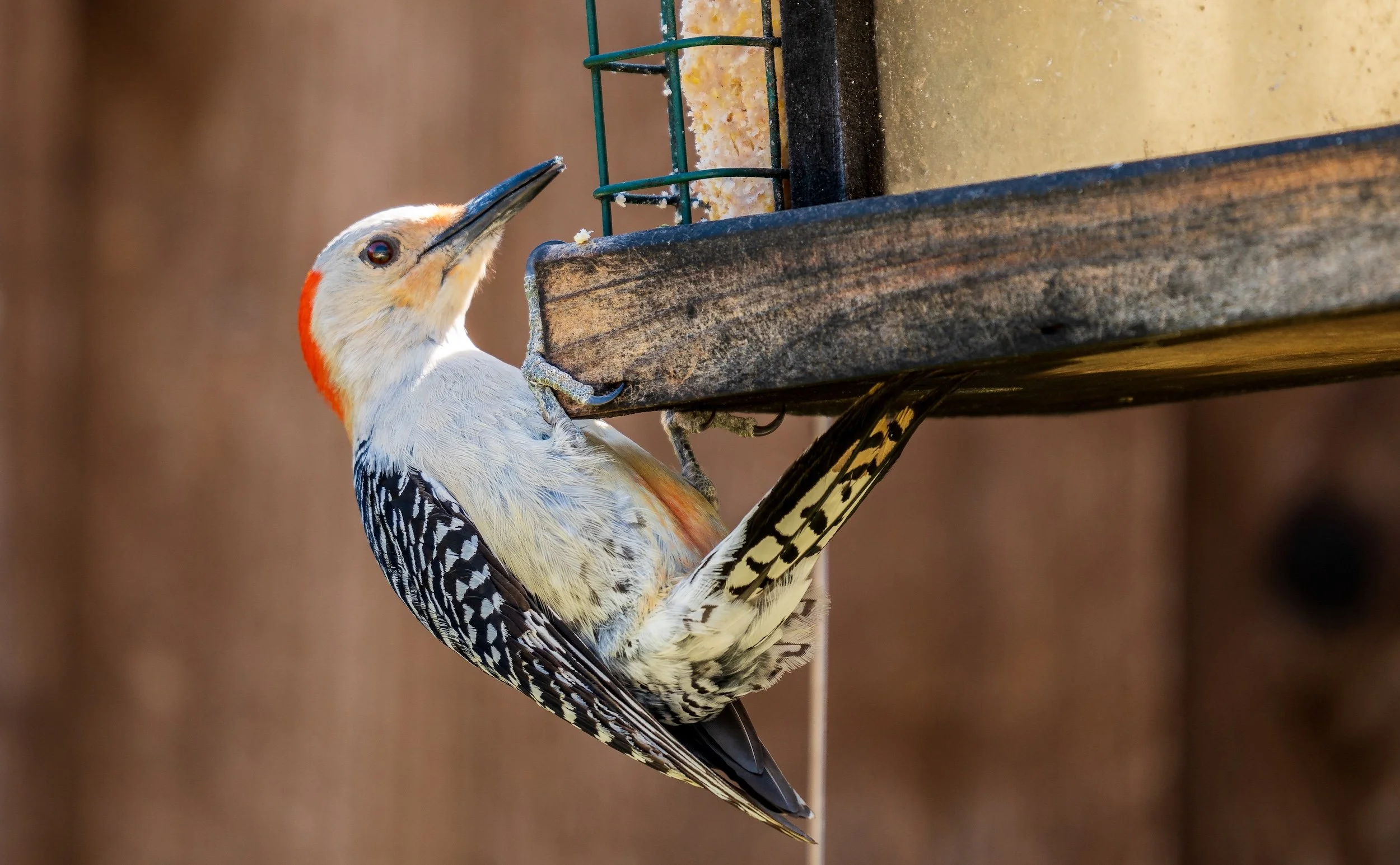
Feeding Birds in Winter
We can help our bird friends survive winter weather by providing them both food and water, particularly in urban and suburban areas where native habitat may be scarce.
Photo: Red-bellied Woodpecker, Steve Donovan/Audubon Photography Awards
Annette Skye
We can help our bird friends survive winter weather by providing them both food and water, particularly in urban and suburban areas where native habitat may be scarce. If your yard is already a wildlife sanctuary, providing supplemental food and water can make it even more attractive to winter birds. Careful preparation, maintaining your equipment and selection of nourishing food all are key to ensuring a successful and healthy feeding station.
Keep It Clean!
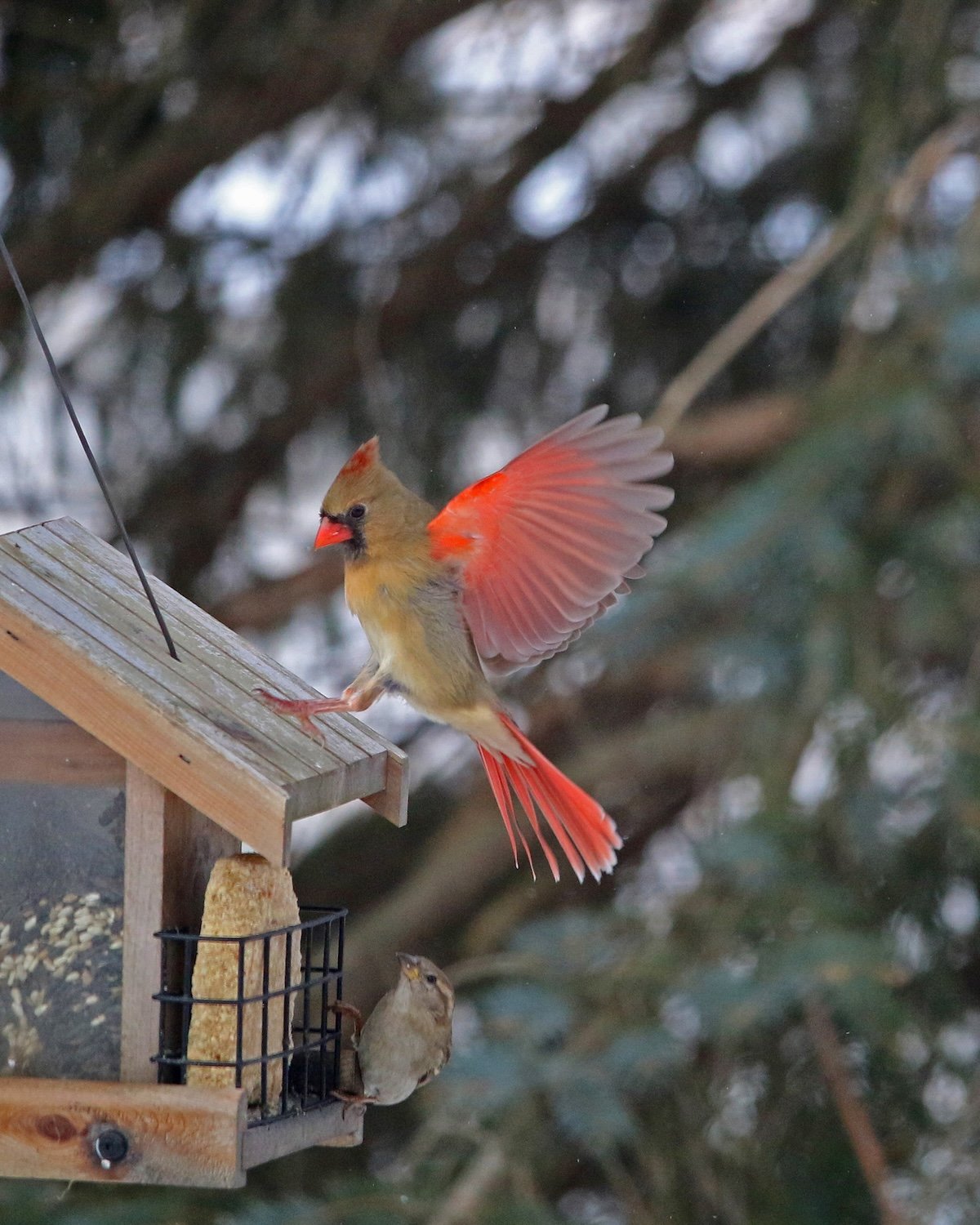
Northern Cardinal, Angela W/Audubon Photography Awards
If you have stored feeders since last winter, make sure you give them a good cleaning before filling them. This will ensure you aren’t transferring any bacteria from remnants of food that may have been sitting in the feeder for months. According to National Audubon’s 11 Tips for Feeding Backyard Birds, uneaten seed can be a source for deadly mold. You can clean birdfeeders with dish soap, although some authorities suggest an additional decontamination with a 10 percent solution of non-chlorine bleach. Cornell’s Winter Bird Feeding pamphlet suggests using a weak bleach solution if there’s evidence of disease in your yard. Always make sure the feeder is completely dry before filling it, to avoid mold growth.
After that initial cleaning, clean the feeders again at least every two weeks, and, unless snow prevents it, clean up seed waste under the feeders often. If you use already hulled bird seed you may avoid some of the mess. Discarded seed and seed waste can get moldy even in winter, and birds droppings can contaminate fallen seed under feeders.
Pick High-Quality, High-Energy Food
Although inexpensive wild bird seed blends available in many stores may be tempting, it pays to spend a little more money for quality food. Cheaper blends often include filler grains such as red milo, which birds by and large will not eat. The food is wasted, and, when birds fling it to the ground to get to something they prefer, the waste grains and seed can attract pests as well as make it more difficult to keep the feeding station clean and free of mold. There are a variety of high-quality mixes to meet specific aims, such as avoiding mess or attracting certain kinds of birds. See Mixology: Breaking Down 5 Common Birdseed Blends.
Black oil sunflower seeds will attract a large variety of birds. They are easy for birds to crack open and provide high-energy, oil-rich meat. Some kinds of food are preferred by different birds. Cracked corn, peanuts, Nyger seed, safflower seed, millet and suet all have their fans. To attract a variety of birds, provide a variety of foods. See Who Likes What: The Favorite Birdseed of Feeder Regulars and Rarities. Suet varieties can include peanut butter, insects and berries to attract different birds as well. And, if you don’t have a feeder, suet balls and seed wreaths are readily available options during winter.
Provide a Clean, Heated Water Source
Birds appreciate a source of clean, unfrozen water in winter, for drinking and bathing. If you have a bird bath, a bird bath heater will help to prevent the water from freezing over. Be sure you only plug a heater into a ground-fault interrupted circuit to prevent shorts. If you don’t have a grounded outdoor outlet, a National Wildlife Federation Blog suggests buying several heavy-duty plant saucers so that you can replace frozen baths with fresh ones each morning. See Don't Forget Water for Birds in Winter. Of course, it’s just as important to keep bird baths clean as it is feeders. Change the water daily and clean the bird baths completely at least every two weeks, following the same guidelines as for cleaning feeders.
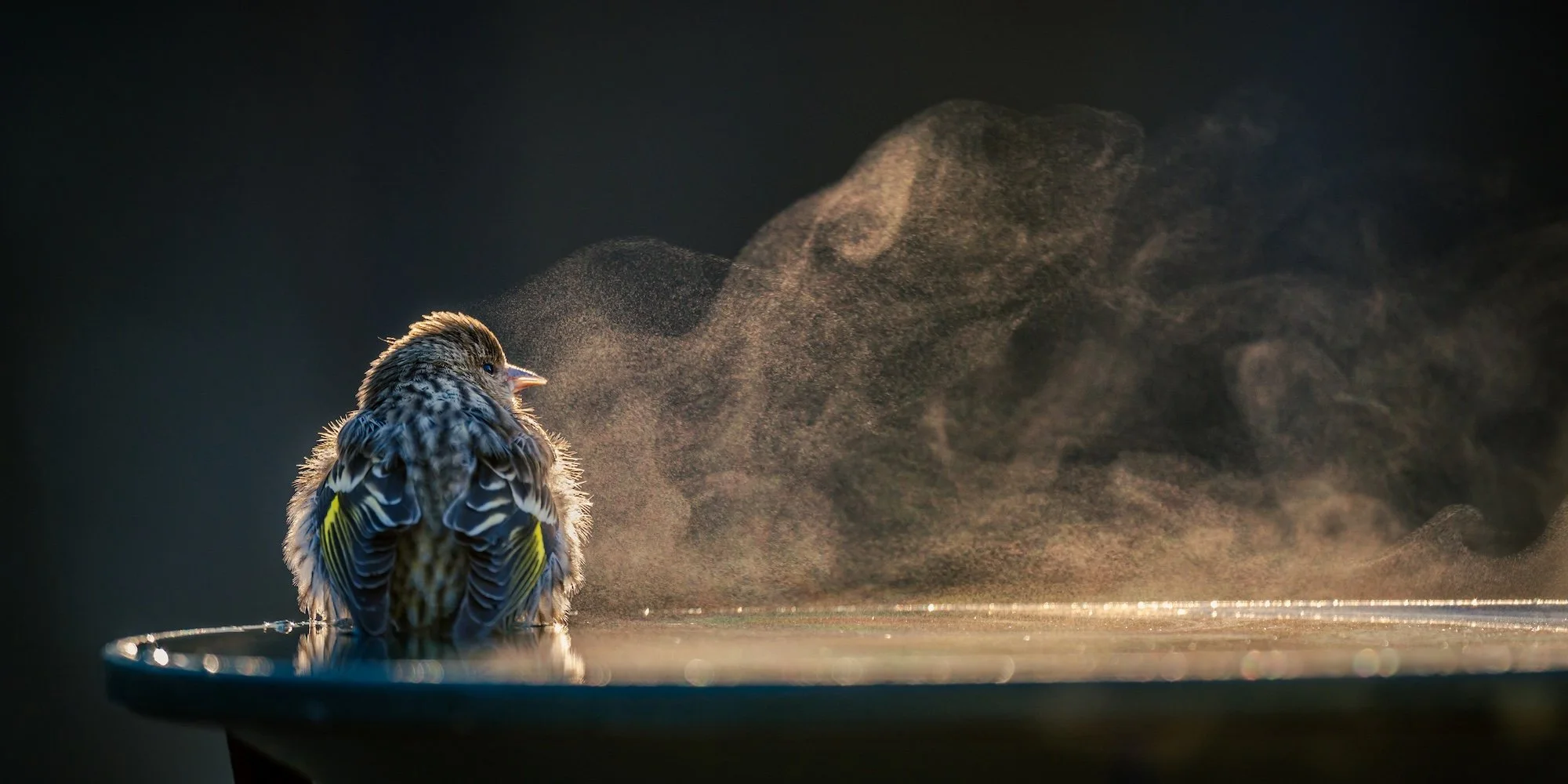
Pine Siskin, Christopher Baker/Audubon Photography Awards
Be Wary of Predators
Flocks of birds in your back yard may attract predators. It’s not uncommon for a Cooper’s Hawk to stake out a yard with bird feeders. If you notice repeated predation, take the feeders down for a while to encourage the hawk to look for another source of food. Do the same if a neighborhood cat stakes out your feeding station.
If you take care and follow a few simple rules, you can enjoy watching birds from the warmth of your home, even when the weather is frightful!
Annette Skye is an avid gardener who enjoys birdwatching.
A Closer Look: Nature All Around Us, January 2026
Judy Gallagher is an NVBA board member and a regular surveyor of local wildlife who also captures photos of what she sees, in particular the less common species.
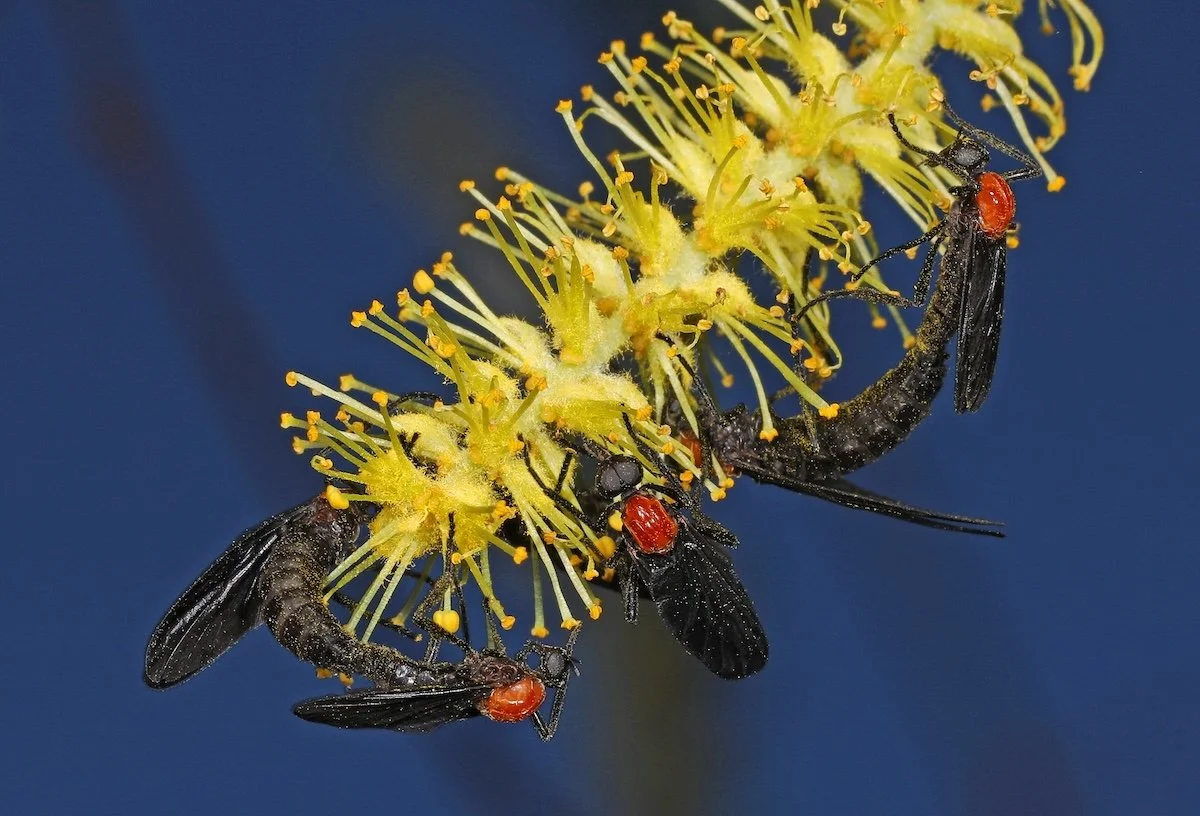
Photo: Lovebugs, Judy Gallagher
Judy Gallagher
January 2026
My late husband Jimmy and I used to travel to north Florida in late May each year. We had to carry an ice scraper and windshield washer fluid so we could periodically pull over and scrape insects called Lovebugs off the windshield. Lovebugs, so called because they are typically found in copula, were so numerous that we couldn't wait until we stopped at a gas station to clean the windshield. Lovebugs have even been known to make cars overheat when radiators become clogged with them.
Lovebugs. Photo: Judy Gallagher
Despite the name, Lovebugs are flies, not bugs, and they are a species in the March Fly family. Lovebug adults only live for a few days, and they are in tandem for the majority of their short adult lives. They are attracted to chemicals found in automobile exhaust, which explains why they are so numerous around roads. Lovebugs are not originally native to Florida, but they spread quickly due to lack of natural control mechanisms. They are now less common in Florida than they once were because natural controls, mostly fungi, have expanded to help with the overpopulation.
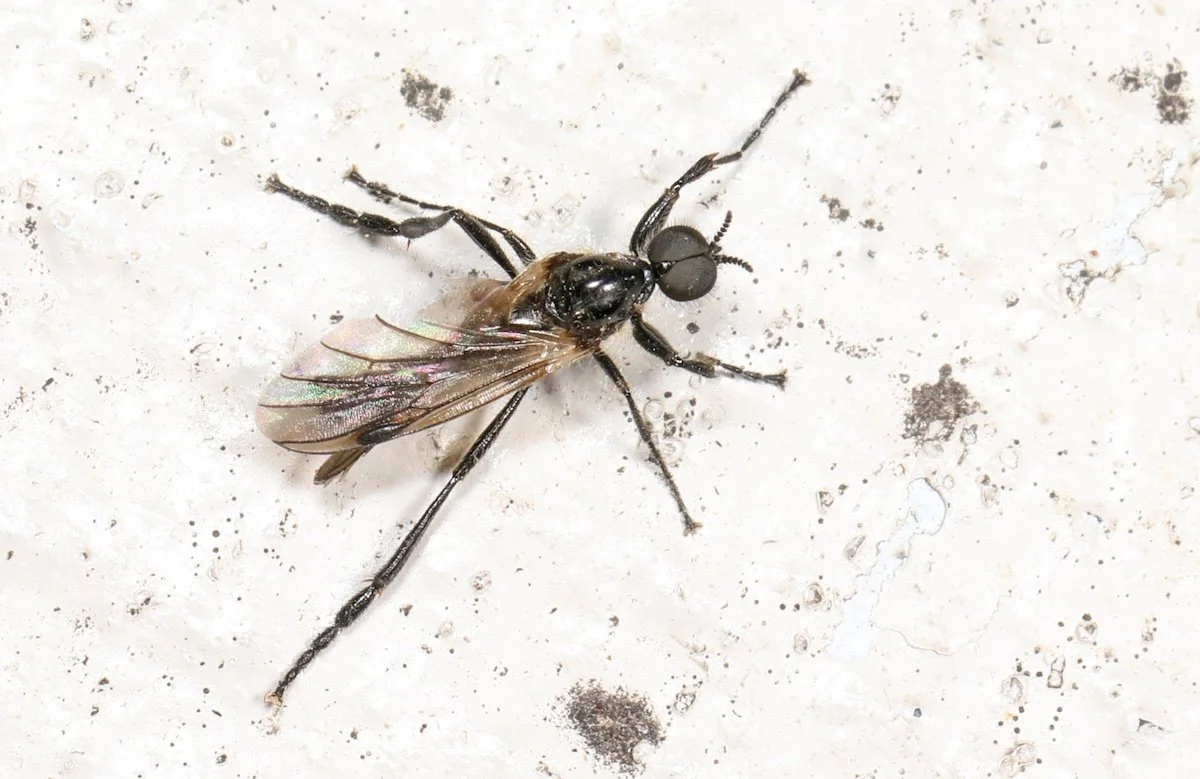
Dark Autumn Bibio (male). Photo: Judy Gallagher
We don't have Lovebugs here in northern Virginia, but we have other species in the March Fly family (Bibionidae). Like Lovebugs, March Flies are medium-sized, with slender black, brown or rusty bodies, thick legs and relatively small eyes. The rear legs are long and hang loosely when in flight, so it's pretty easy to recognize them while flying.
Common names like March Fly can be confusing. In Australia, members of fly family Tabanidae are called March Flies. We call them Horse Flies, and they aren't closely related to our March Flies.
Our species are mostly seen in late autumn or early spring, and the fly family is named because a lot of them make an appearance in early March. It's easy for them to find a mate because they emerge en masse and they complete their life cycle before many predators come out. But I did see one, the Dark Autumn Bibio, near the end of November, which was the inspiration for this month's column. Male Dark Autumn Bibios are known to swarm, but, unlike Lovebugs, they aren't attracted to automobile exhaust and don't mess up cars.
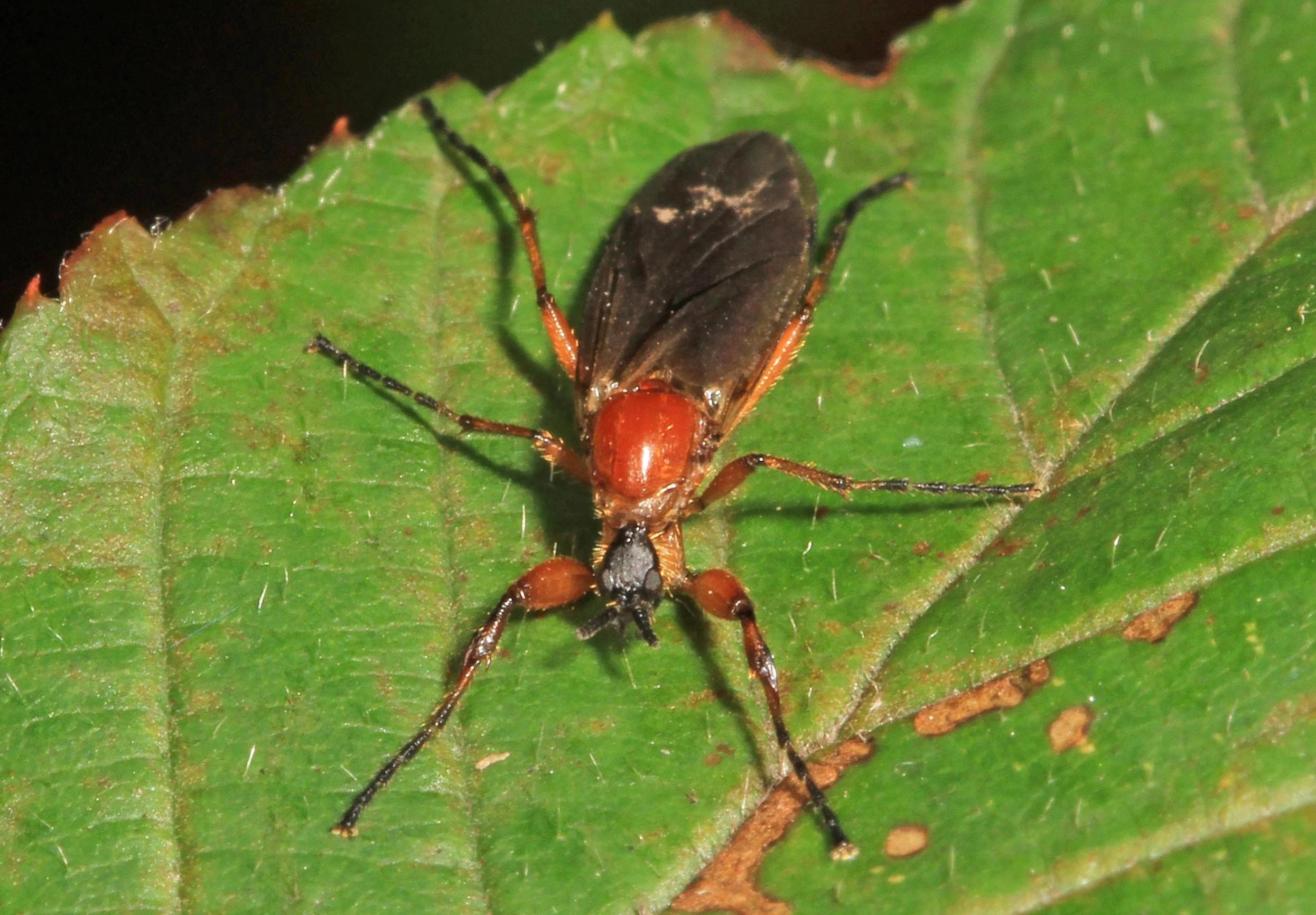
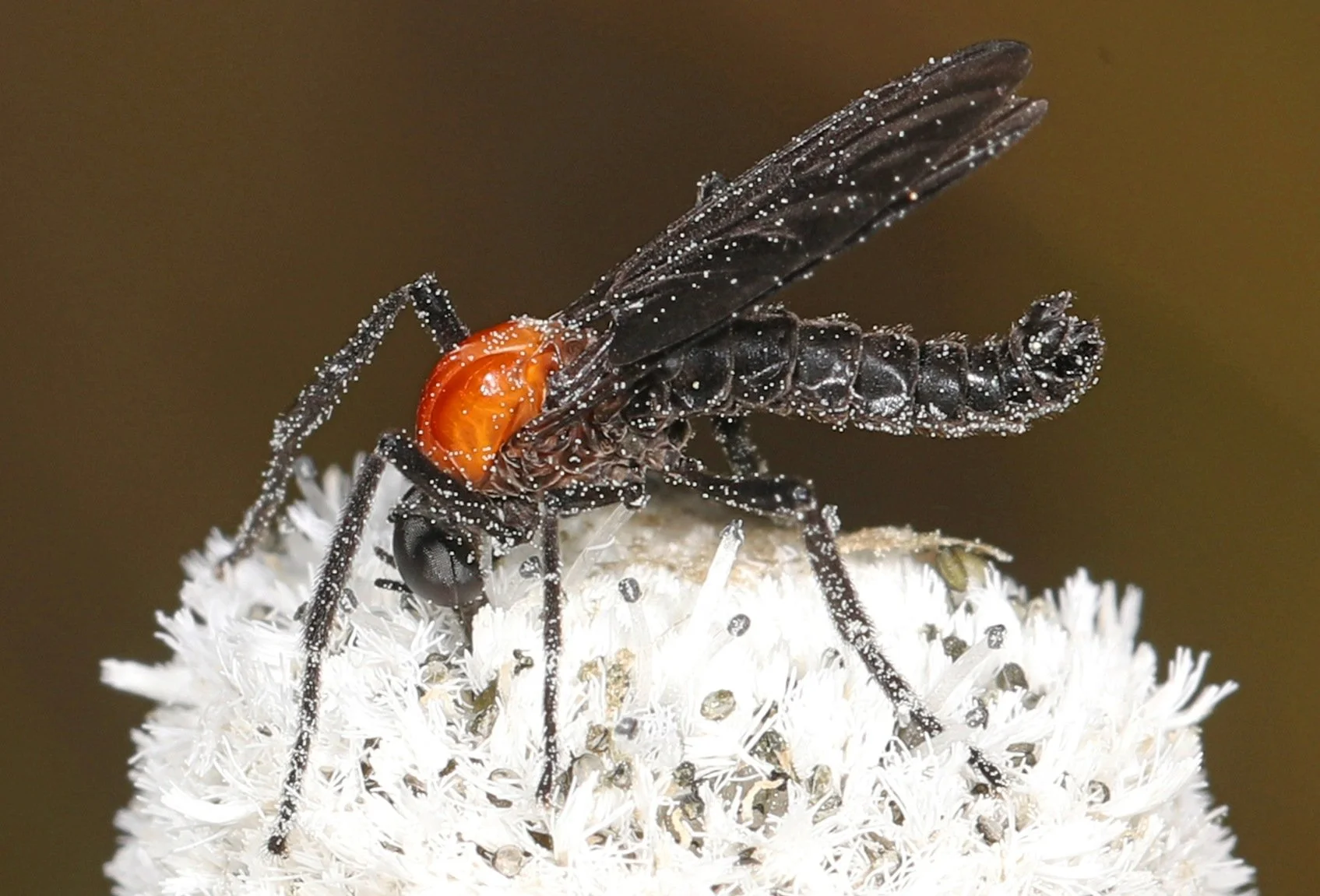
Dark Autumn Bibio (female). Photo: Judy Gallagher
Dark Autumn Bibios are sexually dimorphic. The male and female are easy to distinguish because the male is dark (as suggested by the common name), but the female has a red thorax and red on its legs.
Not all March Flies have sexually dimorphic coloring, but all March Flies have eyes that are easily distinguished by sex. Female eyes are smaller than male eyes and are separated from each other as seen above.
Lovebug male. Note the dividing line near the bottom of the compound eye. Photo: Judy Gallagher
The male's eyes are large and touch each other, and each male eye is divided into upper and lower parts that have different visual properties. The larger divided male eyes may help them to see other males above and below them in a mating swarm.
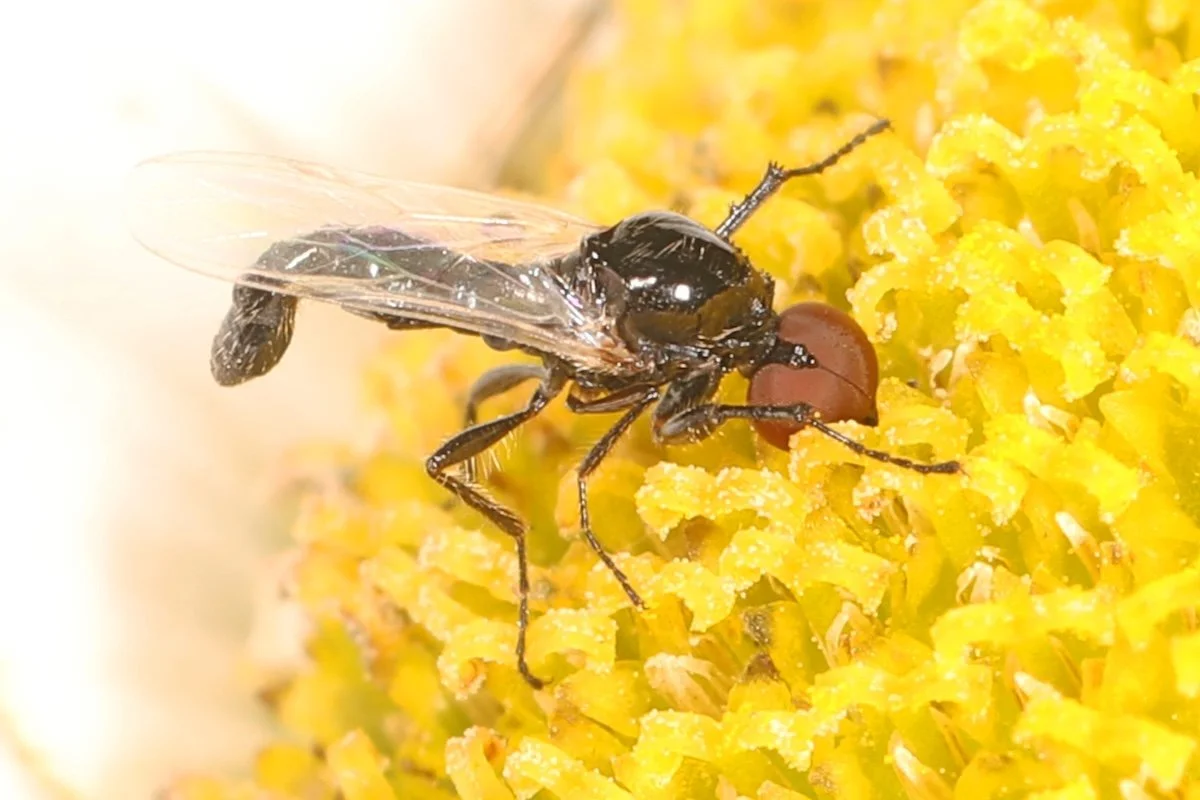
Dilophus species feeding on nectar. Photo: Judy Gallagher
March Fly larvae are usually found in grassy areas. They feed on plant material, sometimes scavenging dead vegetation like decaying wood, and are often found in compost. Like Lovebugs, other March Fly adults don't live very long, and many adults don't eat. But those that do usually rely on nectar. The adults can be good pollinators, and some are the primary pollinators of various orchid species. Larvae help form and accumulate humus in soil. According to an old (1904) publication by the British Museum of Natural History, chickens love to eat March Fly larvae.
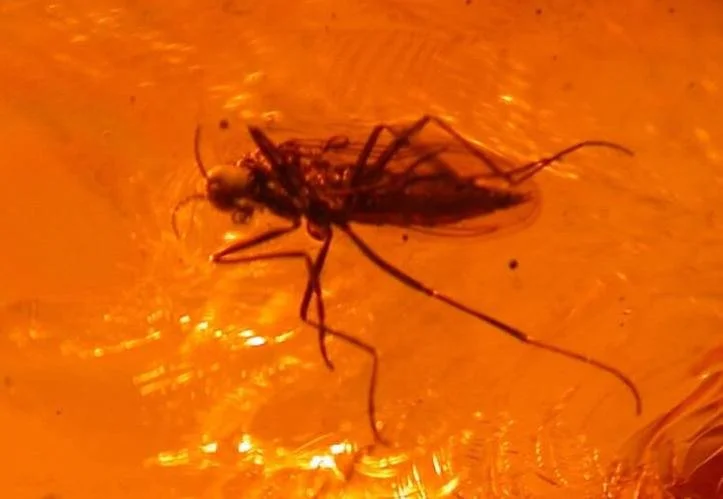
My holiday present to myself, a March Fly preserved in amber. Photo: Judy Gallagher
There are only about 700 March Fly species worldwide, but they are the most common flies in the fossil record. It's less than a week before Christmas as I write this column, and I decided to see if there were any affordable March Fly fossils available. I am happy to report that I will soon be the proud owner of a March Fly preserved in amber. Happy New Year to all of you, and to me!
View more of Judy’s articles on A Closer Look: Nature All Around Us (formerly Observations from Meadowood).
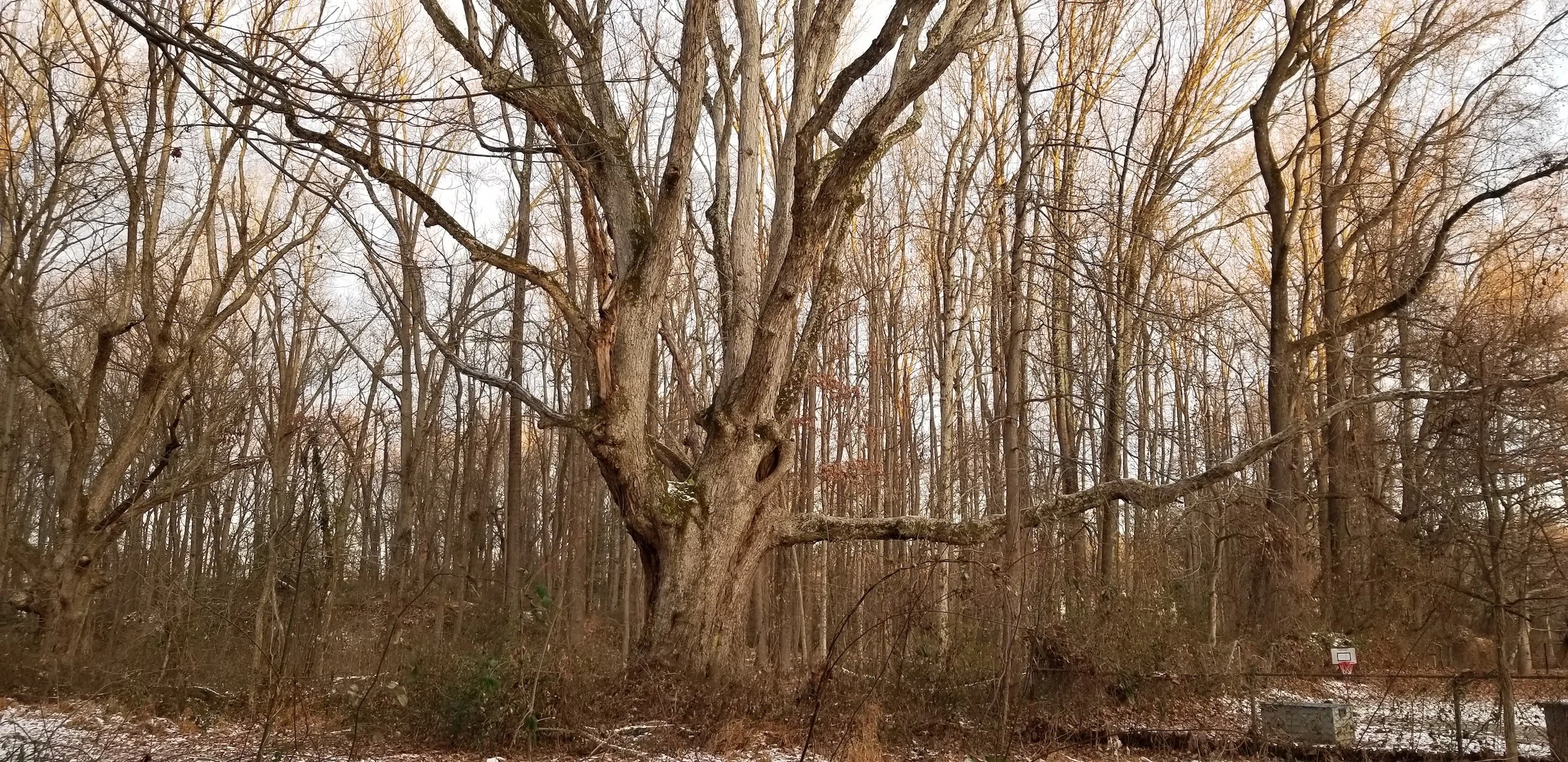
Wildlife Sanctuary Almanac: Love Our Mighty Oaks
Native species of oak trees are abundant across our region. Northern Red Oaks and White Oaks in particular are among our most dominant keystone species, contributing to the ecosystem in ways that are mighty indeed.
Photo: Swamp Chestnut Oak, Betsy Martin
Eileen Ellsworth
Native species of oak trees are abundant across our region. Northern Red Oaks and White Oaks in particular are among our most dominant keystone species, contributing to the ecosystem in ways that are mighty indeed.
Doug Tallamy has written and spoken extensively about oaks. Like all large canopy trees, they scrub air-borne pollutants, capture carbon dioxide, provide oxygen and shade, manage stormwater runoff and produce life-supporting leaf litter. But oaks are noteworthy in their ability to nurture insects – a form of life that E. O. Wilson called “the little things that run the world.” Without caterpillars, there would be no terrestrial food webs. Pause for a moment to take that in.
Tallamy estimates that oak trees are hosts for hundreds if not thousands of species of caterpillars. A full third of our native moths depend on oaks to reproduce. He estimates that only 14% of native plants produce 90% of caterpillar food, which is the reason he considers oak trees to be “keystone” to biodiversity. Caterpillars eat the oak leaves, and birds feed the caterpillars to their nestlings – many thousands of them during just one breeding season. If you want to attract a wider diversity of nesting birds on your property, plant an oak.
Oak trees provide food for wildlife in winter as well. Many small birds such as chickadees, titmice, and Golden-crowned Kinglets can be seen flitting through the canopy on the coldest days of the year. What are they doing? To find out, Bernd Heinrich, a research scientist and biology professor at the University of Vermont, examined the crops of Golden-crowned Kinglets in Maine, in January. He discovered they were filled with geometrid moth caterpillars, commonly known as inchworms. Remarkably, these caterpillars produce a kind of antifreeze that enables them to survive freezing cold temperatures. Even in the dead of winter, our native oaks support caterpillars that drive the food web.
Oaks also drop fat- and protein-rich acorns, of course, and many tons of them during a “mast year.” A single oak can produce up to 3 million acorns during its lifetime. Squirrels, deer, and chipmunks all eat acorns, as do many species of birds such as Wild Turkeys, Red-headed Woodpeckers, Red-bellied Woodpeckers, flickers, titmice, towhees, Wood Ducks, and Blue Jays.
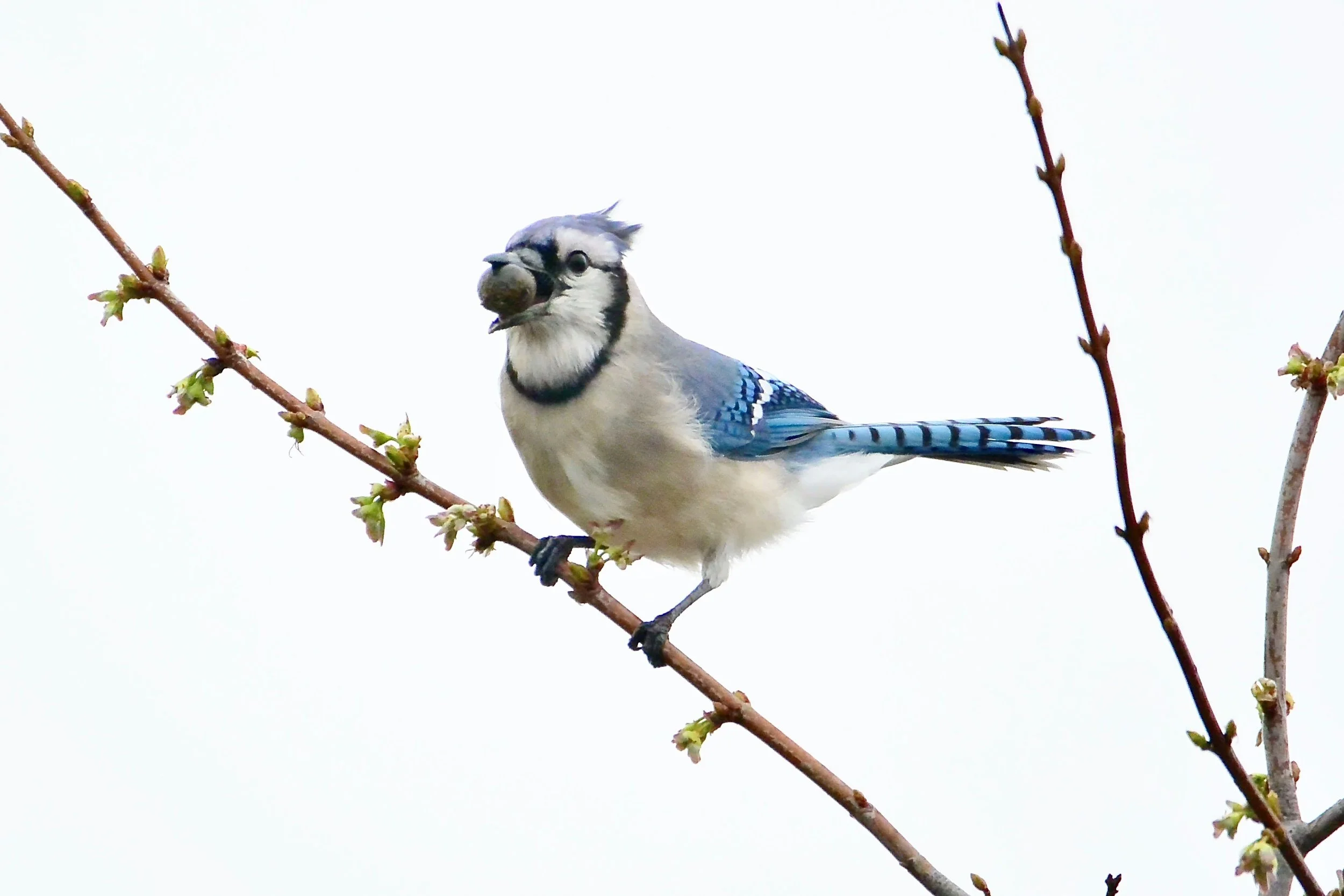
Blue Jay with acorn, Seth Honig
Jays of all kinds enjoy a particularly ancient and beneficial relationship with acorns. They cache them. A single jay will fly up to a mile to bury an estimated 4,500 acorns each fall, only remembering where 1 in 4 are buried. They are therefore planting 3,300 oaks a year, turning oak trees into the “fastest moving” deciduous trees in the world.
The decline of our older oaks that has been going on for decades came to a head a few years ago. (See Chamberlin, Oak Decline in Virginia.) The early wet weather in 2018 and 2019, followed by summer heat and drought and winters with unusual temperature swings, stressed many tree species, but especially oaks. The combination opened the door to ambrosia beetles and other pests. Many mature oak trees died across the region. As our older oaks die off, it is important that we actively replace them with young ones.
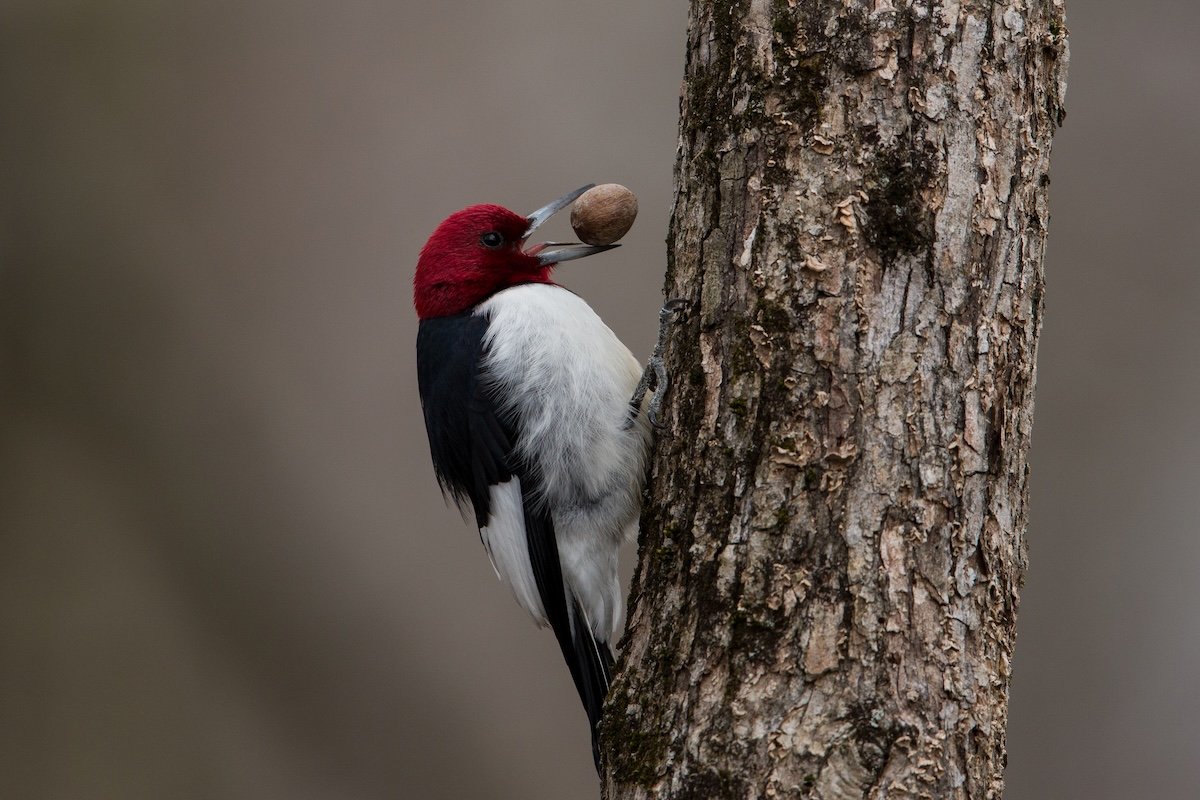
Red-headed Woodpecker, Gary Robinette/Audubon Photography Awards
The single best way to turn your yard into a sanctuary for wildlife is to plant an oak, making sure to pick a spot where it can grow unimpeded by powerlines above ground and waterlines and other infrastructure below ground. Based on research by Tallamy and his colleagues, we tell clients that 70% or more of the plant material in a yard should be native for the yard to support wildlife effectively. A single oak can meet that standard as it grows.
When you plant a single oak tree, or spare an existing one, you will help capture carbon, protect water quality, protect insect populations, and support birds and other wildlife. You can use the Plant NOVA Natives plant finder app to find an oak (or other native tree or plant) suitable for the conditions in your yard.
Catch up on past Wildlife Sanctuary Almanac articles here.
Mystery Arlington Bird Carried Disease First Found in Alaska
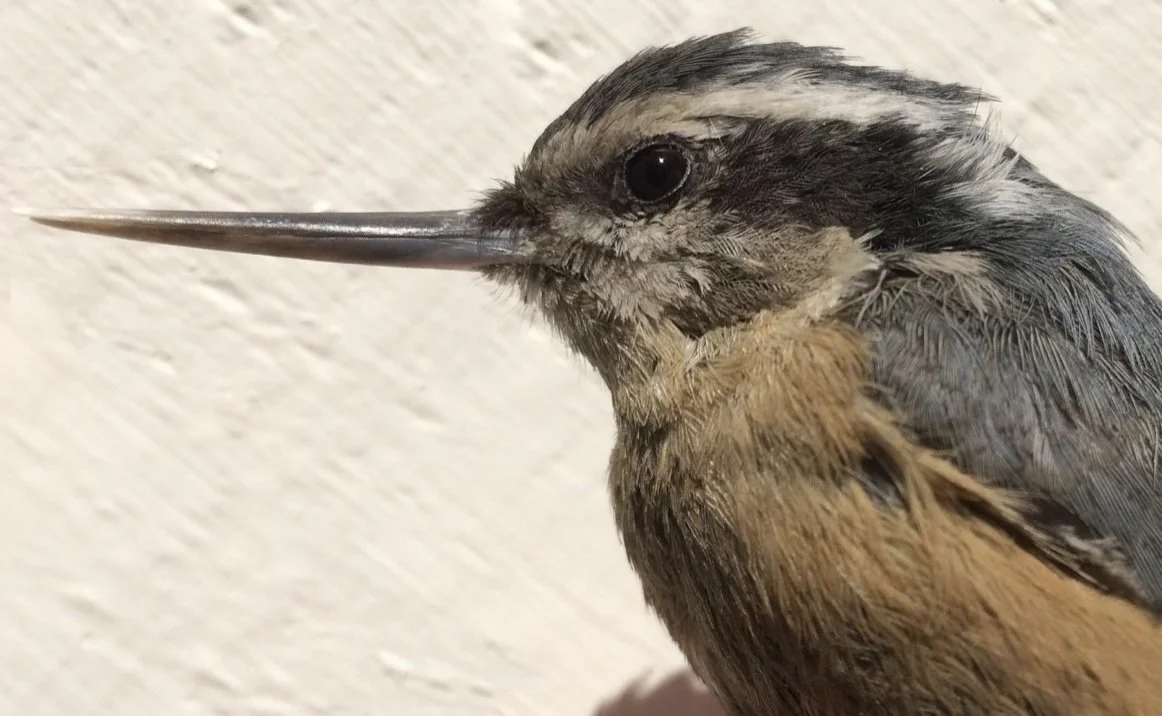
An enigma alighted on an Arlington birdfeeder in late July, a sparrow-sized bird with an inverted feeding style and a prodigious beak almost as long as its brown and white body. Who was this strange visitor?
Photo: Red-Breasted Nuthatch with deformed beak, Alaska Science Center, USGS
Brad Scriber
An enigma alighted on an Arlington birdfeeder in late July, a sparrow-sized bird with an inverted feeding style and a prodigious beak almost as long as its brown and white body. Who was this strange visitor?
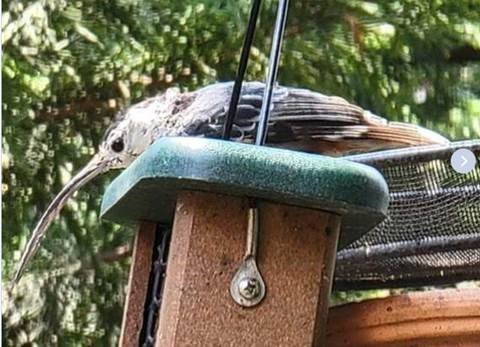
White-breasted Nuthatch with avian keratin disorder in Arlington. Photo: Chris Traugott
Thanks to a local network of experts, the bird, photographed by Chris Traugott, was quickly identified as a White-breasted Nuthatch, but there was more to this bird’s story.
Its manner of feeding matched the behavioral profile of a nuthatch, but its Cyrano-sized beak didn’t match the silhouette of one.
Almost certainly, this bird was suffering from avian keratin disorder (AKD), a debilitating condition marked by distorted and hyperextended bills in a variety of birds.
Biochemist Joseph DeRisi, reviewing a photo of the bird, called it “classic AKD, although the only way to know for sure is to get a sample.”
What DeRisi would look for in a sample is the genetic signature of the Poecivirus, a member of a large group of viruses that includes polio and the common cold. DeRisi was involved in a 2016 study led by Maxine Zylberberg, a fellow biologist at the University of California, San Francisco, which found a likely connection between this newly discovered virus and the beak deformities. In this and follow-up work with a larger sample, Poecivirus was present in every bird with an abnormal beak, but only in a small fraction of healthy birds.
The research, a collaboration between the U. S. Geological Survey, the California Academy of Sciences, and UCSF researchers, used advanced genetic sequencing to identify the virus. Previous research had ruled out many known bird diseases as well as bacteria, fungi, trauma and other possible drivers of the disease.
Avian keratin disease was first spotted in the 1990s among Black-capped Chickadees (Poecile atricapillus) by USGS researchers in Alaska. Red-breasted Nuthatches are among the species most frequently reported with AKD in Alaska. The disease has since been identified in thousands of individual birds across more than 80 species including hawks, crows and jays. The disorder has spread to the East Coast and parts of Europe.
Danielle Gerik, a biologist at the USGS Alaska Science Center says the disorder has been circulating in Virginia for more than two decades. “The earliest record we have in Virginia is of a Northern Cardinal and House Sparrow in 2001,” she says. “There are other reports of affected White-breasted Nuthatches in this region.”
The USGS researchers have been tracking reports of beak deformities since AKD was first described. Bird-spotters can report cases and send photos to the USGS at this link.
John Tracey, State Wildlife Veterinarian with Virginia’s Department of Wildlife Resources says AKD is on their radar, but confirming individual cases is not easy. “We don’t often get to see birds that are in good enough shape to pursue diagnostics,” he notes.
Even if an intact specimen were to be submitted to the state, there are no off-the-shelf tests for the Poecivirus. Collaboration with national and regional labs is required.
A few years ago, an alert from the Sandhills area of North Carolina about AKD in the Red-cockaded Woodpecker got Tracey’s attention. In an endangered or threatened species such as this, "any bottlenecks are potentially worrisome,” he notes.
Malformed, oversized and disfigured beaks that cross or curve in odd ways result from rapid growth in the rhamphotheca, a keratin sheath that sits atop the jawbones. This untamed keratin makes essential tasks like preening and foraging extremely difficult for birds with AKD. Imagine trying to button your shirt or pick up an almond with foot-long fingernails.
Afflicted birds make do as best they can. Gerik says her colleagues at the USGS “commonly hear of birds with elongated beaks turning their heads to pick up seeds because they're unable to perform normal foraging behaviors. It’s quite impressive all the ways birds adapt their behaviors to deal with having a beak deformity,” she adds.
Notwithstanding such striving, it’s a serious and often deadly barrier to survival. “A bird with such a deformed beak will be unlikely to feed well,” says UCSF’s DeRisi.
Researchers are working to understand how exactly the disease leads to deformed beaks, which sometimes develops in birds born with normal bills. They are also looking for certainty about how it spreads.
Gerik notes that even if some cause other than Poecivirus is uncovered, cleaning birdfeeders can help prevent the spread of disease in general. She recommends cleaning feeders in diluted bleach at a ratio of one unit of bleach to 32 units of water.
More tips on keeping your feeders free of disease can be found here.
Brad Scriber is a freelance writer based in Arlington.
Prepare for the Next Virginia General Assembly: Two Programs on Advocacy
Advocating for your legislative priorities can be intimidating. NVBA is offering two programs that will help demystify the process and provide an advance look at legislation that will be introduced in the 2026 Virginia General Assembly.
Photo: Virginia State Capitol Building, Wikimedia user Skip Plitt via CC BY-SA 3.0
Tom Blackburn
Advocating for your legislative priorities can be intimidating. NVBA is offering two programs that will help demystify the process and provide an advance look at legislation that will be introduced in the 2026 Virginia General Assembly.
General Assembly Preview: Saturday, December 6
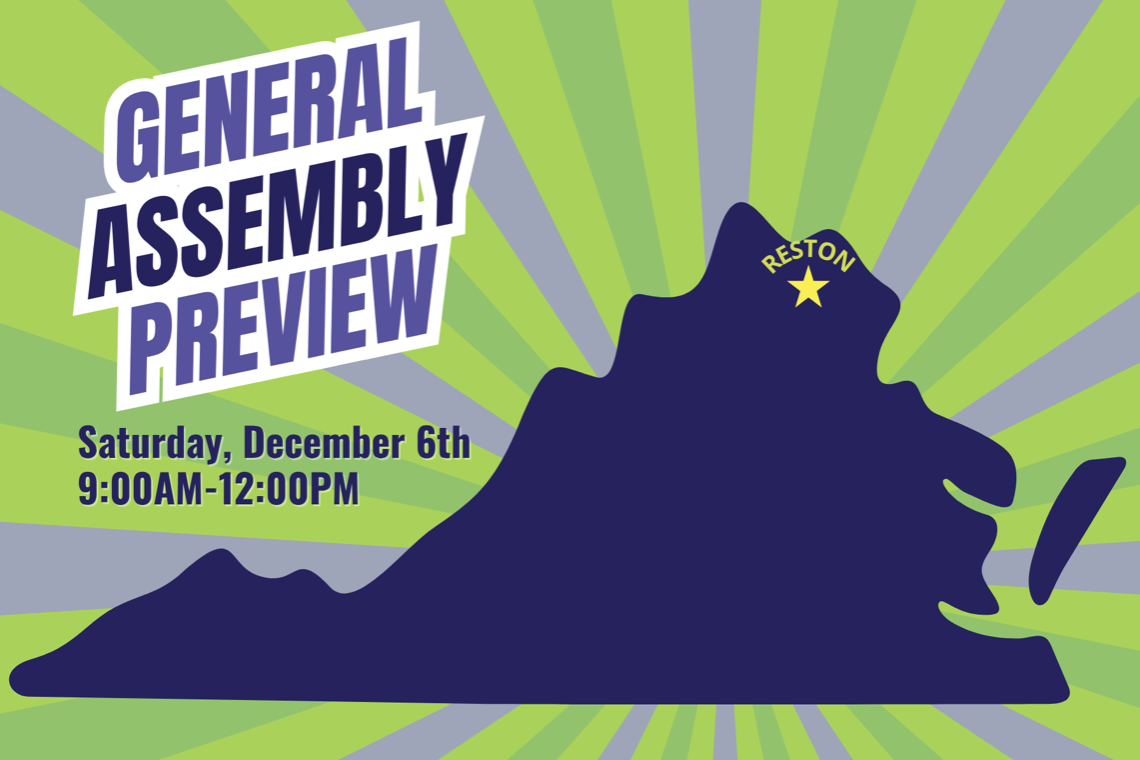
We are preparing for Virginia’s legislative session by partnering with the Virginia Conservation Network, the largest conservation advocacy organization in Virginia, to host a General Assembly Preview Regional Watch Party. Join us at our offices in the National Wildlife Federation Building, 11100 Wildlife Center Drive in Reston on December 6, from 9:00 AM to noon. You’ll learn about the environmental legislation we expect to see in the upcoming General Assembly session. We’ll provide breakfast, followed by a streamed presentation from experts across the Commonwealth, and an in-person discussion about local issues.
You can register for the General Assembly Preview here. We suggest a $20 ticket price to support this event and our environmental advocacy efforts. If cost is a barrier, please use the promo code “VCNREST2025” during registration for a free ticket.
Can’t attend in person? You can still register to stream presentations virtually from 9:15 AM-11:00 AM to hear all speaker presentations.
Effective Advocacy with Delegate Kathy Tran: Tuesday, December 16
When: Tuesday, December 16, 7:00 PM - 8:00 PM
Where: Online
Fee: FREE

Delegate Kathy Tran. Photo: courtesy of Delegate Tran.
Do you want to learn how to be a more effective advocate? Join NVBA and Loudoun Wildlife Conservancy for a virtual program, “Effective Advocacy in Virginia,” with the Honorable Kathy Tran, Representative for Virginia District 18, and Majority Caucus Chair for the Virginia House of Delegates.
The recent November 4 election determined who will be the Governor of Virginia for the next four years, as well as all 100 representatives to the Virginia House of Delegates, each serving a two-year term. The Virginia General Assembly will convene for a sixty-day session on January 14, 2026. This is an excellent opportunity for you to work to enact legislation that supports and protects the environment. Consequential issues also are before our local governments, including modifications to the master plans of Fairfax and Prince William Counties, decisions on data centers in Loudoun and Prince William Counties, and much more. Delegate Tran will provide advice on how to advocate before the General Assembly and local governments, making your efforts to lobby elected officials more effective.
We’ll conclude the evening with an opportunity to sign up for alerts on important pending legislation to support communications with your elected representatives.
This event is FREE and open to the public. You can register for this program here.
Tom Blackburn is Chair of NVBA’s Advocacy Committee, and a past President of NVBA.
Back for the Holidays: The White-throated Sparrow
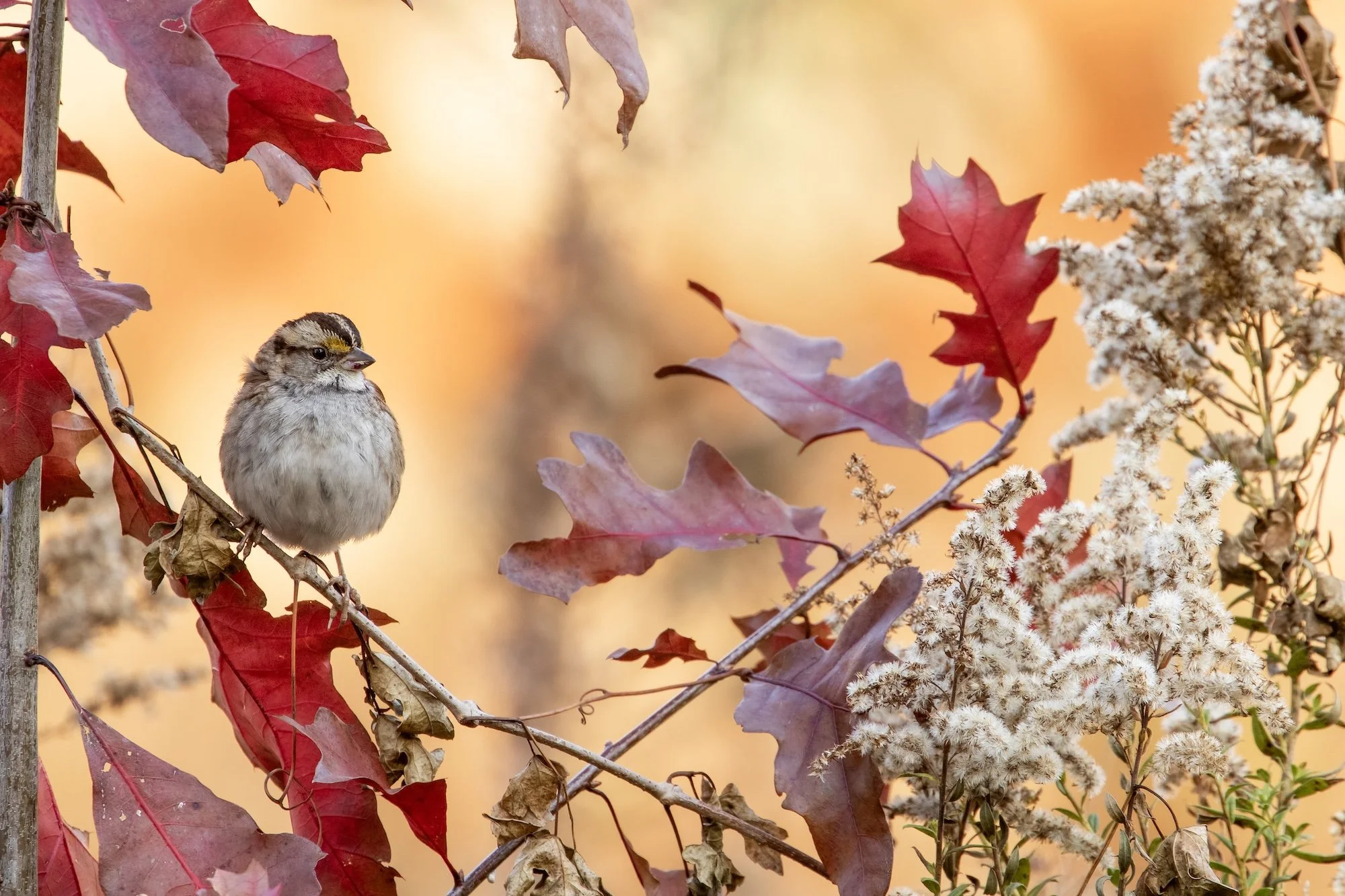
“Oh-sweet-Canada-Canada” or “Old-Sam-Peabody-Peabody” – no matter which phrase you associate with the song of the White-throated Sparrow, northern Virginia residents can expect to hear it throughout the coming months as these little birds sing of their return from breeding grounds in Canada.
Photo: White-throated Sparrow, Ashrith Kandula/Audubon Photography Awards
Summer Delehanty
“Oh-sweet-Canada-Canada” or “Old-Sam-Peabody-Peabody” – no matter which phrase you associate with the song of the White-throated Sparrow, northern Virginia residents can expect to hear it throughout the coming months as these little birds sing of their return from breeding grounds in Canada. As winter encroaches, White-throated Sparrows fly south into the Midwest, Mid-Atlantic, and Southeast of the United States, with some also staying in coastal California. Although they are present year-round in the Northeast, that region’s summer residents head south and are replaced by northern populations.
White-throated Sparrow, Charles Carlow/Audubon Photography Awards
While most birds only sing during the breeding season, relying on chirps and other short calls to communicate the rest of the year, White-throated Sparrows sing year-round, at any time of day. Their whistled song is roughly four seconds long with even notes that can either rise or fall in pitch. Though commonly ending in three syllables, a different two-syllable “dialect” first appeared in British Columbia in 2002. See How a White-Throated Sparrow's New Tune Went Viral. The Rocky Mountains were initially predicted to confine this dialect to the West Coast. However, miraculously, the song had traveled clear to Quebec in less than 20 years, an unusually quick uptake of a new singing pattern for a bird. Biologists used geolocators to track the wintering behavior of different White-throated Sparrows, finding that an overlap in Western and Eastern populations in Texas allowed the song to spread to impressionable baby sparrows of the East. Any doublet-ending singers in Virginia can be traced back to this first variation in British Columbia.
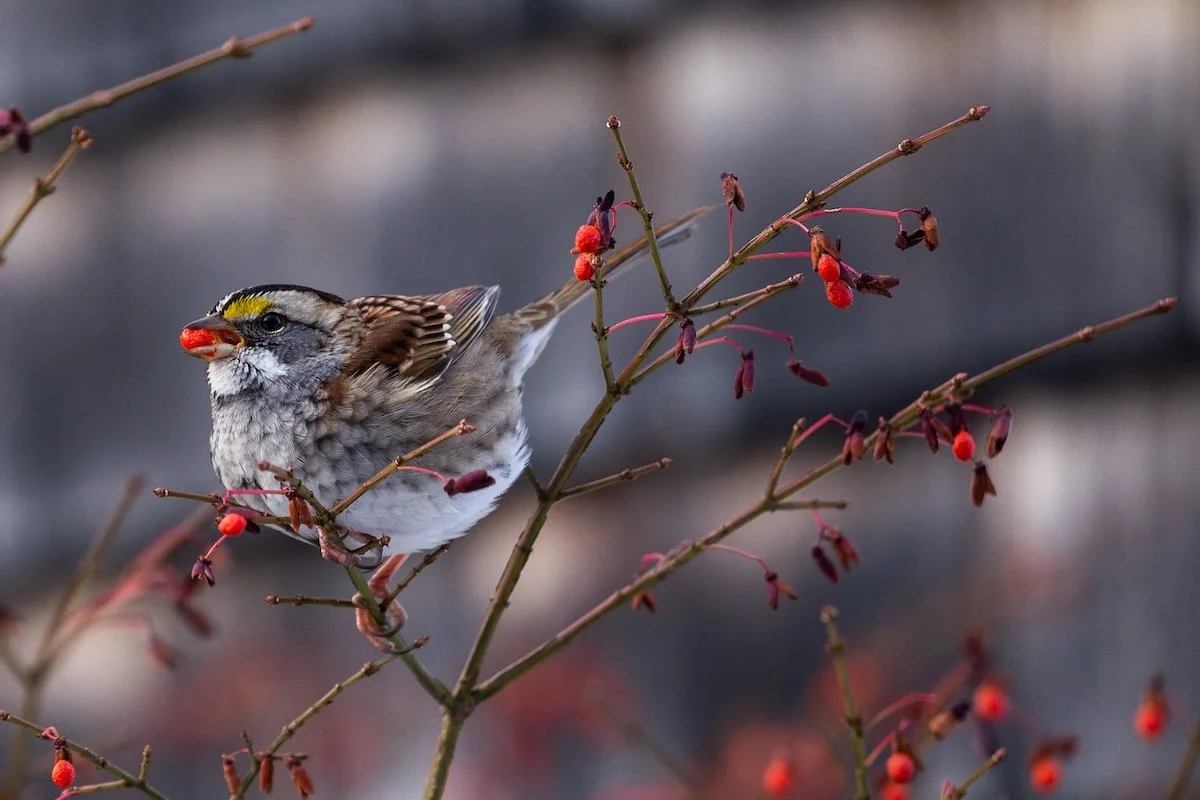
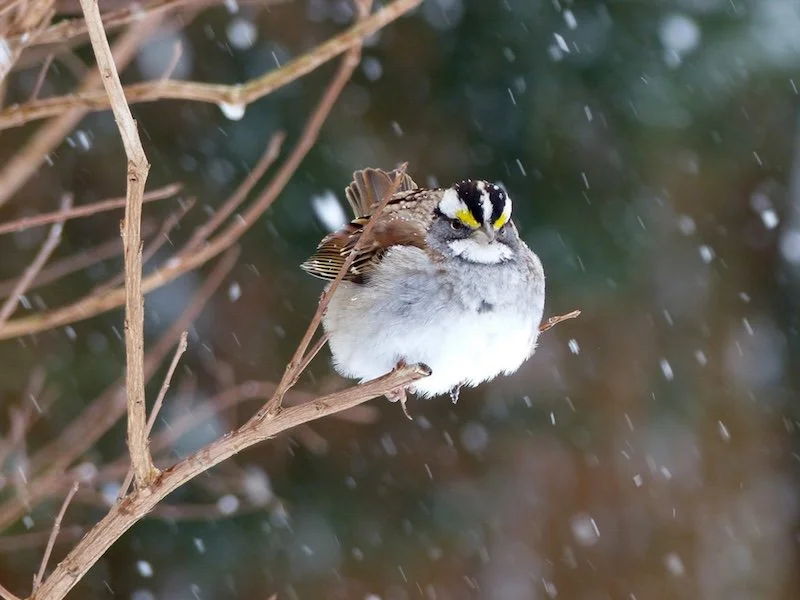
Though both sexes of White-throated Sparrow sing, some individuals are more likely to sing than others, and it depends on the color of their eyebrow stripe. In fact, other behavioral differences are observed not only between sexes, but between individuals with different color stripes. The classification is subtle: all White-throated Sparrows sport the same general appearance, with the tell-tale white throat, yellow lores, and black-and-pale facial markings. The difference is in the color of the pale stripes on the face. “White-striped” birds have white markings, the same color as their throat, while “tan-striped” birds are noticeably drabber. White-striped males are more aggressive and sing the most, while tan-striped females will rarely sing. Regardless of sex, tan-striped individuals are more likely to engage in parental care of their young. Interestingly, White-throated Sparrow individuals almost always mate with a bird of the opposite color morph. Their courtship patterns are complicated, with both types of males preferring white-striped females, and both types of females preferring tan-striped males. This mismatched pairing allows both stripe types to persist.
White-throated Sparrow, Dawn Phillips/Audubon Photography Awards
With such interesting songs and color variations, it’s no wonder that White-throated Sparrows are a fan-favorite, declared “one of the continent's best-studied and most familiar songbirds” by Cornell’s Birds of the World. Even if you’ve never seen one, they shouldn’t be hard to find. White-throated Sparrows congregate in most woods and brushy areas, including neighborhoods and tree-lined sidewalks. When in flocks, like other sparrows, they will often emit high-pitched “seep” calls, though their bold black-and-white facial patterns are hard to mistake for anything else. These birds aren’t picky with their friends; pay attention to the flocks they congregate in and you may also find a Song Sparrow, Swamp Sparrow, Carolina Wren or other small passerine.
Though widespread and abundant, White-throated Sparrows are especially vulnerable to window collisions as they migrate through urban and suburban areas. This species has been dubbed a "super-collider," with Chicago Bird Collision Monitors recording over 4,000 individuals in a 5-year period, nearly two times as many birds as the second most common species. Because they migrate at night and rely on stars to navigate, light pollution in cities can cause them to become disoriented. It’s been suggested that their tendency to call to one another while migrating actually causes more collisions, as one confused White-throated Sparrow can lead others astray.
Collisions don’t only happen with skyscrapers during peak migration. Studies on college campuses, like the University of Washington, have found collisions around mid-sized buildings year-round, with an uptick during winter months in that region. Reducing unnecessary light pollution at night, keeping shrubbery away from windows and treating large and reflective window facades with vinyl patterns are all effective ways to reduce collisions for birds like the White-throated Sparrow.
In cold weather and dark evenings, this bird’s cheery song makes it a welcome winter resident in Virginia. Listen for their whistled tune this holiday season. By the time they’re heading back north, the canopy will be alive with spring birdsong again.
Summer Delehanty is a product designer with a passion for birdwatching.
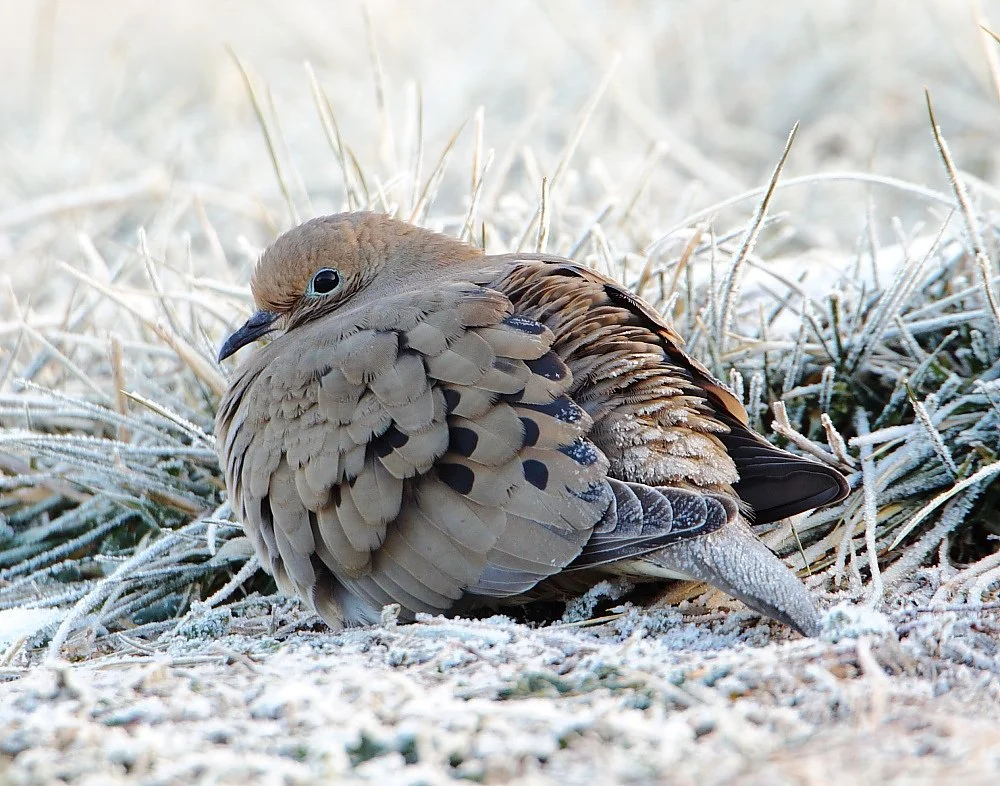
How Birds Survive Winter
How do our feathered friends survive winter? They have two options: migrate south to warmer temperatures or adapt to the winter weather.
Photo: Mourning Dove, Danny Brown/Audubon Photography Awards
Jessica Pavlick
How do our feathered friends survive winter? They have two options: migrate to warmer temperatures or adapt to the winter weather. Some birds fly south to warmer temperatures and more plentiful food. Those that live in mountains can move to lower elevations. Those who choose to stay adapt to winter months through behavioral and physical changes, showing how extraordinary they are!
Winter adaptations include:
Fluffing up to increase body heat. Birds can fluff up their feathers to keep warm air near their bodies (like a warm down coat). Fluffing up creates hundreds of air pockets between their feathers that trap heat, increasing natural insulation. (Andrew del-Colle, "How Do Birds Cope With Cold Winter Weather," Jan. 24, 2024) Birds also can grow extra feathers for thicker insulation. (Laura Carberry, "Let's Go Birding -- Brrr . . . Birding Behavior in Winter," Dec. 9, 2020)
Huddling up. During cold nights, birds huddle up together to increase warmth through community. According to Carberry, “Golden-crowned Kinglets will roost together with 4 or more of their friends to survive the cold winter nights. Other birds like Black-capped Chickadees and Eastern Bluebirds will find cavities or nest boxes to huddle together at night.”
Slowing metabolism. Similar to a short-term hibernation, torpor is when a bird at rest slows its metabolism below its normal level, sometimes well below. They can do this for a few hours at a time, usually at night. (Ivan Phillipsen, "How Birds Get Through the Winter," Jan. 24, 2021)
Storing Food. During the fall, it’s typical for birds to store food from feeders. They carry food to hide for later when resources are scarce. According to Del-Colle, “a single chickadee can store up to 80,000 seeds—and remember where they all are.”
Sharing Food. A high bird body temperature (typically 105 degrees) means a high metabolism. Birds need high protein energy sources and they work together when they spot one! Birds look for insects, berries and seeds, and if they see a neighbor has found food, they will join in.
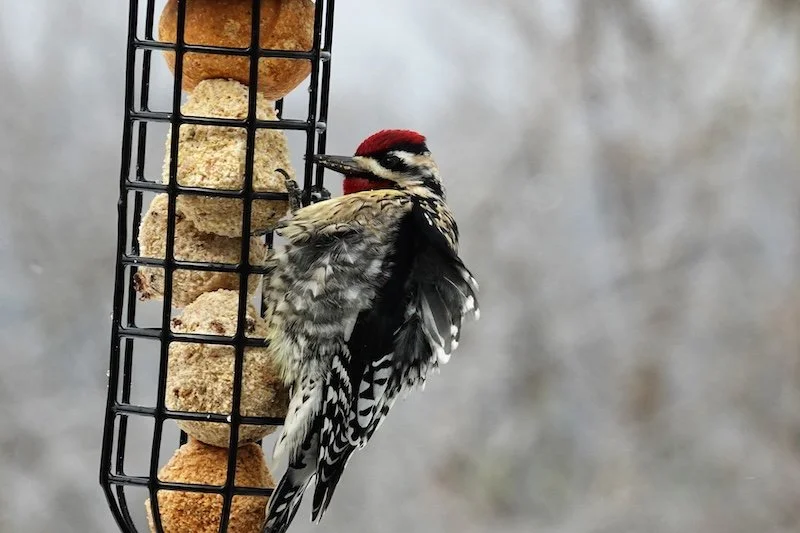
Yellow-bellied Sapsucker, Pamela Brown/Audubon Photography Awards
Birds’ adaptations are impressive, but we can still take action to help them in winter:
Help with warm housing: Clean nest boxes so birds can huddle together. Check them for mice periodically. If you do not have natural nesting spots in your yard, consider purchasing a nest box or roosting box.
Put up a bird feeder up and keep it clean and well stocked. Carberry’s article reports that birds watch each other and communicate where food sources are.
Consider feeding birds high-protein food.
Suet cakes are a high-protein food that you can provide for woodpeckers, nuthatches, Pine Warblers, chickadees and Tufted Titmice.
Birds love peanuts, seeds, insects or berries.
Attract bluebirds by offering mealworms.
Finches love thistle feeders and Nyger seeds.
Doves, sparrows and cardinals can enjoy millet and cracked corn.
Use a platform feeder to keep birds safe from predators and cats.
Provide a bird bath and keep it heated and clean. Birds need a water source in the winter.
Jessica Pavlick is a licensed psychologist and beginning birder who enjoys learning from nature.

A Closer Look: Nature All Around Us, December 2025
Judy Gallagher is an NVBA board member and a regular surveyor of local wildlife who also captures photos of what she sees, in particular the less common species.
Photo: Cynipid Wasp gall on Pin Oak, Judy Gallagher
Judy Gallagher
December 2025
Live insects are challenging to find at this time of year. But signs of them remain in the form of galls, a swelling growth of plant tissue. Galls can also be caused by viruses, fungi, bacteria and mites, but I'm only going to talk about ones that are created by insects.
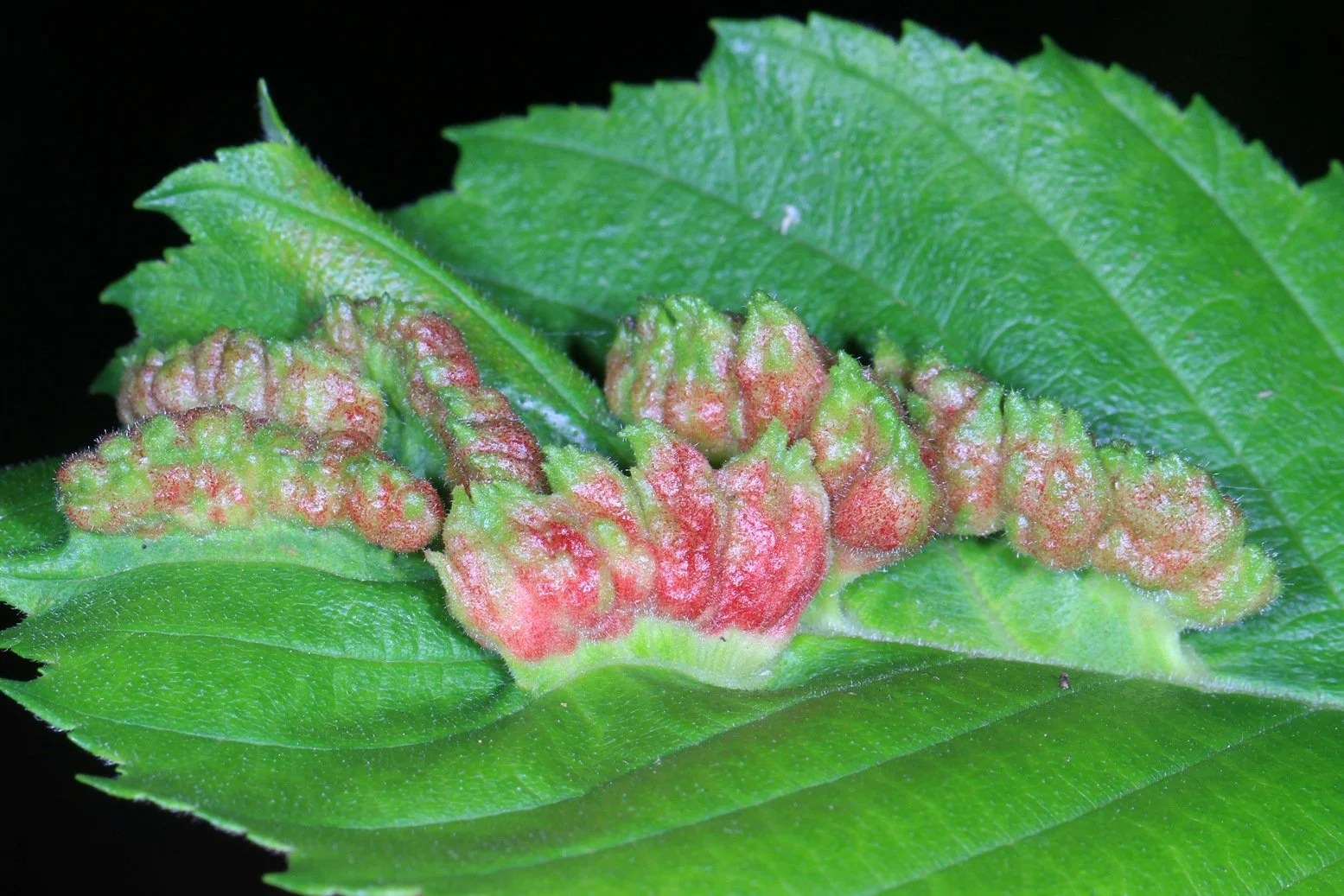
Elm Cockscomb Aphid Gall. Photo: Judy Gallagher
Insects that produce galls include gall wasps, gall midges, gall flies, leaf-miner flies, aphids, scale insects, psyllids, thrips, gall moths and weevils.
Galls are basically plant tissue that grows abnormally as a result of chemicals in salivary secretions of insects, which cause increased production of plant growth hormones. The abnormal growth envelops the larva and provides a microhabitat until it is ready for adult life. The gall continues to grow as the larva grows inside it. Galls are usually formed during the growing season when plant cell division occurs quickly. At this time of year, I see old galls on fallen leaves.
Gall-making insects have very specific plant preferences and even tissue preferences because their salivary chemicals must be able to stimulate that plant's genetic machinery, and each species' gall is unique. Galls can occur on leaves, stems and twigs, or on flowers or flower buds. Although they can be unsightly, insect galls rarely affect the general health of the plant.

Wool Sower Gall. Photo: Judy Gallagher
Some galls contain multiple larvae. The female Wool Sower Gall Wasp lays multiple eggs in one location, usually on a White Oak, although she can also use Chestnut Oak, Swamp Chestnut Oak and Swamp White Oak. The adult female releases fluids that start the gall-making process. When the eggs hatch, the larvae secrete chemicals that continue the process, and the resulting gall has many chambers, each containing one wasp larva. This wasp makes two types of galls. Wasps that emerge from the Wool Sower Gall make inconspicuous stem galls, and the wasps that emerge from the inconspicuous stem galls make Wool Sower Galls.
Cynipid Wasp (Zopheroteras guttatum) gall on Pin Oak. Photo: Judy Gallagher
This tiny and exquisite gall is formed by larva of another wasp, Zopheroteras guttatum, on Pin Oak.
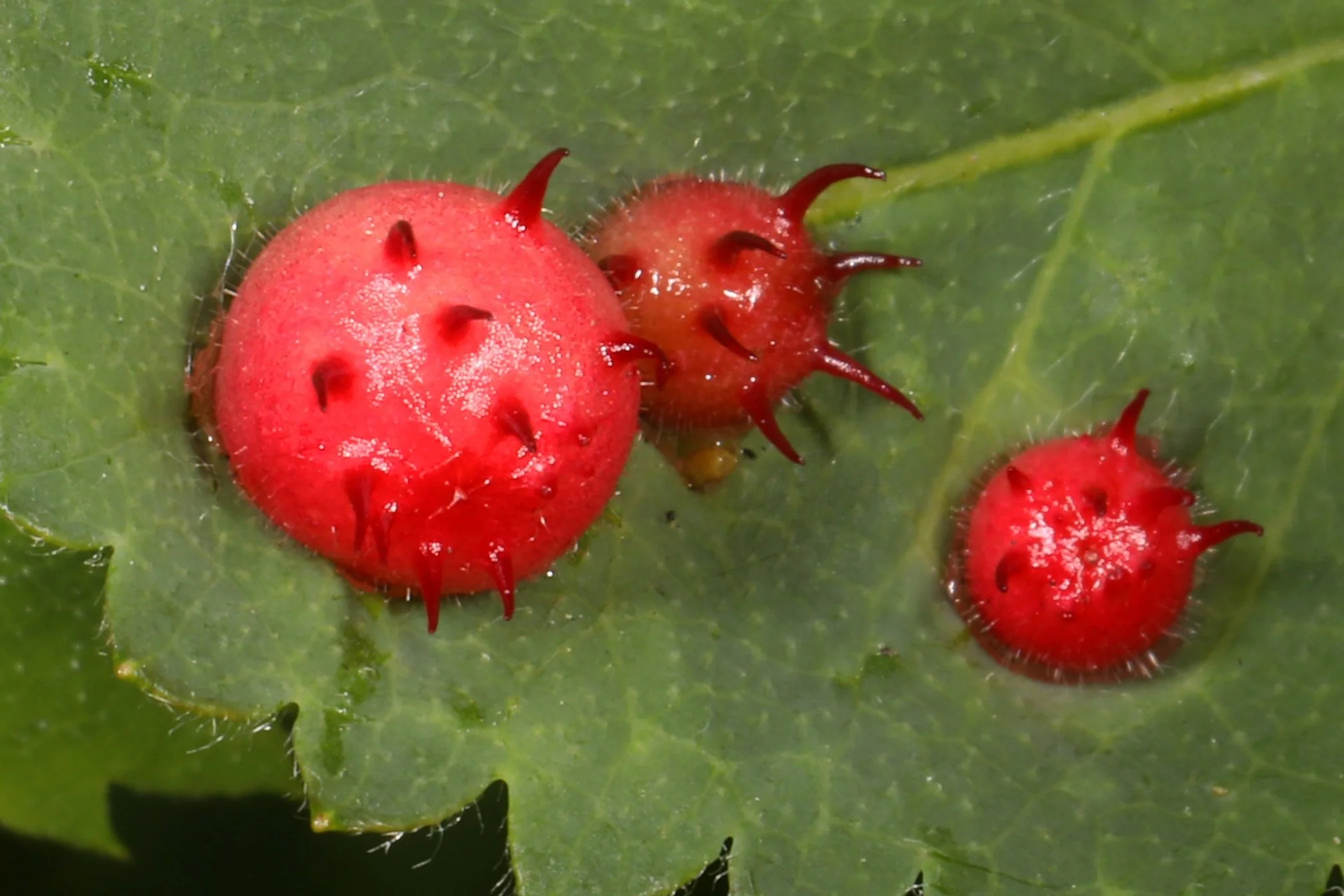
Spiny Leaf Gall Wasp gall. Photo: Judy Gallagher
Galls are a sort of nursery and provide some protection to the larva. But there are lots of predators who would like to eat tasty larvae, and the larvae can’t move around much due to the constraints of their gall. And there also are insects who eat plant tissue, and the larvae could be accidental victims if the plant tissue containing the gall is eaten. So the Spiny Leaf Gall Wasp has manipulated the genes of its host plant, a wild rose species, to produce a spiny gall that deters predators. To me, this is pretty incredible – a wasp larva secretes substances that force the plant to grow a nursery for it and protect it from predation!
Other gall wasps create galls with concentrations of toxic tannins near the surface to repel predators, or force the gall to secrete sweet plant juices (phloem) to attract ants, bees or yellowjackets who defend their space from other insects.
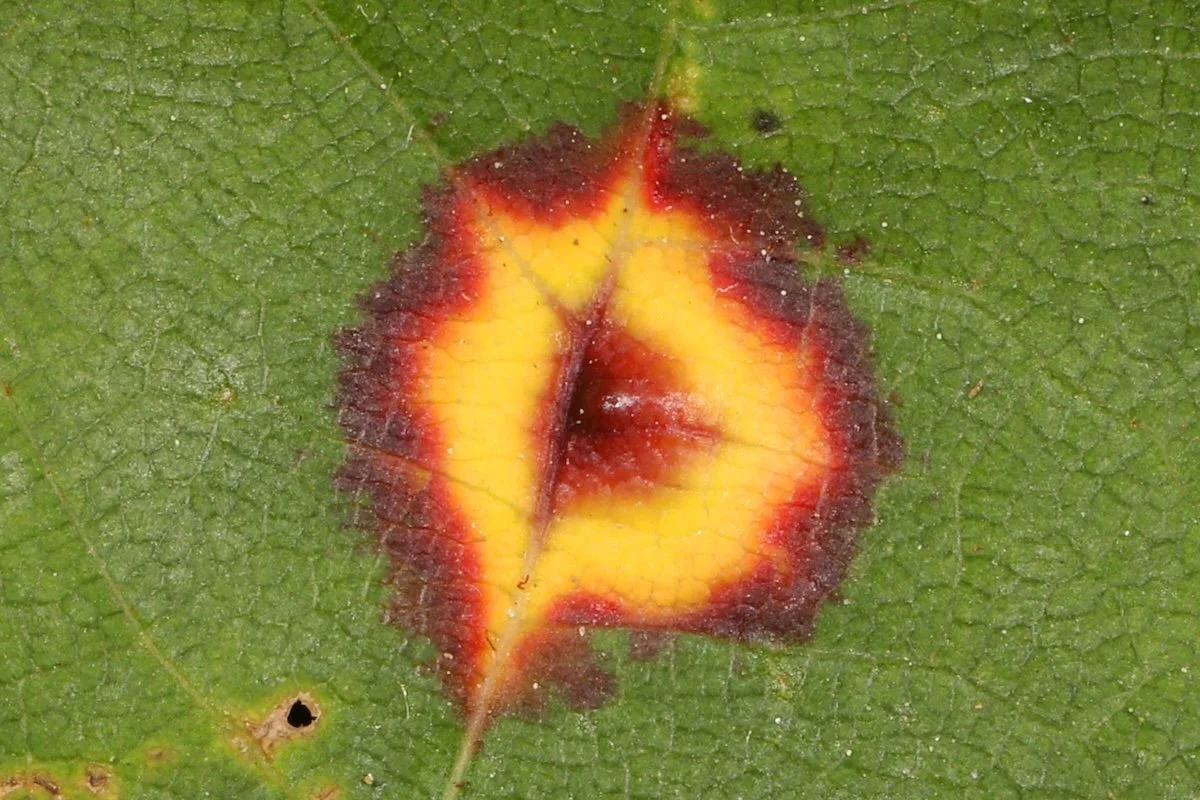
Ocellate Maple Gall Midge gall. Photo: Judy Gallagher
Here's a gall made by the Ocellate Maple Gall Midge, a small fly that, as the name suggests, produces galls on Maples. It also causes the leaf to develop rings of yellow and red, with Maple pigments normally only seen in the fall. Most gall-making insects leave the gall as an adult, but this midge leaves the gall as a larva and pupates in the leaf litter, where it remains until it emerges as an adult fly the following spring.
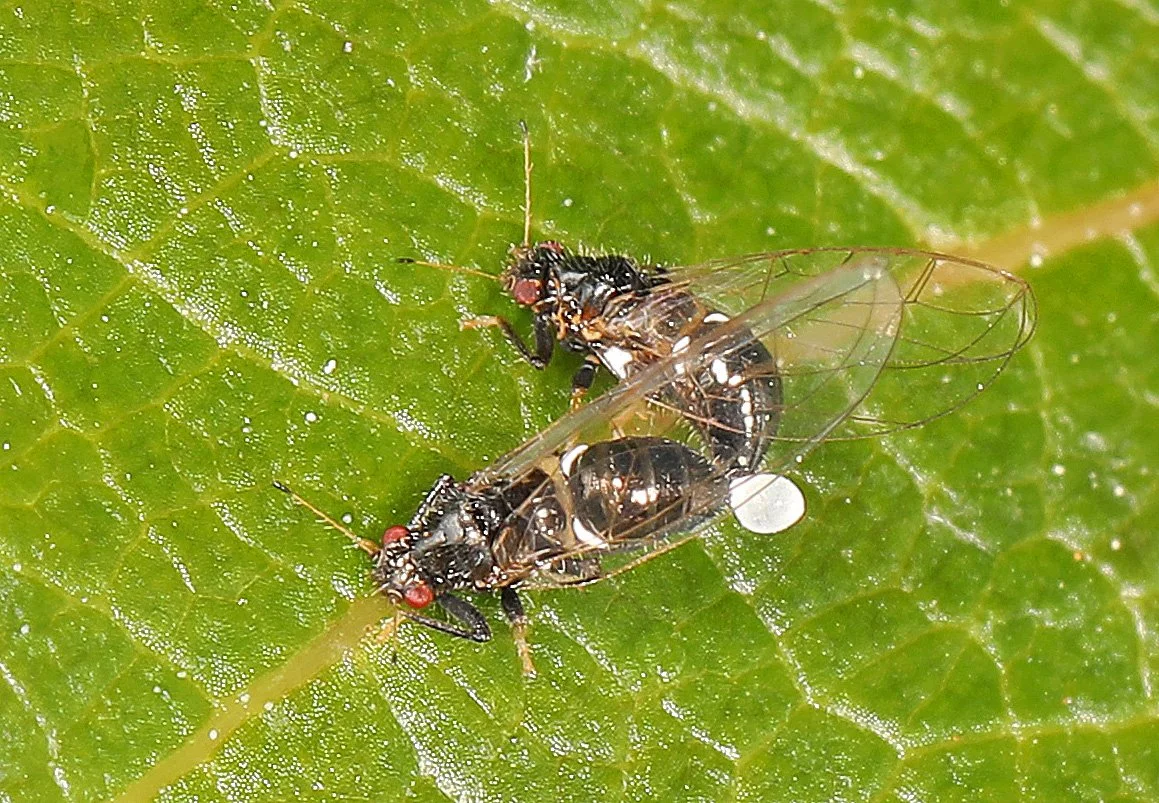
Persimmon Psyllids mating. Photo: Judy Gallagher
Although I often see galls, I rarely see the adult insects of gall-making species. Most are quite small and not easily noticed, but I was fortunate enough to see these Persimmon Psyllids mating and, I think, laying eggs. Persimmon Psyllids are True Bugs, about 1/8 inch long, and the larval spit secretions cause Persimmon leaves to become stunted, twisted, and curled. The larvae live in pockets within the twisted structure.

Soldier Beetle coming out of a Phylloxera gall. Photo: Judy Gallagher
I mentioned before that there are insects that like to eat the inhabitants of galls. I observed this Soldier Beetle going in and out of galls. I asked experts what was going on and they speculated that the Soldier Beetle was eating the Phylloxera larvae inside the gall. Insects are fascinating!
View more of Judy’s articles on A Closer Look: Nature All Around Us (formerly Observations from Meadowood).

Wildlife Sanctuary Almanac: Use - and Lose - Nandina
It’s a beautiful plant - evergreen, red berries, soft foliage - but evil lurks in its heart. Nandina, a.k.a. Heavenly Bamboo or Nandina domestica, is a woody shrub native to Asia. It is not a true bamboo but, just like its namesake, it is a real problem in the landscape.
Photo: Nandina, Emőke Dénes, CC BY-SA 2.5, via Wikimedia Commons
Julie Udani
It’s a beautiful plant - evergreen, red berries, soft foliage - but evil lurks in its heart. Nandina, a.k.a. Heavenly Bamboo or Nandina domestica, is a woody shrub native to Asia. It is not a true bamboo but, just like its namesake, it is a real problem in the landscape.
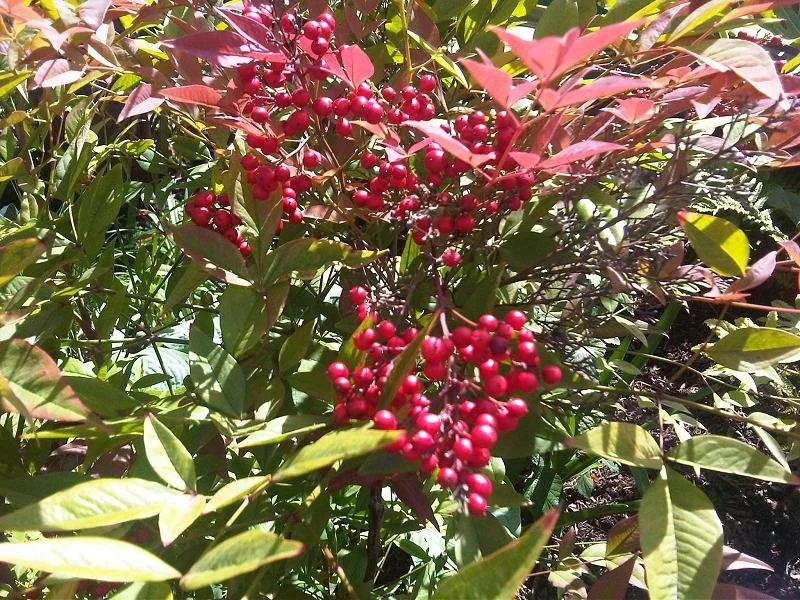
Nandina, Emőke Dénes, CC BY-SA 2.5, via Wikimedia Commons
Nandina is invasive in Virginia. But that’s not the worst part. Those pretty Nandina berries are poisonous to birds. In 2009 the University of Georgia College of Veterinary Medicine was asked to investigate the death of cedar waxwings that had been found in a backyard in Thomas County. The laboratory examined the birds and discovered that they had died of cyanide poisoning from eating Nandina fruit. The berries can contain cyanogenic compounds. Because cedar waxwings often eat large quantities of berries at a time, the Nandina is particularly deadly for them; but any hungry bird is vulnerable. Nandina is also toxic to dogs, cats, and other small animals.
Let’s take advantage of the season and use the berries and branches in our holiday decor. The fact that this requires removing the berries - or even the whole shrub - is a bonus. (You’ll need to dig the rest of it out when the soil softens in the spring because they can resprout from the roots.)
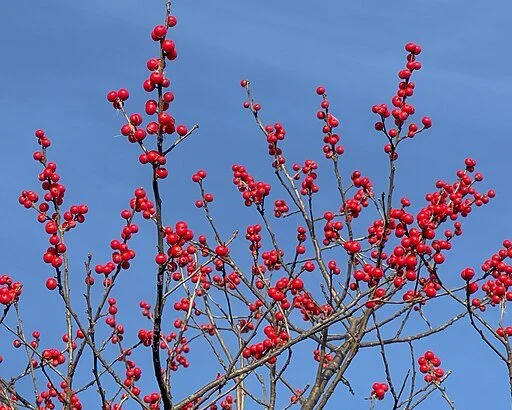
Winterberry Holly (Ilex verticillata)Paul R. Burley, CC0, via Wikimedia Commons
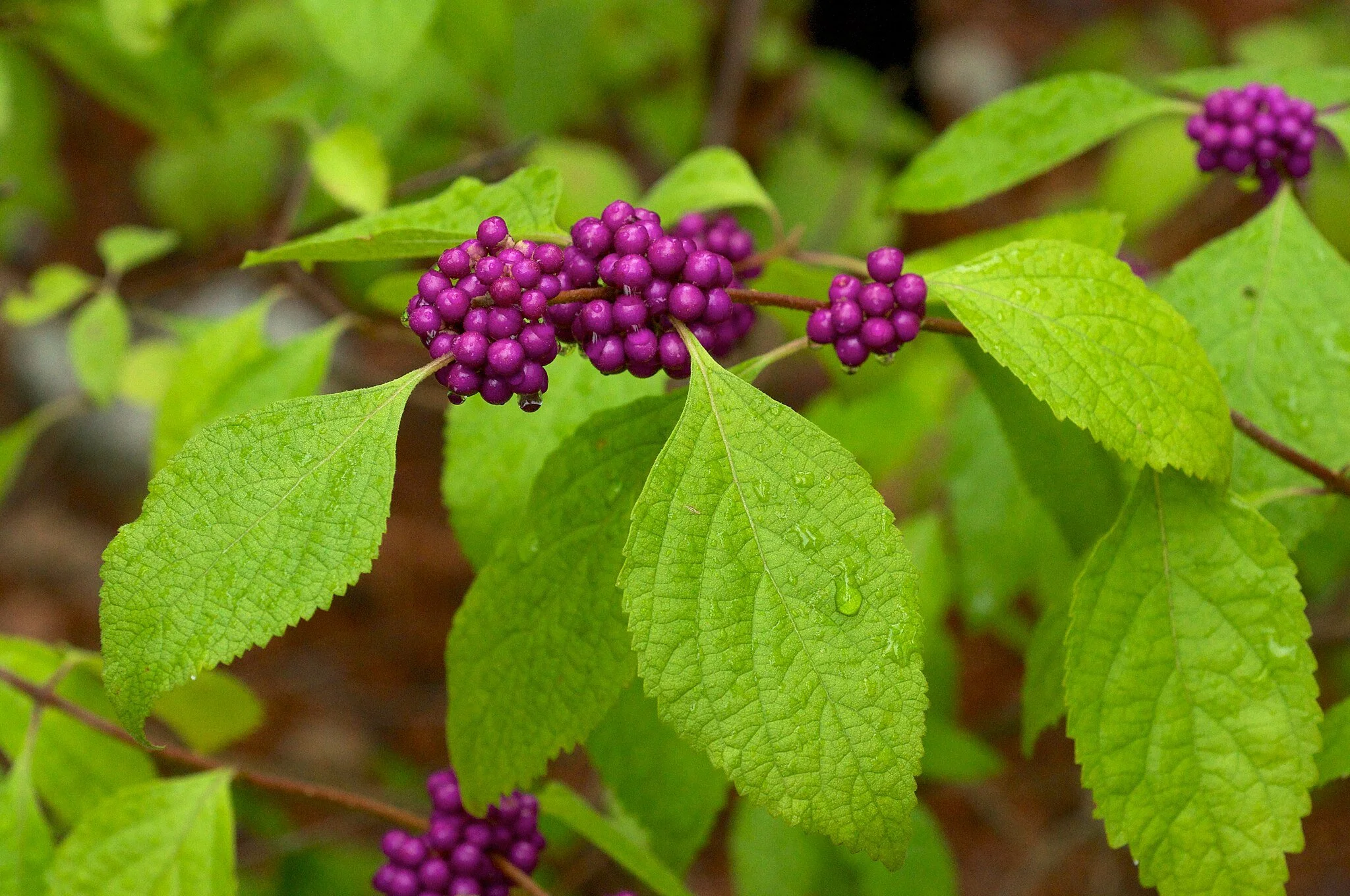
American Beautyberry (Callicarpa americana), Eric Hunt, CC BY-SA 3.0, via Wikimedia Commons
If you planted Nandina for the berries and are now feeling bitterly betrayed, there are several native alternatives. For example: Winterberry Holly (Ilex verticillata). It isn’t evergreen but it is spectacular when it drops its leaves and the generous clusters of red berries remain. The fruits can persist quite late before the birds eat them. That means more color for you in your landscape and a source of food for the birds at a time in winter when there isn’t much else available. Note that hollies are usually dioecious - that means plants are either male or female. Only the females produce berries but to get the berries you need to plant at least one male. Or switch to purple berries and plant Beautyberry (Callicarpa americana) which is absolutely gorgeous in a fall border planted with goldenrods and asters.
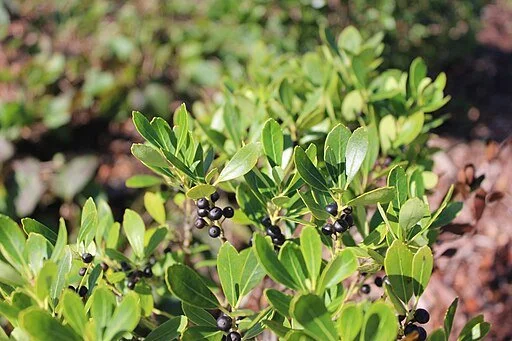
Inkberry (Ilex glabra), vastateparksstaff, CC BY 2.0, via Wikimedia Commons
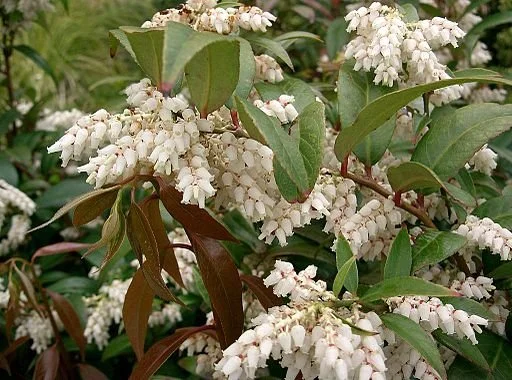
Doghobble (Leucothoe fontanaisiana), KENPEI, CC BY-SA 3.0, via Wikimedia Commons
For an evergreen Nandina replacement, there are dwarf cultivars of Yaupon Holly (Ilex vomitoria ‘Bordeaux’ or ‘Nana’) that can give you red berries and evergreen foliage in a sunny spot. For shade, swap it for Inkberry (Ilex glabra) or Doghobble (Leucothoe fontanaisiana). If you liked the soft texture of the bamboo-like foliage, look to Coastal Doghobble (Leucothoe axillaris) for a taller swap, or one of our native evergreen ferns for something shorter. Christmas Fern (Polystichum acrostichoides) and Wood Fern (Dryopteris marginalis) are evergreen and do just fine in regular garden soil. All of these options - except the Beautyberry - are also deer resistant.
So lose the evil Nandina. Cut it down - it makes a great holiday wreath. Just don’t put it where pets or children might eat the berries.
Catch up on past Wildlife Sanctuary Almanac articles here.

Birds, Belief and Balance: Native Wisdom for Modern Birders
Long before modern birding, native peoples across North America watched, listened, and learned from the birds that shared their homelands. For them, birds were not merely part of the scenery: they were kin, teachers and messengers between worlds.
Photo: Common Loon (Maang), Benjamin Olson/Audubon Photography Awards
Jo Doumbia, NVBA Director and Chair, Diversity and Inclusion
Each November, during Native American Heritage Month, we are reminded that our connection with nature did not begin with field guides or binoculars. Long before modern birding, native peoples across North America watched, listened, and learned from the birds that shared their homelands. For them, birds were not merely part of the scenery: they were kin, teachers and messengers between worlds.
Among the Cherokee, the vulture is said to have shaped the mountains with its mighty wings. To the Lakota, the eagle soars higher than any other creature, carrying prayers and hopes to the Creator. The Anishinaabe call the Common Loon Maang, a spirit guide whose haunting call drifts across northern lakes, linking the seen and unseen worlds. Each of these stories reflects a deep and enduring respect for birds as sacred beings who reveal the patterns of life itself.
For native communities, birds also provided practical guidance. Their migrations marked the rhythm of the seasons, signaling when to plant, harvest, or prepare for winter. Bird calls forecasted weather changes, and nesting behaviors told when the rivers would rise. What we now call traditional ecological knowledge arose from generations of careful observation and reciprocity, a way of learning that listens as much as it teaches.
That same wisdom still speaks to us today. As birders, we, too, are listeners. Every time we pause to identify a song in the trees or note the first flash of migration overhead, we join a continuum of watchfulness that reaches back millennia. But birding can also be an act of gratitude. Planting native trees and flowers, protecting nesting sites and learning the indigenous names of local birds are small yet powerful ways to honor the birds and the peoples who have long cared for this land.
Across the continent, indigenous birders and conservation leaders continue that legacy. In Manitoba, the Indigenous Birding Club brings together students, elders and community members to blend traditional teachings with modern science. In the American Southwest, tribal conservation programs restore wetlands vital to migratory birds. These efforts remind us that caring for birds is inseparable from caring for community, language and place.
When we listen carefully to the song of a wren or the cry of a hawk circling above, we hear more than sound: we hear memory. We hear the same voices that guided those who walked this land long before us. Birds connect us, across cultures, across generations and across the thin space between earth and sky.
This November, as we celebrate Native American Heritage Month, may we carry forward that sense of reverence. To watch a bird is to practice attention. To protect a bird is to practice respect. And to listen to a bird is to remember: every feather carries a story, and every story is a path back to balance.

Virginia’s Data Centers and Our Environment
The Commonwealth’s nearly 600 data centers make it one of the largest concentrations in the world. It is estimated that 70% of the world's internet traffic passes through Virginia.
Photo: Loudoun County Data Center, Hugh Kenny/Piedmont Environmental Council
John Barth
The Cloud, which stores our documents and photographs, is not a puff of water vapor floating across the sky but a massive concrete building housing thousands of computer servers. And the chances are good that it is in Virginia. The Commonwealth’s nearly 600 data centers make it one of the largest concentrations in the world. It is estimated that 70% of the world's internet traffic passes through Virginia.
Northern Virginia is the epicenter of that concentration. The area around Herndon and Ashburn – known as Data Center Alley – is home to approximately 260 data centers. They currently consume more than a quarter of the electricity generated in the state. One facility there tops out at 1,000,000 square feet. Many are sited near parks, playgrounds, and residential areas.
The current push to create artificial intelligence (AI) is accelerating the development of additional data centers to manage the numberless searches and calculations it requires. The new computer chips that make those calculations possible use five times the electricity their predecessors needed.
The rapid increase in data centers raises a number of environmental concerns. One among them is noise. Residents who live near data centers report a constant, audible hum from the cooling fans atop the buildings. Of interest to NVBA members is a recent research report from the University of Florida showing that anthropogenic noise creates stress among birds and interferes with breeding cycles, further reducing reproduction rates for a population already in decline. See Yue Liu, Effects of Anthropogenic Noise on Reproduction in an Urban Population of Eastern Bluebirds.
A second concern is water use. We know generally that data centers use significant amounts of water for cooling. But specific, accurate information on their water use is more difficult to secure. Many data center operators consider information about their cooling systems to be proprietary and balk at detailed reporting.
The issue of most pressing immediacy is electricity demand. The rapid expansion of data centers to meet the requirements of AI are pushing the already taxed power grid to its limits. Meta is developing a data center “supercluster” in Louisiana that will use almost twice as much electricity as the entire city of New Orleans. Dominion Energy’s projections of energy demand over the next decade expect residential use to remain stable. However, commercial use, driven by data centers, will increase dramatically. The independent monitor for PJM Interconnection, a regional collaborative to facilitate power sharing in response to peaks in demand across 13 states, including Virginia, recently reported that its members are at capacity.
The voracious appetites of data centers for electric power can only be met by increasing generating capacity. This means that the retirement of coal and methane powered generating plants, scheduled to be phased out to reduce greenhouse gas emissions, will be delayed, and the construction of new generation facilities is inevitable. Because they are the cheaper and quicker option, additional methane fueled plants are likely.
Throughout the current year, electricity costs across the country, including Virginia, have been rising. The costs of the infrastructure to meet data center driven demand – generating plants, transmission lines, substations – will be passed on to all customers in the form of higher utility bills.
NVBA is represented in the Virginia Data Center Reform Coalition, a group of environmental organizations in northern Virginia seeking to increase state oversight of data centers, require regular reporting to public officials and the public on electricity and water usage and revise rate structures so that the data centers responsible for the soaring demand for electricity and not residential customers pay the lion's share of the infrastructure costs to meet that demand.

A Winter Resident Returns: The Yellow-bellied Sapsucker
The return of Yellow-bellied Sapsuckers in northern Virginia coincides with the re-appearance of Halloween decorations in mid-October, and, like the trick-or-treaters who arrive October 31, they seek sweets.
Photo: Yellow-bellied Sapsucker, Michael Fogleman/Audubon Photography Awards
Summer Delehanty
With fall come shorter days and cooler weather, a welcome respite from the sweltering Virginia heat. As autumn foliage spreads south, so do waves of birds–first, some migrating shorebirds and warblers, passing through on the way to the tropics, followed by our winter residents.
The return of the Yellow-bellied Sapsuckers (Sphyrapicus varius) in northern Virginia coincides with the re-appearance of Halloween decorations in mid-October, and, like the trick-or-treaters who arrive October 31, they seek sweets. The Yellow-bellied Sapsucker is the only East Coast woodpecker that migrates, returning from a summer in Canada, New England or the slopes of the Appalachian Mountains.
October’s thinning tree canopy provides the perfect opportunity to see sapsuckers, northern Virginia’s seventh woodpecker species. Superficially similar in appearance to a Downy or Hairy Woodpecker, Yellow-bellied Sapsuckers sport the same black-and-white attire. Their pattern is the easiest way to identify them. Adult sapsuckers have bold white facial stripes: one above the eye, the other zig-zagging from the beak to the shoulder. A vertical white patch marks the edge of the folded wing. The yellowish wash on the belly is deceptively only present on some birds, though all sapsuckers have pale underparts. Males are differentiated by their bright red throats, with both males and females wearing matching red crowns. Juveniles are a browner, muddier version of their adult counterparts, their markings less defined but still identifiable.
Though taxonomically part of the woodpecker family (Picidae), Yellow-bellied Sapsuckers, along with their western cousins, differ from other woodpeckers by drilling for sap instead of bugs. They satisfy their sweet tooth by searching for tree sap high in sugar content. Once they find a suitable tree, they peck and maintain rows of shallow wells to ensure sap flows continuously. They tend to prefer sick or injured birch, maple, or hickory trees. While sap-drilling is more of a spring pastime, when deciduous trees are sprouting new growths, evergreen trees produce sap year-round and are an off-season favorite of Yellow-bellied Sapsuckers. They also can supplement their diet by catching insects and foraging for fruit. In the winter, they’re less selective about their habitat, occupying hardwood forests from sea level to as high as 10,000 feet in elevation. Their wintering range spreads from the coastal Mid-Atlantic through the Southeast and stops at South America.
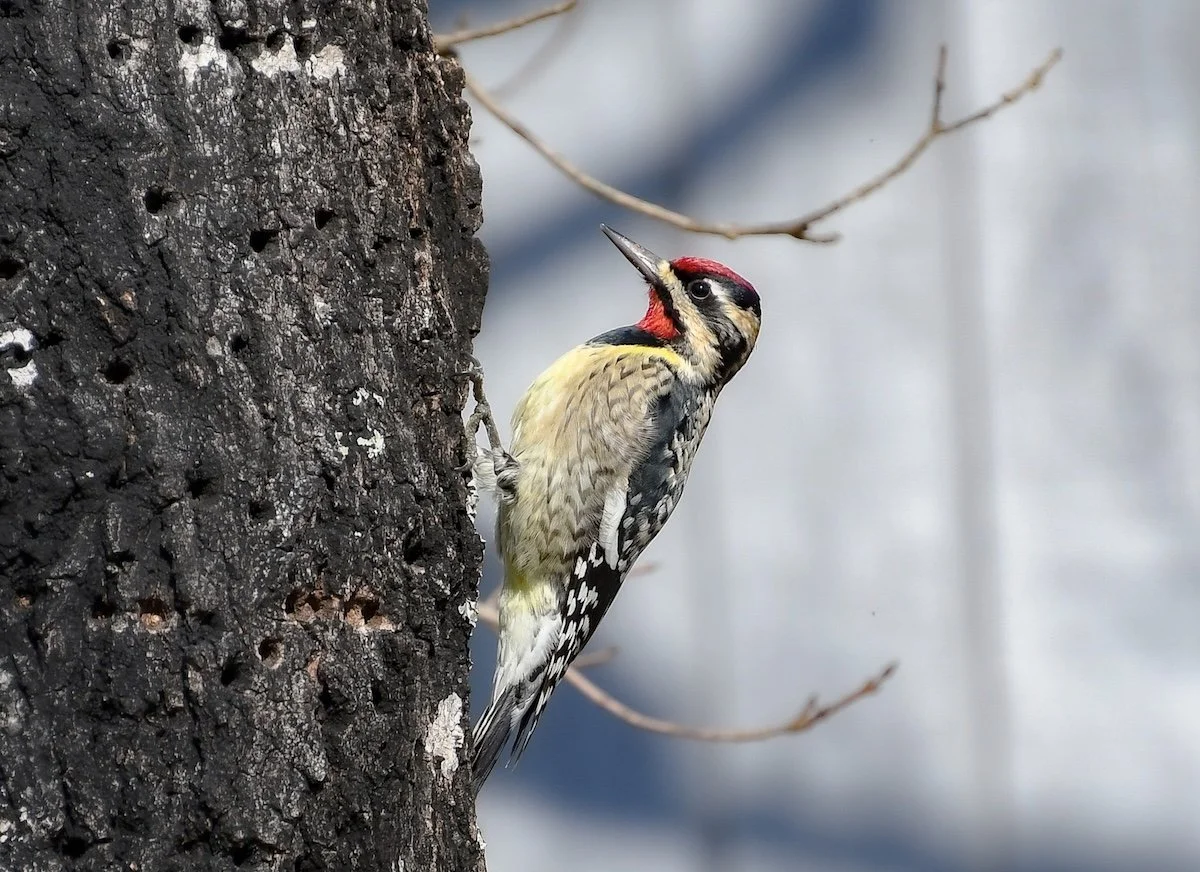
Yellow-bellied Sapsucker. Photo: Fraida Gutovich/Audubon Photography Awards
Sapsuckers were once considered pests from the damage they caused to orchards. While their drilling can make trees more vulnerable to insects or disease, these sapwells are an important food source for other animals. In some parts of Canada, Ruby-throated Hummingbirds are so reliant on sap that they time their spring migration to match that of the sapsuckers. Bats, other birds and porcupines also will visit sapwells.
Often motionless and silent, woodpeckers can be hard to spot, and the Yellow-bellied Sapsucker is no exception. Look for them flush against tree trunks, easiest to find when they’re ascending or flying from tree to tree. When birding by ear, listen for their drumming, which is distinct from that of other woodpeckers in its irregularity, or a “mewing” similar to that of a Gray Catbird. They peck in short bursts, often of three, rather than continuously. In addition to feeding, they do this to mark territory, so will sometimes pound on man-made objects—like metal signs—to sound louder. They may be easier seen than heard in the winter.
Luckily, as their population grows, they should only get easier to spot. Yellow-bellied Sapsuckers have a stable and increasing population, according to the North American Breeding Bird Survey. Although they are not typical feeder birds, you may be able to attract them to your yard by offering suet or mealworms. Like most woodpeckers, they benefit from healthy forests with plenty of trees—the best way to support them is through general habitat restoration and protection.
Yellow-bellied Sapsuckers will stick around long after the Halloween candy and Thanksgiving leftovers run out. They stay in northern Virginia until springtime, typically leaving around April and May to fly back north. While indulging in holiday sweets, be sure to think of these sugar-loving sapsuckers and get a glimpse of one before they leave!
Additional Resources:
https://www.allaboutbirds.org/guide/Yellow-bellied_Sapsucker/id
https://www.audubon.org/field-guide/bird/yellow-bellied-sapsucker
https://ebird.org/species/yebsap
https://feederwatch.org/learn/common-feeder-birds

“Junk Trees” and the Native Understory
Berries that grow on native trees and shrubs are wildlife powerhouses. Despite that, some of the best producers are labeled “junk trees” in today’s gardening and landscaping industries because they aren’t someone’s idea of what a yard tree should look like.
Photo: Closeup of the flowers of Devil’s Walking-stick, USGS Bee Inventory and Monitoring Lab from Beltsville, Maryland, USA, Public domain, via Wikimedia Commons
Eileen Ellsworth
Take a moment to stand in the scaly shoes of a migrating songbird along the Atlantic Flyway this fall. Passing through Virginia, you will still have a long way to go before reaching your southern wintering grounds. Imagine your relief when, after an entire night of flying, you find a stopover habitat to rest and refuel before the next leg of the journey. And what is your favorite food from the on-site offerings? Berries that grow on native trees and shrubs, all of which are wildlife powerhouses. Despite that, some of the best producers are labeled “junk trees” in today’s gardening and landscaping industries because they aren’t someone’s idea of what a yard tree should look like.
To show how far afield we have drifted in our plant-think, consider the results of this 2022 study by the Center for Conservation Biology (CCB). Researchers working on the eastern shore of Virginia analyzed the nutritional content of several native plant berries to discover which ones provide the biggest energy boost for migrating birds. Next, they measured levels of berry removal from plants during the fall migration to determine which berries were most preferred. Considerable overlap existed between the most nutritious and the most popular native plant berries, as follows:
The most nutritious native tree berries, starting with the best, were
Sassafras
Bayberry
Virginia Creeper
Pokeweed
Devil’s Walking-stick
American Beautyberry
Hackberry
Wild grapes.
The most preferred native plant berries, starting with the most popular, were
Sassafras
Devil’s Walking-stick
Pokeweed
Virginia Creeper
American Beautyberry
Bayberry
Hackberry
American Holly.
These plants are not just profuse berry producers. They are classic native understory shrubs and trees that have been disappearing from our landscapes in modern times. White-tailed deer have over-browsed the understory. Non-native invasives outcompete the natives. Plant diseases proliferate as the climate warms. And humans persist in calling some native plants “junk” and discourage their purchase. It is a perfect storm of destructive pressures and wrong thinking. At least the thinking part is something we can reverse along with the behavior that flows from it.
Let us ditch the “junk tree” label and take a closer look at three rock star “treasure trees” included in the CCB study.
Sassafras: Sassafras berries were rated #1 in the study for both nutritional value and bird popularity. Who knew? Woodpeckers, mockingbirds, catbirds, flycatchers, phoebes, vireos, Wild Turkeys, and Yellow-throated Warblers all enjoy the feast. The tree also provides excellent support for squirrels, rabbits, and other mammals and hosts some very cool moth species such as the Imperial, Promethea, Cecropia, and Io moths as well as the remarkably handsome Spicebush Swallowtail caterpillar.
Sassafras grows very fast and reaches heights of 30-60 feet in ideal conditions. You’ll need to plant more than one if you want berries, as only the female trees produce them. White-tailed deer relentlessly browse the tree, so some fencing is recommended for the first few years. Flower and berry production begins at ten years, and the abundant clusters of yellow flowers in April and May are simply spectacular. The fruit ripens in September, just in time for the fall migrations. The berry’s appearance has been likened to a blue-black egg sitting atop a bright red golf tee. Its leaves are just as unique. Three distinct leaf shapes - the mitten, the three-lobe, and the oval - all grow on the same tree and turn bright yellow, orange, and red in the fall.
Its wildlife value and unique features say it all.

Devil’s Walking-stick berries. Photo: GlacierNPS, Public domain, via Wikimedia Commons
Devil’s walking-stick: The CCB study rated Devil’s Walking-stick berries as #5 for nutritional value and #2 in popularity. Cedar Waxwings, Wood Thrushes, White-throated Sparrows, Swainson's Thrush, American Robins, Gray Catbirds, Northern Mockingbirds, Rose-breasted Grosbeaks, Dark-eyed Juncos, and various migrating warblers are all avid consumers.

The distinctive red berries of Devil’s Walking-stick. Photo: Margaret Fisher
Another fast grower, the tree/shrub reaches heights of 10-30 feet, making it ideal for yards and gardens where larger canopy trees can’t fit. It also reproduces quickly by suckering roots and often forms colonies in open fields, wood margins, and moist woods. You only need to purchase and plant one specimen to set fruit, and berries appear as early as year three or four.
Devil’s Walking-stick is a native plant that looks positively exotic. Spot it once and you will never forget it. Prominent thorns grow along the trunk, stems, and leaf stalks (thus, the label “junk”). The thorns give the plant its name while also discouraging most deer browse. Small white or creamy white flowers appear in mid-to-late summer and form showy, fragrant canopies above the huge compound leaves, attracting many pollinators. When dark purple berries appear in the fall, they hang on stalks that have turned a vivid burgundy or lacy red.
This plant is just plain crazy beautiful.
American Beautyberry: We mention this even though it is native further south but not in northern Virginia, because we would like to warn people not to buy the wrong species by mistake, which happens commonly. The CCB study rates American beautyberry #6 for berry nutrition and #5 for bird popularity. While Sassafras and Devil’s Walking-stick rarely appear on landscaping plans, American Beautyberry is a frequent choice and never designated “junk” in anyone’s book.
In spring and summer, the plant looks ordinary with unremarkable leaves and inconspicuous flowers. Come the fall, however, the plant transforms itself as tight clusters of bright purple berries ripen along the entire length of the stem. Those berries last for weeks, but their taste improves as they age and ferment on the stems, making them a fan favorite for migrating birds. American Robins, mockingbirds, cardinals, towhees, thrashers, Gray Catbirds, and finches are known customers among 40 species relying on the tree for late season food.
American Beautyberry also grows fast to reach a mature size of up to about 8 feet. Deer eat it, so fencing is recommended until it is well established.
Here is the warning. When purchasing American Beautyberry, be aware that Asian cultivars are often sold under the name “Beautyberry” and can be confused with the straight native. Only purchase Callicarpa americana. Mislabeling is common even then. Devil's Walking-stick (Aralia spinosa) also has an invasive look-alike (Aralia elata).
When we label a native plant as “junk,” it is often because of thorns, poor-quality wood, or aggressive growth and spread. But the label also reflects our severed connection with nature. A “junk" tree or "brush" shrub may or may not please us, but it is a migrating bird’s vital food source, an uncommon moth’s host plant, and a native bee’s essential nectar source. For more suggestions, see the Plant NOVA Trees website.
One person’s junk has always been another’s treasure. Let’s value what matters.
A Closer Look: Nature All Around Us, November 2025
Judy Gallagher is an NVBA board member and a regular surveyor of local wildlife who also captures photos of what she sees, in particular the less common species.
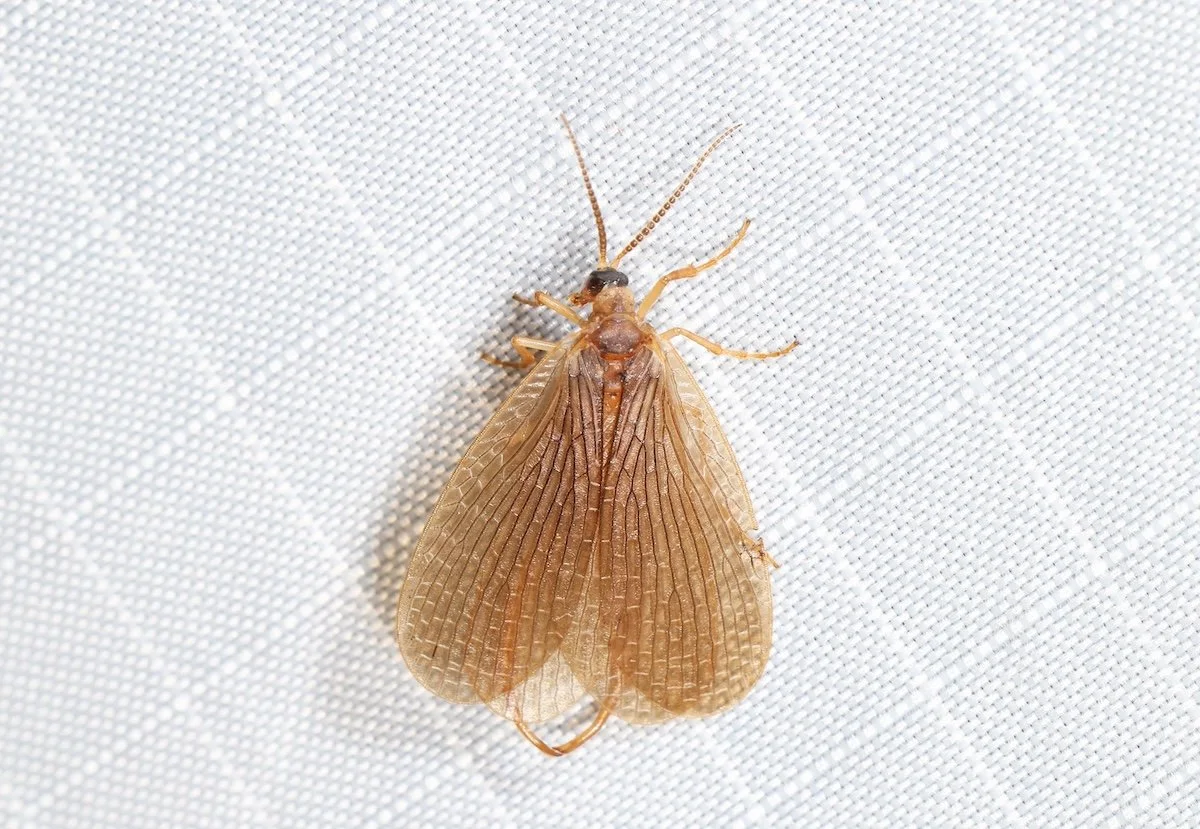
Photo: Forcepfly, Judy Gallagher
Judy Gallagher
November 2025
I was fortunate recently to see a Forcepfly, a species in a family that was previously unknown to me, and that inspired this month’s column. Forcepflies, sometimes called Earwigflies, belong to Order Mecoptera (long wings), which also includes Scorpionflies, Hangingflies, and Snow Scorpionflies. Order Mecoptera is closely related to Siphonaptera (fleas) and slightly more distantly to Diptera (flies).
Members of this order look a bit like flies, with long slender bodies and narrow membranous wings. They have long beak-like mouthparts. They undergo complete metamorphosis with egg, larval, pupal, and adult stages. The larvae mostly feed on plant matter, but most adults are predators or eat dead organisms. Some scientists postulate that early Mecopterans fed on nectar and pollen, but so far fossil evidence has not confirmed this. Analyses of fossilized Mecopteran mouthparts, which didn’t find any iron, suggest that early Mecopterans did not feed on blood.
Forcepfly. Photo: Judy Gallagher
The Forcepfly that I saw recently is one of just three species in Family Meropeidae, and it’s the only species found in North America. Not much is known about this family. No larvae of any species have been found and the adults have never been seen feeding, although there is speculation that they feed on decaying organic matter. They are called Forcepflies because of the forcep-like male genitalia. Their bodies are flat, which enables them to live under tree bark or logs.
The biggest Mecopteran family is Panorpidae, or Scorpionflies. There are about 300 species worldwide, with 54 species in eastern North America. Female scorpionflies lay small masses of eggs in soil. The larvae live in or near the soil-layer before pupating in underground cells over the winter. Both adult and larva are primarily scavengers, eating dead insects and snails, bird droppings, pollen, nectar and fruit juices. Adults often steal prey from spider webs and occasionally also eat the live spiders.

Male Helena’s Scorpionfly (Panorpa helena), showing off its scorpion-like appendage. Photo: Judy Gallagher
Male scorpionflies have genitalia that look like scorpion stingers, which is the reason behind their name. Unlike scorpions, they can’t sting. Each species of scorpionfly has unique genitalia, and this is what is commonly used by entomologists to distinguish between species.

Another male scorpionfly, Panorpa species. Note the slightly different appendage and different wing markings. Photo: Judy Gallagher
Male scorpionflies try to attract females by offering them a dead insect, but if a dead insect isn’t available, they sometimes offer saliva instead. Some female scorpionflies will accept a male suitor only if he brings her a gift of prey, and females tend to prefer males that bring them big prey items. Males are reputed to occasionally mimic females in order to get a free meal. Some male scorpionflies also try to attract a female by issuing chemical signals (pheromones) and waving their wings, accompanied by sounds made by vibrating their abdomen against a solid surface.

Female scorpionfly, Panorpa species. Photo: Judy Gallagher
Female scorpionflies don’t have the scorpion-like appendage.

Female scorpionfly showing different wing markings. Photo: Judy Gallagher
Scorpionflies are usually among the first insects to start feeding on corpses, indicating that the body is at most a few days old, something that is used by forensic investigators to date the approximate age of a corpse. I am grateful that I don’t have pictures to illustrate this!
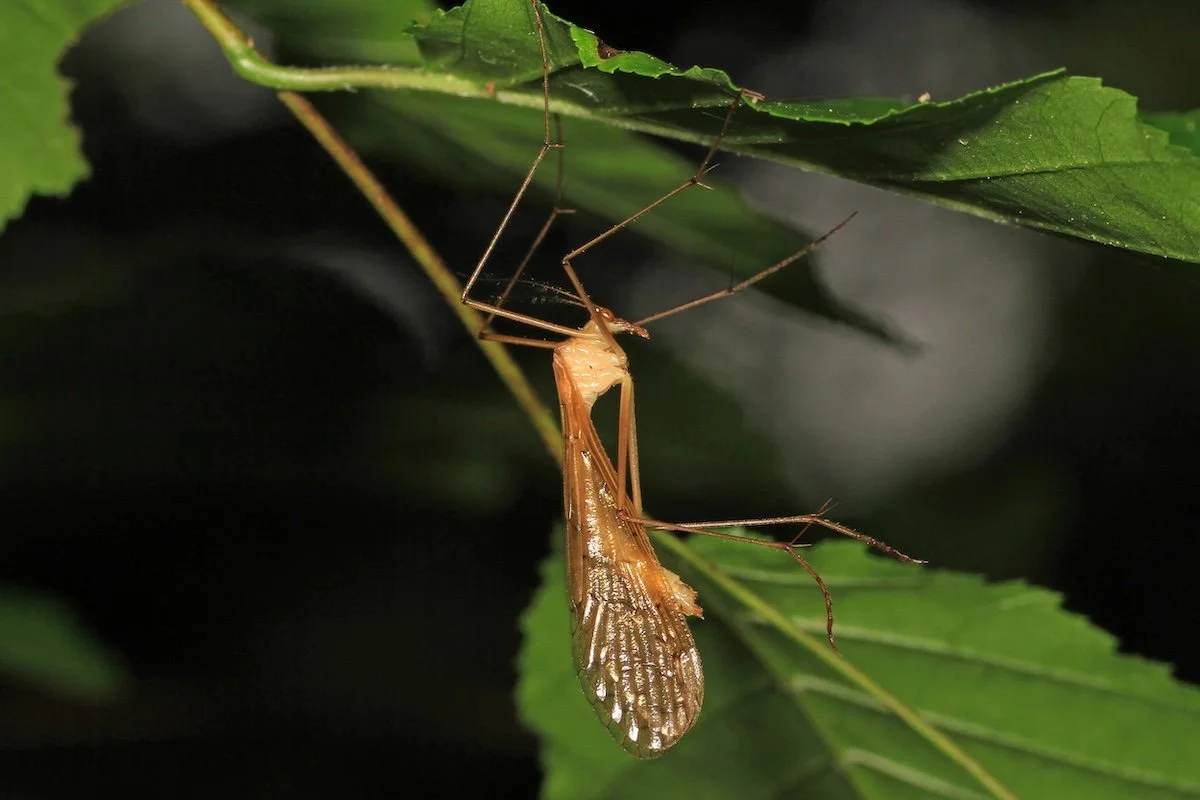
Hangingfly, Bittacus species. Photo: Judy Gallagher
The final Mecopteran family that occurs regularly in our area is Hangingflies (Bittacidae). They hang by their front and middle legs from low plants, and use their hind legs to capture passing prey. They look a little like Crane Flies, but have the long beak-like mouthparts characteristic of this order. Like scorpionflies, male hangingflies attract females by bringing them insect prey. If the female doesn’t think the prey is big enough, she flies away.
I’ve never seen a snow scorpionfly (family Boreidae). They are adapted to cold climatic conditions, often living on the surface of ice or snow, and may die if exposed to the heat of a human hand. A few individuals have been found in our area, but they typically live further north. My goal is to find one this winter.
View more of Judy’s articles on A Closer Look: Nature All Around Us (formerly Observations from Meadowood).

Wildlife Sanctuary Almanac: Grow a Winter Bird Feeder
Now is the time to clean and fill the feeders to help birds make a living when other food sources are scarce. It’s also time to think about providing next year’s winter bird food by planting more native plants, including native grasses, wildflowers, and woody plants, such as shrubs, vines and trees, that provide sustenance all winter long.
Photo: American Goldfinch, Barb D’Arpino/Audubon Photography Awards
Elizabeth Martin
Now that fall migration is winding down, the resident birds who stayed behind will be foraging and scrounging for food to survive the winter. Now is the time to clean and fill the feeders to help birds make a living when other food sources are scarce. It’s also time to think about providing next year’s winter bird food by planting more native plants, including native grasses, wildflowers, and woody plants, such as shrubs, vines and trees, that provide sustenance all winter long.
American Goldfinch feeding on seeds of New England Aster (Symphyotrichum novae angliae). Photo: Barb D’Arpino/Audubon Photography Awards
Mourning doves survive almost entirely on grain, including seeds from native grasses such as little bluestem and Indian grass. Native grasses provide high quality, carbohydrate-rich grain for birds in winter. Sparrows and dark-eyed juncos also eat grass seeds.
Many of the best winter food sources for birds are produced by members of the sunflower family (Asteraceae). Asters, sunflowers, black and brown-eyed Susans, goldenrods, ironweeds and others all produce highly nutritious seed that ripens late in the season. Some plants produce large seed, and others produce small seed, and so different bird species are attracted to feed on them. For example, Northern Cardinals love large sunflower seeds, while finches and sparrows feed on the smaller seeds of brown-eyed Susans and goldenrods. By planting a variety of wildflowers, you’ll attract a greater variety of bird species looking for winter food. Goldfinches, chickadees, and titmice also feed on wildflower seeds.
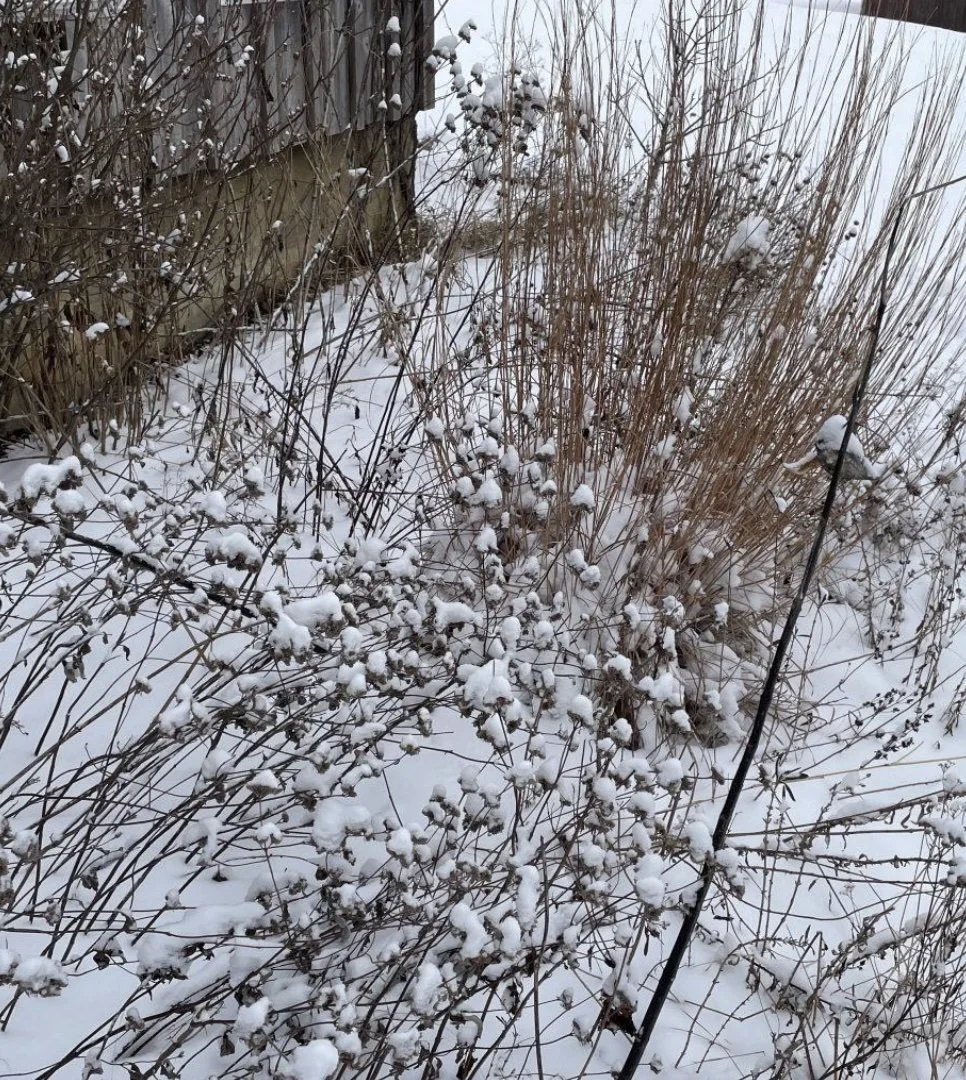
A variety of dormant native grasses and herbaceous flowering plant stems left standing in winter. Avoid cutting them down until spring, if you can. They provide many ecological benefits, including food for many birds. Photo: Brandon Everett
To preserve this source of bird food, don’t deadhead or cut down dried grasses and wildflowers when they go dormant in fall. Not only will the seeds feed the birds, but the dried stems and stalks provide shelter and overwintering sites for insects, butterflies, and other little critters.
Finally, the fruits of many native trees, shrubs and vines provide winter food for birds, especially the fruit-lovers (frugivores) like woodpeckers, American Robins, Northern Mockingbirds, Cedar Waxwings and Blue Jays. For example, Coral honeysuckle (Lonicera sempervirens) is a semi-evergreen vine which produces clusters of red berries that support finches and robins. This plant’s dense growth also provides good nest sites and shelter for birds, and its red trumpet-shaped flowers attract hummingbirds in summer—it is truly a plant for all seasons. Berries on Virginia creeper (Parthenocissus quinquefolia) cling to the vine into winter and are favored by woodpeckers. Winterberry (Ilex verticillate), a deciduous holly shrub, and the evergreen American holly tree (Ilex opaca) produce starchy drupes that are not initially palatable and are only eaten later in winter, after they have gone through several freeze and thaw cycles. When the holly drupes are finally ripe, birds may show up in large flocks and completely strip a holly tree or shrub in a matter of minutes. By the time they’re eaten, the drupes have fermented, so you may see tipsy birds staggering unsteadily in your backyard after their feeding frenzy.
Drunken birds? You can’t get a show like that with a birdfeeder.

Northern Mockingbird feeding on Winterberry (Ilex verticillata). Photo: Barbara Driscoll/Audubon Photography Awards
Catch up on past Wildlife Sanctuary Almanac articles here.

Fake Spiderwebs: A Hidden Halloween Hazard for Birds
As Halloween approaches, one decoration deserves to stay on the store shelf: synthetic spiderwebs. While these stretchy strands might seem like harmless fun, they're creating a serious threat to birds in our communities
Photo: Synthetic spiderweb decorations, Sebastian Schuster via Unsplash
As Halloween approaches, one decoration deserves to stay on the store shelf: synthetic spiderwebs. While these stretchy strands might seem like harmless fun, they're creating a serious threat to birds in our communities.
Why Spiderwebs Are So Dangerous

Natural spider silk will break under pressure, but artificial webbing holds firm. Photo: Chelsea Marques via Unsplash
When a bird encounters fake webbing, the outcome is often tragic. The synthetic material is engineered to be strong and sticky—qualities that make it perfect for decorating but lethal for wildlife. A bird that brushes against these fibers quickly becomes trapped, and their instinct to struggle only tightens the grip. Unlike natural spider silk that breaks under pressure, artificial webbing holds firm.
The danger doesn't end when Halloween is over. Wind carries loose strands into trees and vegetation where they persist for months, creating invisible traps in the very places birds need most. In urban and suburban areas where natural habitat is already limited, blocking off trees and shrubs with webbing eliminates crucial shelter and feeding spots.
A Better Way to Decorate
Here's the good news: you can still embrace the spooky season while protecting birds. Keep those synthetic webs indoors, or better yet, apply them directly to your windows. When placed on glass, they serve double duty by creating your Halloween aesthetic while making windows visible to birds.
Fall migration is in full swing right now, with millions of birds passing through our region. Window collisions kill hundreds of millions of birds annually in the United States, and simple visual markers can dramatically reduce these deaths. Spooky decals, washable window markers, or even DIY paper cutouts transform your windows into both festive displays and lifesaving signals.
Starting a Friendly Conversation
If you notice a neighbor using fake spiderwebs, a kind approach can make all the difference. Start with a compliment about their decorations, then share what you've learned about the risks to birds. Most people simply don't know about the danger and are happy to make a change once they understand. Offer specific alternatives like window application or indoor use. Keep it light and positive; frame it as a way to keep their display just as festive while being wildlife-friendly. You might be surprised how many neighbors become advocates themselves once they know.
This Halloween, choose decorations that celebrate the season without harming the wildlife that makes our neighborhoods special. Your yard can still be the spookiest on the block, just without the collateral damage.
If you do see an injured bird, please reach out to local wildlife rehabbers for assistance. We recommend AERO and Wildlife Rescue League for more information!

Fall 2025 Cape May Field Trip Recap
On Saturday, October 4, 22 birders awoke before sunrise, loaded into vans, and began our journey from Northern Virginia to Cape May, NJ, our eyes set on this faraway destination perfectly aligned with the Atlantic Flyway, one of the four “avian superhighways” in North America.
Photo: Cape May Lighthouse, Alan Kotock via Pixabay
McKenzie Ingram

Driving to Cape May. Photo: Ajani Simmons
Saturday morning was anything but cozy, sleepy, fall vibes for our birders chasing the thrill of fall migration. 22 birders, including experienced guides Tom Wood, Herlitz Davis, and Judy Gallagher in tow, awoke before sunrise, loaded into vans, and began our journey from Northern Virginia to Cape May, NJ! Our eyes were set on this far away destination because of its geography. This peninsula is perfectly aligned with the Atlantic Flyway, one of the four “avian superhighways” in North America, making it a world-renowned birding hotspot.

Our group after arriving in Cape May via the ferry. Photo: Ajani Simmons
After our drive from Virginia, we crossed into New Jersey from Delaware via the Cape May–Lewes Ferry, which offered scenic views and unique birding opportunities along the way. Aboard the ferry, we saw Laughing Gulls, Forster's Terns, a pair of Brown Pelicans, and many other water-loving birds. Many species are in their non-breeding plumage this time of year, making identification trickier but rewarding.
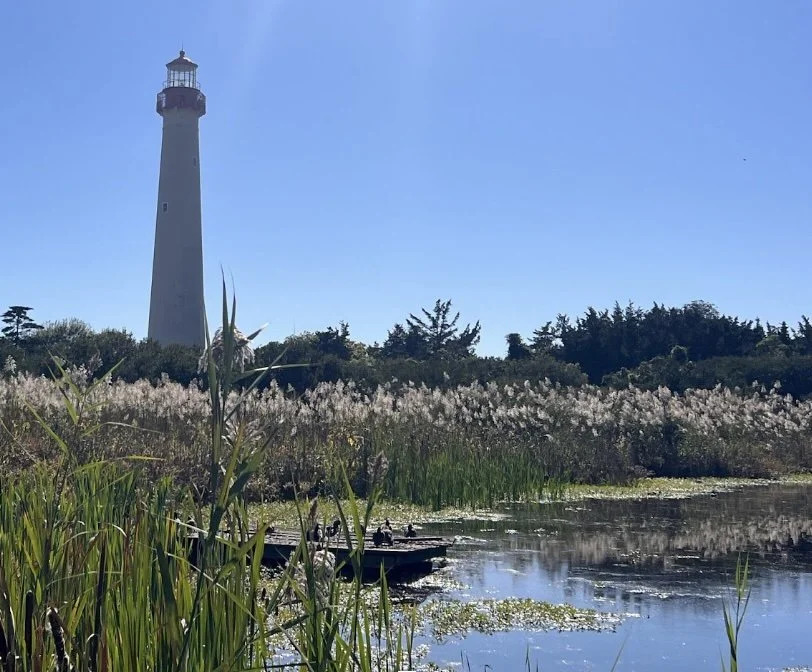
Cape May Lighthouse. Photo: McKenzie Ingram
Once in Cape May, we hurried to the nearby Cape May Point State Park , where we enjoyed a quick lunch before an afternoon of birding fun under the observation of the nearby 157-foot-tall Cape May Lighthouse which has overlooked the entire peninsula since it was first lit in 1859.
When you hear “fall migrants” one might expect to only see avian migrants such as warblers, the infamously colorful tiny birds that flood the skies on their migrations every spring and fall. However, a plethora of species are also on their way to warmer temperatures or waters this time of year - something we quickly learned during our time at the park. At Cape May Point, Monarch butterflies and dragonflies stop briefly in the park along their migration to gain their strength before crossing the Delaware Bay.
Monarch butterfly sporting a band. Photo: Jenn Crawford
These Monarch butterflies are part of what researchers call “the monarch super generation.” Unlike their close relatives, these monarchs' reproductive cycles are on hold. They do not complete their life cycle in a mere four weeks, and they are migrating south, the opposite of what their parents or grandparents did. Some fly over fifty miles a day on their way to their winter homes in Mexico! Some guests even had the pleasure of watching a butterfly banding demonstration provided by the Monarch Monitoring Project while visiting the park.
This monitoring project is hosted under the Cape May Bird Observatory (CMBO) founded in 1976 by NJ Audubon. The CMBO is a beacon for migratory species research such as annual counts, censuses of species, and other environmental education projects. For instance, the park’s nearby Cape May Hawkwatch, is one of many birding attractions that also conducts conservation-driven studies through the CMBO. We were especially grateful for the expert advice given by the seasonal naturalist hired by NJ Audubon. The naturalist happily answered our questions and aided us in bird identification. On the platform we saw a male Belted Kingfisher, American Kestrels, and a Peregrine Falcon, among others.
Sea Shells of the World exhibit at the CMBO Nature Center. Photo: McKenzie Ingram
The park’s Nature Center and Museum provided us with more educational opportunities such as seashell exhibits, live reptiles, and other information relevant to visitors. Onsite there were several trails for us to take that gave up-close views of woodland habitats, marshlands, ponds, beaches, dunes, and other habitats critical for migrants. One group even saw a Black Snake consuming a juvenile squirrel on the side of the trail. While the snake was enjoying his meal, the nest of squirrels made warning calls from the pine tree above, making this an especially memorable sighting.
After leaving Cape May Point State Park, we traveled up to Ocean City, NJ where we enjoyed dinner at the nearby boardwalk full of Saltwater taffy shops and attractions before calling it an early night.
The next morning we drove back down to the Avalon Seawatch. This site was chosen by NJ Audubon for its location because the northern tip of Avalon extends a mile farther out into the ocean than the coastline to the north. Southbound seabirds that are following the coastline pass very close to this beachfront. According to their webpage, there are an average of almost 800,000 seabirds counted here annually, with around 70% of all the migrant seabirds passing in a mere five week period in the fall.
Avalon Seawatch. Photo: McKenzie Ingram
On day two we were accompanied by another seasonal naturalist and local guides who are experts in identifying both local and migrant species that frequent Avalon. While there, we watched Royal Terns fly above the water while about seventy Sanderlings sat on the jetty, completely exhausted from their latest leg of their migration journey.
Here our guide Judy discussed the importance of coastal marshlands and shared her knowledge on the highly invasive marsh reed known as Phragmites australis, that line the trails and beaches we visited almost the entire journey.

Our guide Judy Gallagher addressing the group at Avalon Seawatch. Photo: McKenzie Ingram
Our next stop was the 200-acre South Cape May Meadows preserve established by the Nature Conservancy. Along the one-mile trail loop, we saw several fall migrants such as Common Yellowthroats, Gray Catbirds, Ospreys, and more. Along the way our guides shared detailed identification tips while local guides provided historical information on the restoration projects in the region.
For our final stop, we made our way to the CMBO Northwood Center. Here there is a plethora of field guides from around the world, birding books, spotting scopes, binoculars of all kinds, and other birding goodies available for purchase to fundraise for such programs and projects.
From here, the group rode back across the Delaware Bay to catch last glimpses of seabirds and ponder the many brilliant sights we left behind in NJ.
This trip was made possible in part to the Virginia Department of Wildlife and grant funding provided to support new birders enjoying the nature around us. As a result of that program, over half of our group were new birders who have never had a chance to see a migration hotspot.
At the trip’s conclusion, we spotted over forty species of birds. These species, along with the butterflies, plants, and everything in between, reminded us that even in the midst of life’s biggest journeys, some more challenging than we ever anticipated, there are still many moments of connection, amazement, community, humor, joy, and more to look forward to. And that, to me, is what made our Fall Field Trip to Cape May, NJ truly special.

The 2025 NVBA Cape May crew. Photo: Tom Woods